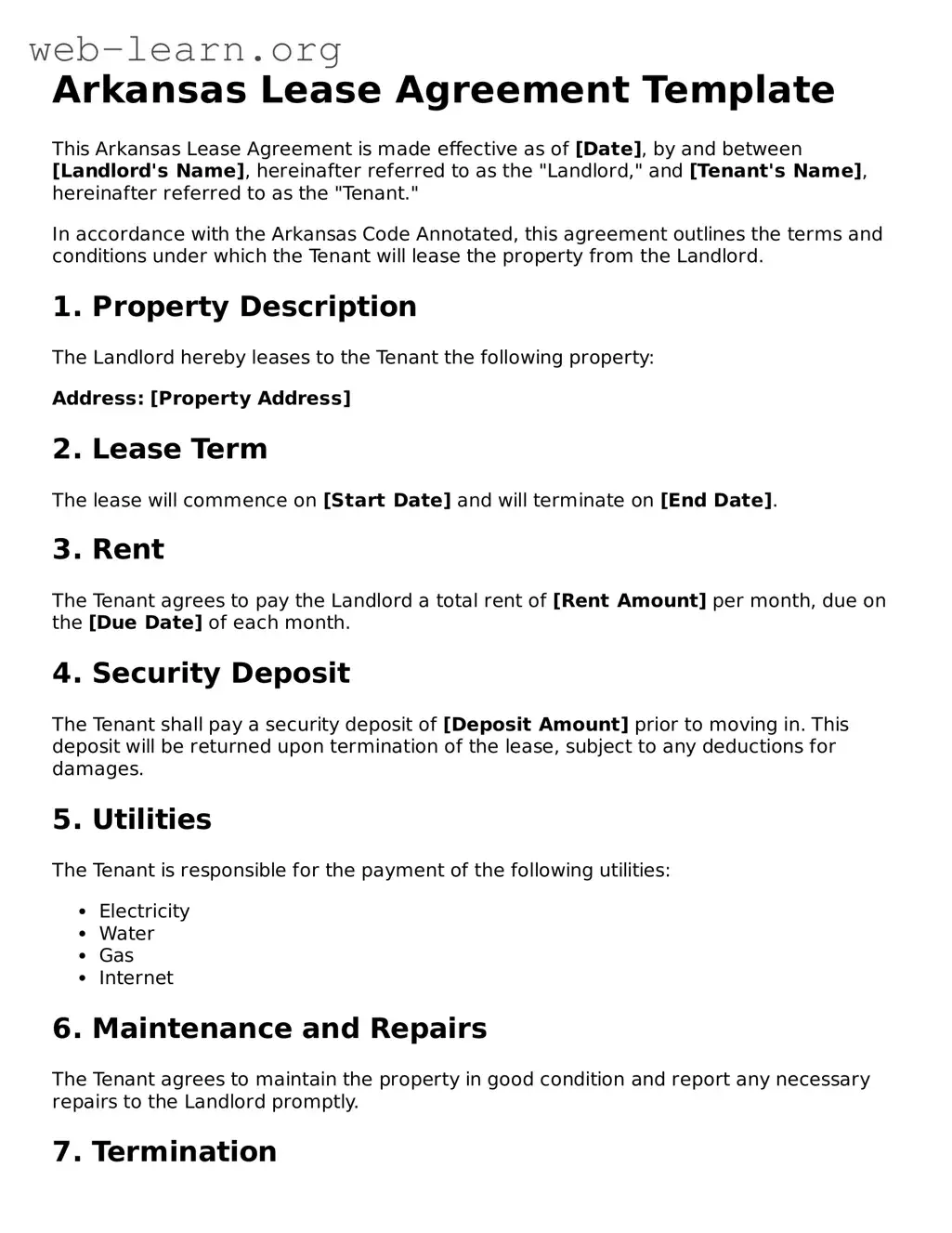
The Arkansas Lease Agreement form is an essential document for landlords and tenants entering into a rental arrangement. This form outlines the terms and conditions of the lease, ensuring that both parties understand their rights and responsibilities. Key aspects include the duration of the lease, rental payment details, and the security deposit requirements. Additionally, it addresses maintenance responsibilities, rules regarding pets, and procedures for terminating the lease. By clearly defining these elements, the lease agreement helps prevent misunderstandings and disputes. Both landlords and tenants can benefit from having a written agreement that serves as a reference point throughout the rental period.
Arkansas Lease Agreement Template
This Arkansas Lease Agreement is made effective as of [Date], by and between [Landlord's Name], hereinafter referred to as the "Landlord," and [Tenant's Name], hereinafter referred to as the "Tenant."
In accordance with the Arkansas Code Annotated, this agreement outlines the terms and conditions under which the Tenant will lease the property from the Landlord.
1. Property Description
The Landlord hereby leases to the Tenant the following property:
Address: [Property Address]
2. Lease Term
The lease will commence on [Start Date] and will terminate on [End Date].
3. Rent
The Tenant agrees to pay the Landlord a total rent of [Rent Amount] per month, due on the [Due Date] of each month.
4. Security Deposit
The Tenant shall pay a security deposit of [Deposit Amount] prior to moving in. This deposit will be returned upon termination of the lease, subject to any deductions for damages.
5. Utilities
The Tenant is responsible for the payment of the following utilities:
6. Maintenance and Repairs
The Tenant agrees to maintain the property in good condition and report any necessary repairs to the Landlord promptly.
7. Termination
Either party may terminate this lease by providing written notice of [Notice Period] days to the other party.
8. Governing Law
This Lease Agreement shall be governed by the laws of the State of Arkansas.
9. Signatures
By signing below, both parties agree to the terms of this Lease Agreement.
Landlord's Signature: ________________________ Date: ___________
Tenant's Signature: ________________________ Date: ___________
| Fact Name | Detail |
|---|---|
| Governing Law | Arkansas Code Annotated § 18-16-101 et seq. |
| Parties Involved | The agreement includes a landlord and a tenant. |
| Property Description | The form requires a clear description of the rental property. |
| Lease Term | The duration of the lease must be specified, whether it's month-to-month or a fixed term. |
| Rent Amount | The rental amount and payment due date are essential components. |
| Security Deposit | Information about the security deposit, including the amount and conditions for its return, must be included. |
| Maintenance Responsibilities | The agreement should outline the responsibilities of both the landlord and tenant regarding property maintenance. |
| Termination Conditions | Conditions under which the lease may be terminated by either party should be clearly stated. |
Filling out the Arkansas Lease Agreement form is an important step in establishing a clear understanding between a landlord and a tenant. By completing this form accurately, both parties can ensure that their rights and responsibilities are clearly defined, leading to a smoother rental experience.
Once the form is completed and signed, both parties should keep a copy for their records. This ensures that everyone is on the same page and can refer back to the agreement if needed.
What is an Arkansas Lease Agreement?
An Arkansas Lease Agreement is a legal document between a landlord and a tenant. It outlines the terms and conditions of renting a property. This agreement specifies the duration of the lease, the amount of rent, and the responsibilities of both parties. It is important for protecting the rights of both the landlord and the tenant.
What should be included in the Lease Agreement?
A comprehensive Lease Agreement should include the following:
Including these details helps avoid misunderstandings later on.
How long is a typical lease term in Arkansas?
In Arkansas, lease terms can vary. Most commonly, leases are for one year. However, some landlords may offer month-to-month agreements or shorter terms. The duration should be clearly stated in the Lease Agreement.
Can a lease be renewed?
Yes, a lease can be renewed. If both the landlord and tenant agree, they can extend the lease for another term. This should be documented in writing to avoid any confusion. If the lease is not renewed, the tenant must vacate the property by the end date.
What happens if a tenant breaks the lease?
If a tenant breaks the lease, they may face consequences. This can include losing their security deposit or being responsible for rent until the property is re-rented. It is essential to read the Lease Agreement carefully to understand the penalties for breaking the lease.
When filling out the Arkansas Lease Agreement form, many individuals overlook critical details that can lead to confusion or disputes later on. One common mistake is failing to include the full names of all tenants. It’s essential to list everyone who will be living in the rental property. This ensures that all parties are legally bound by the lease terms. Omitting a tenant's name can create issues regarding responsibility and accountability.
Another frequent error is neglecting to specify the rental amount clearly. While it may seem straightforward, writing the rent in both numerical and written form helps prevent misunderstandings. If the rent amount is disputed, having both formats can serve as a safeguard. Always double-check that the figures match.
Some people forget to indicate the duration of the lease. Whether it’s a month-to-month agreement or a fixed-term lease, clarity is vital. Without a defined term, tenants and landlords may have differing expectations about the length of the rental arrangement. This can lead to potential conflicts down the line.
Additionally, failing to outline the security deposit terms is a mistake that can have financial repercussions. The lease should specify the amount of the deposit, conditions for its return, and any deductions that may be made. If these details are left vague, disputes may arise when the tenant moves out.
Another area where errors frequently occur is in the listing of maintenance responsibilities. Both landlords and tenants should understand who is responsible for repairs and upkeep. Clearly defining these duties in the lease can prevent disagreements about maintenance issues later.
People often overlook the importance of including pet policies in the lease. If pets are allowed, the lease should specify any restrictions, such as breed or size limitations. Conversely, if pets are not permitted, this should be clearly stated to avoid any future misunderstandings.
Additionally, individuals sometimes forget to include provisions for terminating the lease. It’s crucial to outline the notice period required for both parties. This helps ensure that everyone understands their rights and responsibilities when it comes to ending the lease.
Another common mistake is not providing accurate property details. The address of the rental property should be complete and precise. This includes unit numbers, if applicable. Inaccurate information can complicate legal matters and lead to confusion about the property in question.
Lastly, failing to review the lease agreement thoroughly before signing is a critical error. Every party involved should take the time to read through the document carefully. This allows for any questions or concerns to be addressed before any commitments are made. Rushing through this process can lead to regrettable oversights.
When entering into a lease agreement in Arkansas, several other documents may be necessary to ensure a smooth and legally sound transaction. These documents help clarify responsibilities, provide necessary disclosures, and protect the interests of both landlords and tenants. Below is a list of commonly used forms that complement the Arkansas Lease Agreement.
Each of these documents plays a crucial role in the leasing process, helping to ensure clear communication and mutual understanding between landlords and tenants. Being familiar with these forms can help both parties navigate their rights and responsibilities effectively.
Rental Agreement: Similar to a lease agreement, a rental agreement outlines the terms under which a tenant can occupy a property. Both documents specify rental amounts, duration, and responsibilities of each party.
Sublease Agreement: This document allows a tenant to rent out their leased space to another person. Like a lease agreement, it includes terms such as duration and rental payments, but it is specifically for subletting.
Commercial Lease: A commercial lease is used for business properties. It shares many similarities with a residential lease, including rent terms and maintenance responsibilities, but it focuses on commercial use.
Month-to-Month Agreement: This agreement allows tenants to stay on a month-to-month basis without a long-term commitment. It includes terms similar to a lease but offers more flexibility in duration.
Real Estate Purchase Agreement: When buying property, this document outlines the terms of the sale. While it is not a lease, it also establishes rights and responsibilities, similar to a lease agreement.
Property Management Agreement: This document is between a property owner and a management company. It details how the property will be managed, resembling a lease in terms of outlining duties and obligations.
Co-Ownership Agreement: This agreement is for individuals who own property together. It includes terms about use and maintenance, similar to how a lease outlines tenant responsibilities.
Tenancy Agreement: Often used interchangeably with lease agreements, a tenancy agreement also specifies the terms of occupancy, including duration and rental payments.
Roommate Agreement: This document is for individuals sharing a rental space. It lays out each roommate's responsibilities and obligations, much like a lease agreement does for tenants.
License Agreement: This document grants permission to use property without transferring interest. While it differs from a lease, it still outlines terms of use and responsibilities, similar to a lease agreement.
When filling out the Arkansas Lease Agreement form, it is essential to follow certain guidelines to ensure accuracy and compliance. Below is a list of things you should and shouldn't do:
When it comes to lease agreements in Arkansas, many people have misconceptions that can lead to confusion and potential legal issues. Here’s a look at seven common misunderstandings about the Arkansas Lease Agreement form:
While it's highly recommended to have a written lease for clarity and protection, oral agreements can still be legally binding in Arkansas. However, proving the terms of an oral lease can be challenging.
Both landlords and tenants have the right to propose terms in a lease agreement. It’s a negotiation, and both parties should feel comfortable with the final document.
While the terms are often used interchangeably, a lease typically covers a longer duration (usually a year), whereas a rental agreement may be month-to-month. Understanding this difference is crucial.
Lease agreements can be modified if both parties agree to the changes. It’s important to document any amendments in writing to avoid future disputes.
This is not always the case. Some leases have an automatic renewal clause, while others do not. Always read the terms carefully to know what to expect.
In Arkansas, there are specific rules regarding security deposits, including how much can be charged and the timeline for returning the deposit after the lease ends. Familiarizing yourself with these regulations is essential.
While tenants have rights, withholding rent is a serious action that can lead to eviction. It's generally only permissible under specific circumstances, such as when the landlord fails to make necessary repairs.
Understanding these misconceptions can help both landlords and tenants navigate the leasing process more effectively. Always take the time to read the lease agreement thoroughly and consult with a legal professional if you have questions or concerns.
When filling out and using the Arkansas Lease Agreement form, keep the following key points in mind:
Following these guidelines will help ensure a smooth leasing process in Arkansas.
Free Rental Agreement Template - The Lease Agreement is crucial for establishing a professional landlord-tenant relationship.
Free Printable Lease Agreement Template - Includes terms regarding the landlord's liability for injuries on the property.
Free Idaho Rental Agreement Form - Lists any additional occupants allowed on the property.