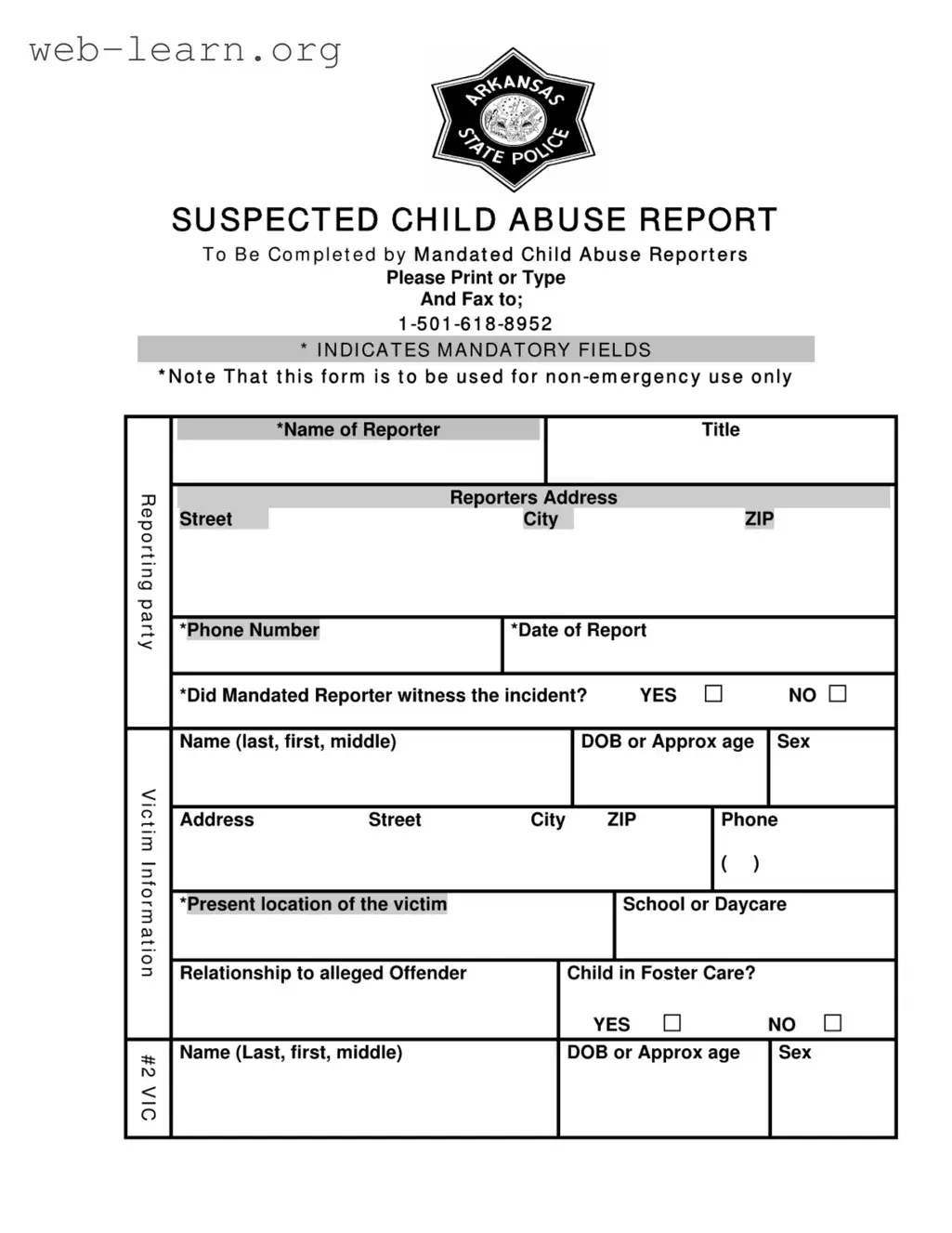
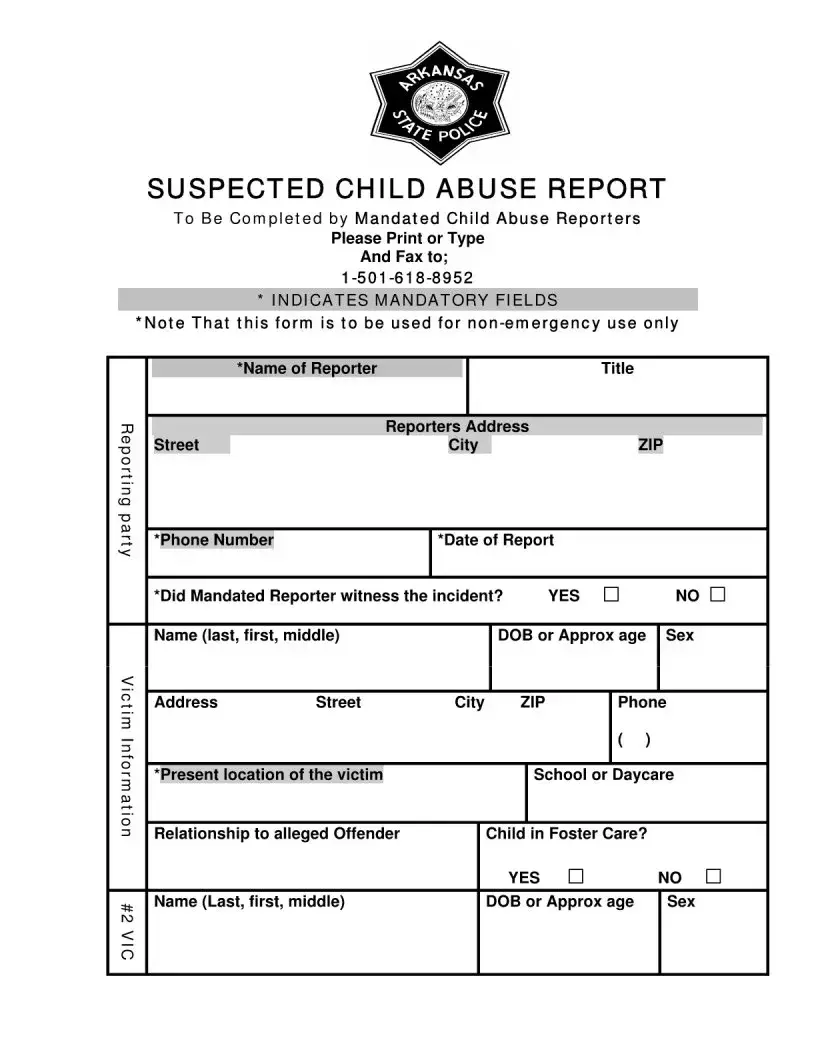
The Arkansas Child Abuse form serves as a crucial tool for mandated reporters who suspect child abuse. This form is designed for non-emergency situations and requires specific information to facilitate the reporting process. Reporters must provide their name, title, contact information, and the date of the report. They must also indicate whether they witnessed the incident in question. Key details about the victim, including their name, age, and current location, are essential components of the form. Additionally, the relationship of the victim to the alleged offender is required, along with demographic information for both parties involved. The form emphasizes the importance of a detailed narrative, prompting reporters to describe what occurred, the presence of any injuries, safety concerns, and any relevant drug use. This structured approach ensures that all necessary information is collected to protect vulnerable children and initiate appropriate responses from authorities.
| Fact Name | Details |
|---|---|
| Purpose of the Form | This form is used to report suspected child abuse by mandated reporters. |
| Mandatory Fields | Certain fields must be filled out, including the name of the reporter and the date of the report. |
| Emergency Use | This form is intended for non-emergency situations only. |
| Reporter’s Information | The form requires the reporter's name, title, address, and phone number. |
| Victim’s Information | Details about the victim, including name, age, sex, and current location, are required. |
| Alleged Offender | The form collects information about the alleged offender, including their name and relationship to the victim. |
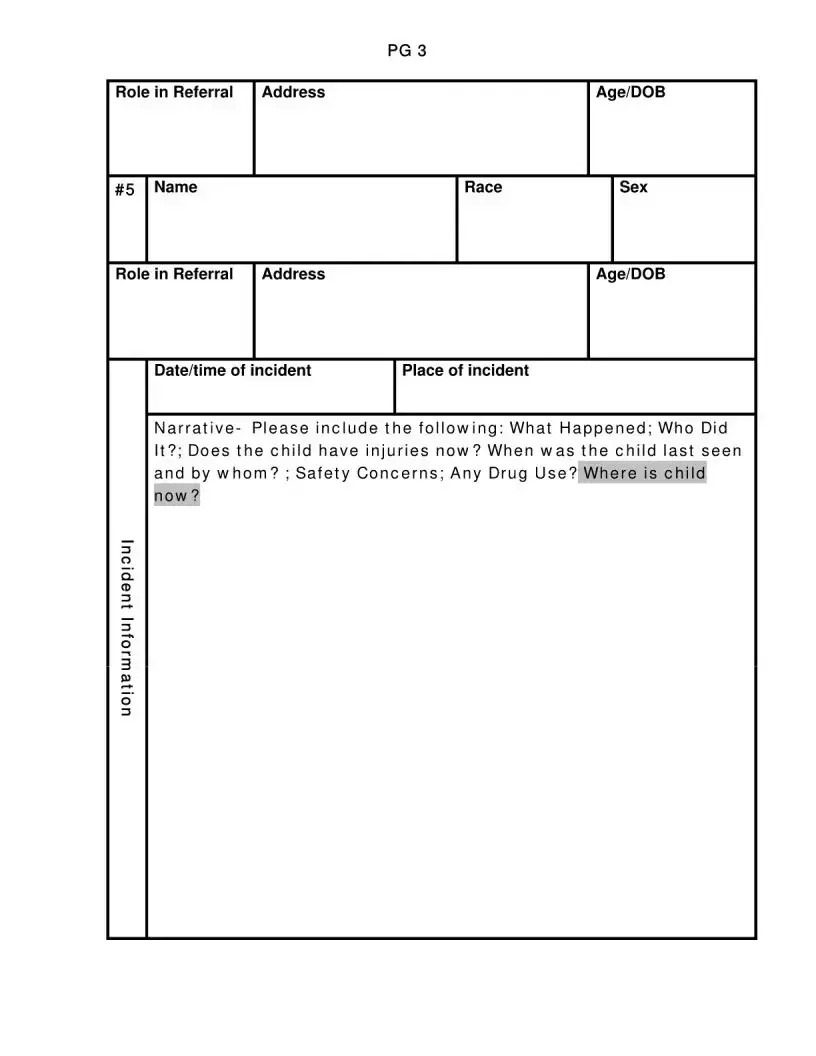
| Incident Details | Reporters must provide a narrative describing the incident, including what happened and any injuries. |
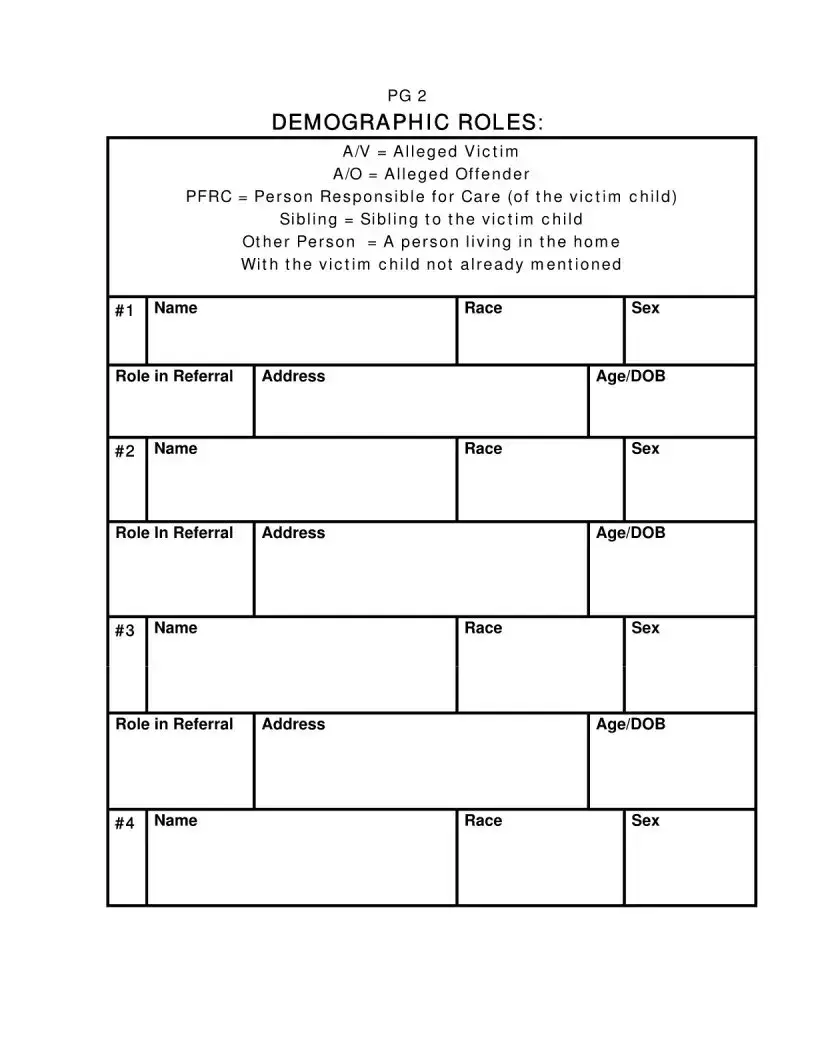
| Demographic Roles | Roles such as Alleged Victim, Alleged Offender, and Person Responsible for Care are defined on the form. |
| Governing Law | The Arkansas Child Abuse Reporting Act governs the use of this form. |
| Confidentiality | Information provided on this form is kept confidential to protect the involved parties. |
Filling out the Arkansas Child Abuse form is a critical step in ensuring the safety and well-being of children. Once you have completed the form, it will be submitted to the appropriate authorities for review and action. It's important to provide accurate and thorough information to facilitate the process.
What is the purpose of the Arkansas Child Abuse form?
The Arkansas Child Abuse form is designed for mandated reporters to report suspected child abuse. This form serves as a crucial tool in ensuring the safety and well-being of children. It collects essential information about the incident, the child, and the individuals involved, allowing authorities to investigate and take appropriate action.
Who qualifies as a mandated reporter?
Mandated reporters include professionals who work with children, such as teachers, healthcare providers, social workers, and law enforcement officers. These individuals are legally required to report any suspected child abuse they encounter in their professional capacity. If you’re unsure whether you qualify, it’s best to consult your organization’s policies or legal counsel.
How should I fill out the form?
When completing the form, it’s important to provide accurate and detailed information. You should include your name, title, and contact information as the reporter. Clearly describe the incident, including what happened, who was involved, and any injuries observed. Don’t forget to indicate the child’s current location and any safety concerns you may have. Remember, this form is for non-emergency situations only.
What happens after I submit the form?
Once the form is submitted, the appropriate authorities will review the information. They may follow up with you for additional details or clarification. Depending on the findings, an investigation may be initiated to ensure the child's safety. Your report can play a significant role in protecting a child from further harm.
Can I remain anonymous when reporting?
While the form does require your name and contact information, you can request confidentiality. However, providing your details can help investigators follow up for more information. If you have concerns about your safety or privacy, it’s advisable to discuss these with a legal professional or the agency to which you’re reporting.
What if I’m unsure whether the situation qualifies as abuse?
If you suspect that a child may be in danger but aren’t certain whether it constitutes abuse, it’s better to err on the side of caution. Reporting your concerns allows trained professionals to evaluate the situation. You can also seek guidance from child protection services or legal advisors to better understand your obligations and the signs of abuse.
Filling out the Arkansas Child Abuse form can be a daunting task, especially when the stakes are high. Unfortunately, many people make common mistakes that can hinder the reporting process. One frequent error is failing to complete all mandatory fields. The form clearly indicates which fields are required, but some individuals overlook these essential sections. Missing information can lead to delays in processing the report.
Another mistake often made is providing vague or incomplete narratives. The narrative section is crucial for conveying the details of the incident. It’s important to clearly describe what happened, who was involved, and any injuries the child may have sustained. A lack of detail can leave investigators without the necessary context to take appropriate action.
People sometimes forget to include their own contact information. The reporter’s name, title, and phone number are vital for follow-up questions or clarifications. Without this information, the investigation may stall, as investigators may have no way to reach the person who submitted the report.
Additionally, some individuals may not accurately describe the relationship between the victim and the alleged offender. Understanding this relationship can significantly affect the investigation. If this information is misrepresented or omitted, it could lead to misunderstandings about the dynamics involved in the situation.
Another common oversight is neglecting to indicate whether the mandated reporter witnessed the incident. This simple yes or no answer can provide critical insight into the reliability of the report. If the reporter did witness the incident, it adds weight to the claims being made.
People often forget to specify the location of the incident. Providing the exact place where the abuse occurred is essential for investigators. Without this detail, it may be challenging for authorities to gather evidence or speak to potential witnesses.
Some individuals also fail to mention any safety concerns for the child. If there are ongoing threats or risks to the child’s well-being, this information must be communicated clearly. It can help authorities prioritize their response and ensure the child’s safety.
Another mistake is not including information about any drug use. If drugs were involved in the incident, this can have significant implications for the child’s safety and the investigation. Omitting this detail can result in a lack of understanding of the full context of the situation.
Finally, it’s essential to remember that the form is intended for non-emergency situations. Some people mistakenly use it in urgent cases, which can lead to delays in addressing immediate threats. Knowing when to use this form versus when to contact emergency services is crucial for the safety of the child involved.
When dealing with child abuse cases in Arkansas, several forms and documents may accompany the Arkansas Child Abuse form. These documents help ensure that all necessary information is collected and reported appropriately. Here’s a list of commonly used forms:
Each of these documents plays a crucial role in the process of reporting and addressing child abuse. Ensuring that all forms are completed accurately can significantly impact the outcome for the child involved.
The Arkansas Child Abuse form serves a critical role in reporting suspected child abuse. Several other documents share similarities in purpose and structure, aimed at ensuring the safety and well-being of children. Here are nine such documents:
When filling out the Arkansas Child Abuse form, it is essential to approach the task with care and attention to detail. Here are some guidelines to consider:
Here are seven misconceptions about the Arkansas Child Abuse form:
Filling out the Arkansas Child Abuse form is a crucial step for mandated reporters. Here are some key takeaways to keep in mind:
Being thorough and accurate when filling out the Arkansas Child Abuse form is essential. Your diligence can make a significant difference in a child's safety and well-being.