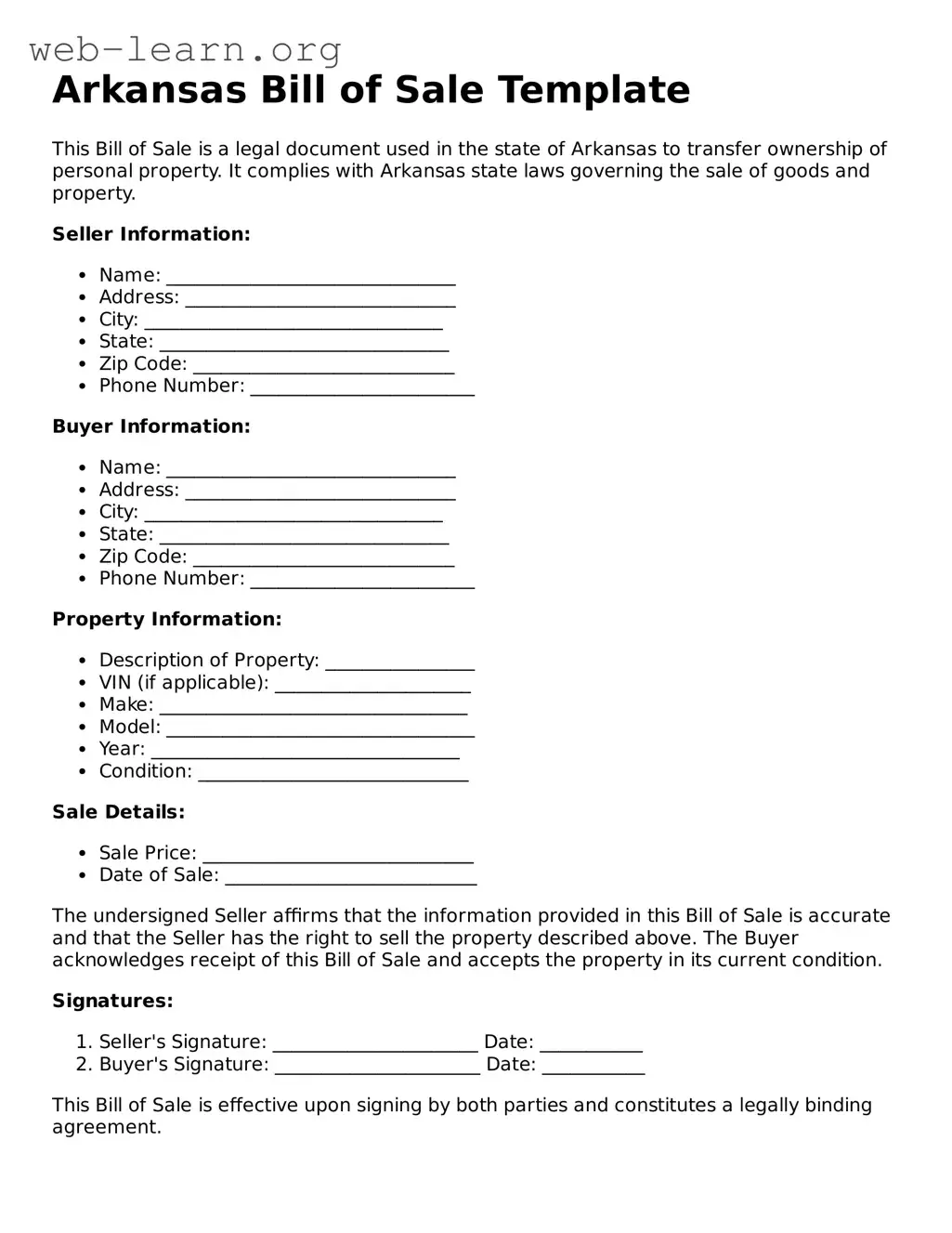
The Arkansas Bill of Sale form is an essential document for anyone involved in the buying or selling of personal property within the state. This form serves as a written record of the transaction, providing both the seller and the buyer with a clear understanding of the terms involved. It typically includes important details such as the names and addresses of both parties, a description of the item being sold, and the sale price. Additionally, the form may outline any warranties or guarantees related to the item, ensuring that both parties are aware of their rights and responsibilities. Having a properly completed Bill of Sale can protect both the buyer and seller in case of disputes or misunderstandings in the future. It is crucial to understand the significance of this document and to complete it accurately to avoid potential legal complications.
Arkansas Bill of Sale Template
This Bill of Sale is a legal document used in the state of Arkansas to transfer ownership of personal property. It complies with Arkansas state laws governing the sale of goods and property.
Seller Information:
Buyer Information:
Property Information:
Sale Details:
The undersigned Seller affirms that the information provided in this Bill of Sale is accurate and that the Seller has the right to sell the property described above. The Buyer acknowledges receipt of this Bill of Sale and accepts the property in its current condition.
Signatures:
This Bill of Sale is effective upon signing by both parties and constitutes a legally binding agreement.
| Fact Name | Details |
|---|---|
| Purpose | The Arkansas Bill of Sale form is used to document the transfer of ownership of personal property from one party to another. |
| Governing Law | This form is governed by the Arkansas Code Annotated, specifically Title 18, Chapter 12. |
| Types of Property | It can be used for various types of property, including vehicles, boats, and other tangible personal items. |
| Notarization | While notarization is not required, having the Bill of Sale notarized can provide additional legal protection. |
| Importance of Accurate Information | Filling out the form accurately is crucial, as it helps prevent disputes over ownership in the future. |
Filling out the Arkansas Bill of Sale form is a straightforward process that ensures you have a clear record of the transaction. Once you complete the form, you can proceed with the necessary steps to finalize the sale, such as transferring ownership and registering the item if applicable.
What is an Arkansas Bill of Sale?
An Arkansas Bill of Sale is a legal document that records the transfer of ownership of personal property from one person to another. This document serves as proof of the transaction and outlines the details of the sale.
What information is typically included in the Bill of Sale?
A Bill of Sale generally includes the following information:
Is a Bill of Sale required in Arkansas?
While a Bill of Sale is not legally required for every transaction, it is highly recommended. Having this document can help protect both the buyer and seller by providing proof of the sale and the terms agreed upon.
Can I use a generic Bill of Sale template?
Yes, you can use a generic Bill of Sale template. However, ensure it includes all necessary details specific to your transaction. Customizing the template to fit your situation is crucial for clarity and legal standing.
Do I need to have the Bill of Sale notarized?
Notarization is not required for a Bill of Sale in Arkansas. However, having it notarized can add an extra layer of authenticity and may be beneficial if disputes arise in the future.
What types of transactions require a Bill of Sale?
A Bill of Sale is commonly used for various transactions, including:
What should I do if I lose my Bill of Sale?
If you lose your Bill of Sale, you can create a new one. Make sure both parties agree to the terms again and sign the new document. Retain copies for your records to avoid future issues.
Can I use a Bill of Sale for a gift?
Yes, you can use a Bill of Sale for a gift. In this case, indicate that the item is being transferred as a gift, and note that no payment is involved. This helps document the transaction for both parties.
How long should I keep my Bill of Sale?
It’s advisable to keep your Bill of Sale for at least three to five years after the transaction. This timeframe can vary based on the type of property and any potential disputes that may arise.
Where can I find an Arkansas Bill of Sale form?
You can find Arkansas Bill of Sale forms online through various legal websites, or you may consult with a local legal professional. Ensure the form you choose complies with Arkansas laws and meets your specific needs.
Filling out the Arkansas Bill of Sale form can seem straightforward, but many individuals make common mistakes that could lead to complications later on. One frequent error is failing to include all necessary details about the item being sold. This includes the make, model, year, and VIN for vehicles, or a detailed description for other items. Omitting this information can create confusion and disputes down the line.
Another common mistake is not providing accurate seller and buyer information. It is essential to include full names, addresses, and contact information for both parties. Incomplete or incorrect details can lead to issues with ownership transfer and may hinder future transactions.
Many people also overlook the importance of signatures. Both the buyer and seller must sign the Bill of Sale for it to be legally binding. A missing signature can render the document ineffective, leaving both parties vulnerable to misunderstandings regarding the sale.
In addition, some individuals forget to include the date of the transaction. This date is crucial as it establishes when the sale took place and can affect the timeline for any warranties or guarantees associated with the item sold.
Another mistake is not considering the payment method. It is wise to specify how payment will be made—whether in cash, check, or another form. Failing to document this can lead to disputes over whether payment was received or not.
Additionally, people often neglect to keep a copy of the Bill of Sale for their records. Having a copy is important for both the buyer and seller, as it serves as proof of the transaction and can be useful for future reference, especially if any issues arise.
Finally, some individuals do not take the time to review the completed form thoroughly before submitting it. Errors can easily be overlooked, but a careful review can help catch mistakes that might otherwise cause problems later. Taking these steps can ensure a smoother transaction and protect the interests of both parties involved.
When completing a transaction in Arkansas, the Bill of Sale form is often accompanied by several other documents. These documents help to ensure that the sale is legally recognized and that both parties are protected. Below is a list of commonly used forms and documents that may be relevant in conjunction with the Arkansas Bill of Sale.
Utilizing these documents alongside the Arkansas Bill of Sale can facilitate a smooth transaction process. Each form plays a specific role in ensuring that both parties fulfill their legal obligations and protect their interests.
The Bill of Sale form shares similarities with several other documents that serve to transfer ownership or rights related to various assets. Below are four such documents:
When filling out the Arkansas Bill of Sale form, it's essential to ensure that all details are accurate and complete. Here are some important dos and don'ts to keep in mind:
When it comes to the Arkansas Bill of Sale form, several misconceptions can lead to confusion among buyers and sellers. Understanding these myths is essential for anyone involved in a transaction. Here’s a list of common misconceptions:
By dispelling these misconceptions, individuals can navigate the process of buying and selling with greater confidence. Understanding the purpose and requirements of the Arkansas Bill of Sale can lead to smoother transactions and fewer legal issues down the line.
When filling out and using the Arkansas Bill of Sale form, keep these key takeaways in mind:
Dealer Bill of Sale Template - It is often required by state laws for certain types of sales, particularly vehicles and boats.
Auto Bill of Sale Colorado - This document is often required for registering vehicles or other significant purchases.