In Arizona, planning for the future often involves considering how to transfer your property to loved ones after your passing. One effective tool for this purpose is the Transfer-on-Death Deed, a legal document that allows property owners to designate beneficiaries who will automatically inherit the property upon their death. This deed simplifies the transfer process, helping to avoid the lengthy and often costly probate process. By using this form, property owners retain full control over their property during their lifetime, with the ability to sell, lease, or otherwise manage it without any restrictions. The Transfer-on-Death Deed can apply to various types of real estate, including residential homes and vacant land, making it a versatile option for many individuals. Importantly, this deed must be properly executed and recorded to ensure that it is legally binding and effective. Understanding the nuances of this form can empower property owners to make informed decisions about their estate planning, ensuring that their wishes are honored and their loved ones are provided for in the future.
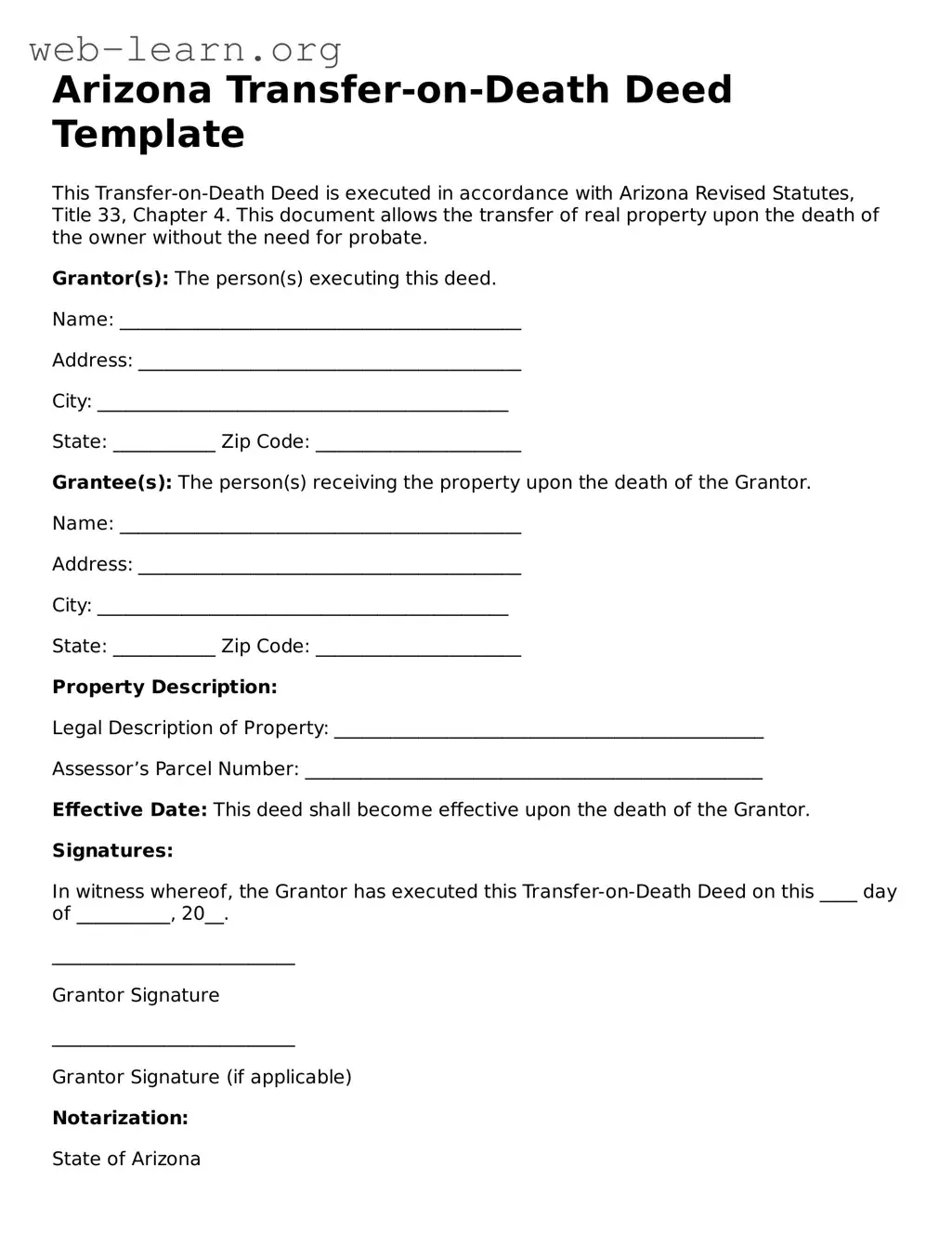
Arizona Transfer-on-Death Deed Template
This Transfer-on-Death Deed is executed in accordance with Arizona Revised Statutes, Title 33, Chapter 4. This document allows the transfer of real property upon the death of the owner without the need for probate.
Grantor(s): The person(s) executing this deed.
Name: ___________________________________________
Address: _________________________________________
City: ____________________________________________
State: ___________ Zip Code: ______________________
Grantee(s): The person(s) receiving the property upon the death of the Grantor.
Name: ___________________________________________
Address: _________________________________________
City: ____________________________________________
State: ___________ Zip Code: ______________________
Property Description:
Legal Description of Property: ______________________________________________
Assessor’s Parcel Number: _________________________________________________
Effective Date: This deed shall become effective upon the death of the Grantor.
Signatures:
In witness whereof, the Grantor has executed this Transfer-on-Death Deed on this ____ day of __________, 20__.
__________________________
Grantor Signature
__________________________
Grantor Signature (if applicable)
Notarization:
State of Arizona
County of _____________________
Subscribed and sworn before me this ____ day of __________, 20__.
__________________________
Notary Public
My commission expires: ________________
This document must be recorded with the county recorder in the county where the property is located to be effective.
| Fact Name | Description |
|---|---|
| Definition | An Arizona Transfer-on-Death Deed allows property owners to transfer real estate to beneficiaries upon their death without going through probate. |
| Governing Law | The Transfer-on-Death Deed is governed by Arizona Revised Statutes § 33-405. |
| Eligibility | Any individual who owns real property in Arizona can create a Transfer-on-Death Deed. |
| Execution Requirements | The deed must be signed by the property owner and notarized to be valid. |
| Revocation | A Transfer-on-Death Deed can be revoked at any time by the property owner, provided the revocation is executed properly. |
| Beneficiary Rights | Beneficiaries have no rights to the property until the owner's death, ensuring the owner retains full control during their lifetime. |
Once you have the Arizona Transfer-on-Death Deed form ready, you will need to complete it carefully. Make sure to have all necessary information on hand before you start filling it out. Follow these steps to ensure accuracy.
After completing these steps, keep a copy of the deed for your records. It’s essential to ensure that the document is properly filed to make the transfer effective upon death. Taking these actions now can help avoid complications later.
What is a Transfer-on-Death Deed?
A Transfer-on-Death Deed (TOD Deed) allows property owners in Arizona to transfer real estate to a beneficiary upon their death, without going through probate. This deed is effective immediately upon signing, but the transfer only occurs after the owner passes away.
Who can create a Transfer-on-Death Deed?
Any individual who owns real estate in Arizona can create a TOD Deed. The owner must be of sound mind and at least 18 years old. Joint owners can also designate a beneficiary, but both must agree on the deed's terms.
How do I complete a Transfer-on-Death Deed?
To complete a TOD Deed, you need to:
Can I change or revoke a Transfer-on-Death Deed?
Yes, you can change or revoke a TOD Deed at any time while you are alive. To do this, you must create a new deed that explicitly revokes the previous one or file a revocation form with the county recorder’s office. Make sure to follow the proper procedures to ensure your changes are legally recognized.
What happens if the beneficiary dies before me?
If the designated beneficiary dies before you, the property will not automatically go to them. Instead, you can either name a new beneficiary by creating a new TOD Deed or allow the property to pass according to your will or Arizona’s intestacy laws if you do not have a will.
Are there any tax implications with a Transfer-on-Death Deed?
Generally, there are no immediate tax implications when you create a TOD Deed. The property is not considered part of your estate for tax purposes until you pass away. However, the beneficiary may face capital gains taxes when they sell the property, depending on the property's value at the time of sale.
Is a Transfer-on-Death Deed the right choice for me?
A TOD Deed can be a good option if you want to avoid probate and ensure a smooth transfer of property to your beneficiaries. However, it may not be suitable for everyone. Consider your overall estate plan and consult with a legal advisor to determine the best approach for your situation.
Filling out a Transfer-on-Death (TOD) Deed in Arizona can be a straightforward process, but many people inadvertently make mistakes that can lead to complications down the line. Understanding these common pitfalls is crucial for ensuring that your wishes are honored after your passing.
One frequent mistake is not including all necessary information. When completing the TOD deed, it is vital to provide the full legal names of both the grantor and the beneficiaries. Omitting a middle name or using nicknames can create confusion and may invalidate the deed.
Another common error involves the description of the property. A vague or incorrect property description can lead to disputes among beneficiaries or even legal challenges. It’s essential to use the legal description found in the property’s title deed rather than a simple address.
Some individuals forget to sign the deed in the presence of a notary public. Arizona law requires that the TOD deed be notarized for it to be valid. Failing to complete this step can render the deed ineffective, leaving your property in limbo.
Additionally, people sometimes neglect to record the deed with the county recorder’s office. Even if the deed is properly completed and notarized, it must be filed to be enforceable. Without this crucial step, the deed may not be recognized when the time comes.
Another mistake occurs when individuals attempt to name multiple beneficiaries without clear instructions. If you designate more than one beneficiary but fail to specify how the property should be divided, it can lead to disputes among heirs. Clear language is essential to avoid confusion.
Some people also overlook the potential tax implications of a TOD deed. While the transfer itself may not trigger immediate taxes, beneficiaries should be aware of any potential inheritance or property tax liabilities that could arise later. Consulting with a tax professional can provide clarity on this issue.
Another common oversight is failing to update the deed after significant life changes. Marriages, divorces, or the death of a beneficiary can affect how the property should be transferred. Keeping the deed current ensures that it reflects your most recent wishes.
Moreover, individuals sometimes mistakenly believe that a TOD deed supersedes a will. While a TOD deed does take precedence over a will for the specific property it covers, it’s important to ensure that both documents work together harmoniously to avoid conflicts.
Lastly, many people do not seek legal advice when drafting their TOD deed. Although it may seem simple, the nuances of property law can be complex. Consulting with a legal professional can help ensure that all aspects are correctly addressed, providing peace of mind that your intentions will be honored.
When dealing with property transfers in Arizona, especially when utilizing a Transfer-on-Death Deed, it is essential to understand the other forms and documents that may accompany this process. Each of these documents serves a specific purpose and can help ensure that your wishes are clearly articulated and legally recognized. Below is a list of common forms that you might encounter alongside the Transfer-on-Death Deed.
Understanding these documents can help you navigate the complexities of property transfer and estate planning. Each form plays a role in ensuring that your intentions are respected and that the process is as smooth as possible for your loved ones.
The Transfer-on-Death Deed (TODD) form is a legal instrument that allows an individual to transfer property to a designated beneficiary upon their death without the need for probate. Several other documents serve similar purposes in estate planning and property transfer. The following list outlines five such documents and their similarities to the Transfer-on-Death Deed:
When filling out the Arizona Transfer-on-Death Deed form, there are important guidelines to follow. Adhering to these can help ensure that your intentions are clearly expressed and legally valid. Below are five things you should and shouldn't do.
By following these guidelines, you can help ensure that your Transfer-on-Death Deed is executed smoothly and in accordance with Arizona law. Taking these steps can provide peace of mind for you and your loved ones.
Understanding the Arizona Transfer-on-Death Deed can help property owners make informed decisions about their estate planning. However, several misconceptions often arise regarding this legal tool. Here are five common misunderstandings:
By clarifying these misconceptions, property owners can better navigate their estate planning options and ensure their wishes are honored. It's always a good idea to consult with a legal professional to understand the best approach for your unique situation.
Filling out and using the Arizona Transfer-on-Death Deed (TOD) form can be a straightforward way to transfer property upon death without going through probate. Here are some key takeaways to keep in mind:
Understanding these points can help individuals navigate the process of using a Transfer-on-Death Deed effectively, ensuring their property is transferred according to their wishes.
Petition for Possession Louisiana - Using a Transfer-on-Death Deed can provide reassurance for both the owner and beneficiaries.
Problems With Transfer on Death Deeds in Indiana - Beneficiaries can receive the property free of any debts or claims against the estate.
Problems With Transfer on Death Deeds California - Some states have specific forms for Transfer-on-Death Deeds.
Transfer on Death Deed Florida Form - Individuals should review their estate plans periodically to ensure the deed remains relevant.