Homepage Attorney-Approved Real Estate Purchase Agreement Template Attorney-Approved Real Estate Purchase Agreement Document for the State of Arizona
Outline

In the vibrant and ever-evolving Arizona real estate market, the Real Estate Purchase Agreement (REPA) serves as a crucial document that facilitates the buying and selling process. This form outlines the essential terms and conditions agreed upon by both the buyer and seller, ensuring clarity and mutual understanding. Key components of the REPA include the purchase price, financing details, and contingencies, which protect the interests of both parties. Additionally, it specifies the closing date and any applicable disclosures, such as property condition and title issues. By addressing these elements, the agreement helps to mitigate potential disputes and fosters a smoother transaction. Understanding the intricacies of this form is vital for anyone involved in real estate transactions in Arizona, as it lays the groundwork for a successful deal and ensures compliance with state laws.

Sample - Arizona Real Estate Purchase Agreement Form

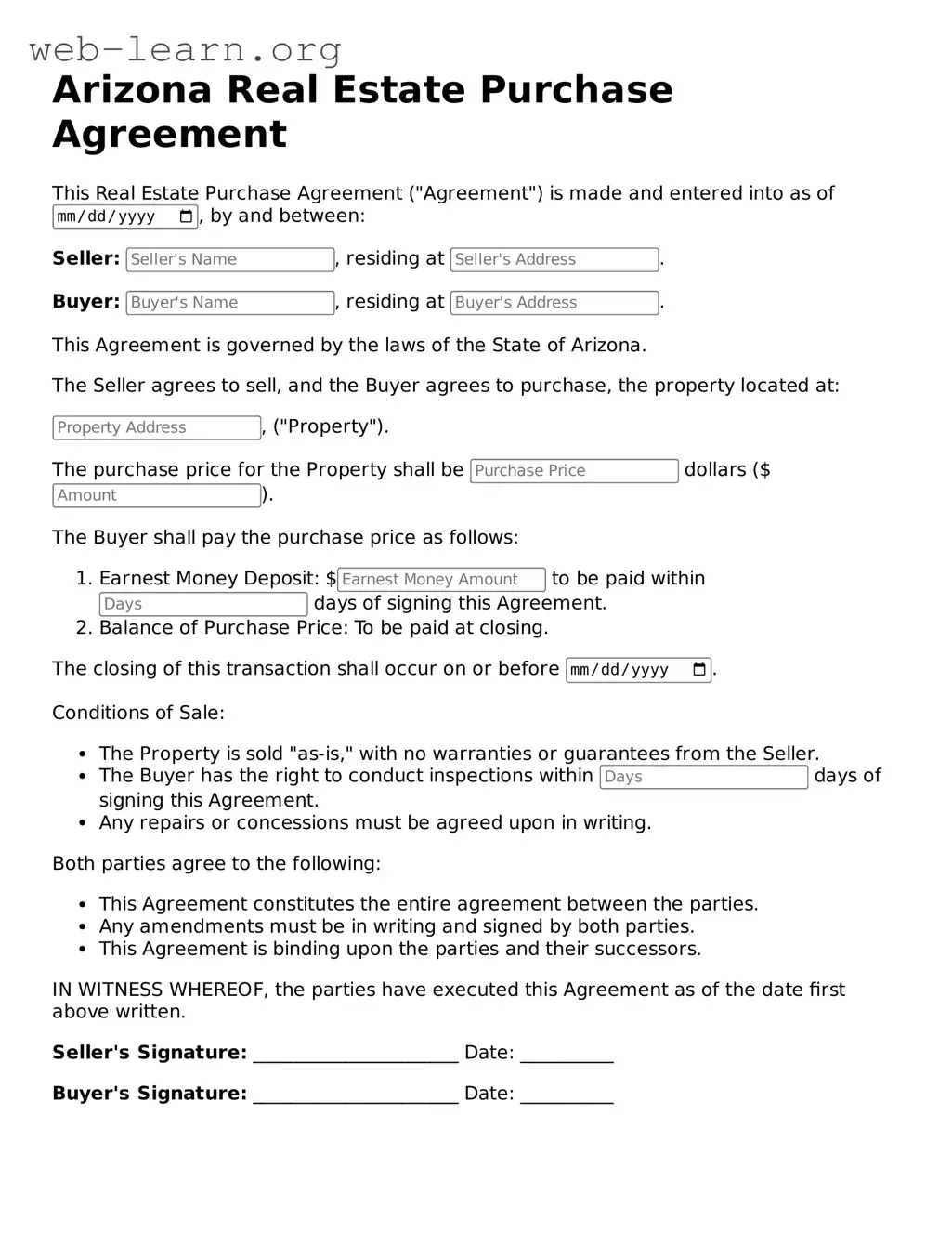
Arizona Real Estate Purchase Agreement

This Real Estate Purchase Agreement ("Agreement") is made and entered into as of , by and between:

Seller: , residing at .

Buyer: , residing at .

This Agreement is governed by the laws of the State of Arizona.

The Seller agrees to sell, and the Buyer agrees to purchase, the property located at:

, ("Property").

The purchase price for the Property shall be dollars ($).

The Buyer shall pay the purchase price as follows:

  1. Earnest Money Deposit: $ to be paid within days of signing this Agreement.
  2. Balance of Purchase Price: To be paid at closing.

The closing of this transaction shall occur on or before .

Conditions of Sale:

  • The Property is sold "as-is," with no warranties or guarantees from the Seller.
  • The Buyer has the right to conduct inspections within days of signing this Agreement.
  • Any repairs or concessions must be agreed upon in writing.

Both parties agree to the following:

  • This Agreement constitutes the entire agreement between the parties.
  • Any amendments must be in writing and signed by both parties.
  • This Agreement is binding upon the parties and their successors.

IN WITNESS WHEREOF, the parties have executed this Agreement as of the date first above written.

Seller's Signature: ______________________ Date: __________

Buyer's Signature: ______________________ Date: __________

File Characteristics

Fact Name Description
Governing Law The Arizona Real Estate Purchase Agreement is governed by Arizona state law.
Parties Involved The agreement typically involves a buyer and a seller, each of whom must be clearly identified.
Property Description A detailed description of the property being sold is required, including the address and legal description.
Purchase Price The agreement must specify the total purchase price and any earnest money deposit required.
Contingencies Buyers may include contingencies such as financing, inspections, or the sale of another property.
Closing Date The agreement should outline the anticipated closing date, which is the date of the property transfer.
Disclosures Sellers are required to disclose any known issues with the property, such as structural problems or environmental hazards.
Signatures Both parties must sign the agreement for it to be legally binding, indicating their acceptance of the terms.

Detailed Guide for Filling Out Arizona Real Estate Purchase Agreement

Filling out the Arizona Real Estate Purchase Agreement form is an essential step in the home buying process. This form outlines the terms and conditions of the purchase, ensuring that both the buyer and seller are on the same page. Once completed, the agreement will guide the transaction and serve as a reference point for all parties involved.

  1. Begin by entering the date at the top of the form. This establishes when the agreement is being made.
  2. Provide the names and addresses of both the buyer and the seller. Ensure that all names are spelled correctly to avoid any confusion later.
  3. Fill in the property address. Include the street number, street name, city, state, and ZIP code.
  4. Specify the purchase price. This is the amount the buyer agrees to pay for the property.
  5. Indicate the amount of earnest money. This is the deposit the buyer will make to show their commitment to the purchase.
  6. Outline any contingencies. These are conditions that must be met for the sale to proceed, such as financing or inspections.
  7. Detail the closing date. This is when the ownership of the property will officially transfer to the buyer.
  8. Include any additional terms or conditions that are relevant to the agreement. This could involve repairs, inclusions, or other specific requests.
  9. Both parties should sign and date the agreement at the designated areas. This signifies that both the buyer and seller agree to the terms laid out in the document.

After completing the form, it’s important to review everything carefully. Ensure all information is accurate and that both parties understand the terms before proceeding with the next steps in the real estate transaction.

Obtain Answers on Arizona Real Estate Purchase Agreement

  1. What is the Arizona Real Estate Purchase Agreement?

    The Arizona Real Estate Purchase Agreement is a legally binding document that outlines the terms and conditions of a real estate transaction in Arizona. This agreement is used when a buyer intends to purchase a property from a seller. It includes important details such as the purchase price, financing terms, and contingencies that must be met for the sale to proceed.

  2. What key components are included in the agreement?

    The agreement typically includes the following key components:

    • Parties Involved: Names and contact information of the buyer and seller.
    • Property Description: A detailed description of the property being sold, including the address and legal description.
    • Purchase Price: The agreed-upon price for the property.
    • Contingencies: Conditions that must be satisfied for the sale to go through, such as inspections or financing approval.
    • Closing Date: The date when the sale will be finalized and ownership transferred.
  3. How does the process work after signing the agreement?

    Once both parties sign the agreement, the following steps typically occur:

    • The buyer may submit an earnest money deposit to show commitment to the purchase.
    • Both parties will work to meet any contingencies outlined in the agreement.
    • A title company or attorney will conduct a title search to ensure there are no issues with the property title.
    • Finally, a closing date will be set, where both parties will sign the necessary documents to complete the sale.
  4. Can the agreement be modified after it is signed?

    Yes, the agreement can be modified after it is signed, but both parties must agree to the changes. Any modifications should be documented in writing and signed by both the buyer and seller to ensure clarity and legal enforceability. It is advisable to consult with a real estate professional or attorney when making changes to the agreement.

Common mistakes

Filling out the Arizona Real Estate Purchase Agreement form can be daunting. Many people make common mistakes that can lead to complications later on. One frequent error is not providing accurate property details. Buyers and sellers must ensure that the legal description of the property is correct. A simple mistake here can cause confusion and delay the transaction.

Another mistake is overlooking the purchase price. It's essential to clearly state the agreed-upon amount. If this is left blank or incorrectly filled out, it can lead to disputes. Always double-check the numbers to avoid any misunderstandings.

Many individuals forget to include important contingencies. These are conditions that must be met for the sale to proceed. Common contingencies include financing, inspections, and appraisals. Without them, buyers may find themselves stuck in a deal that doesn’t work for them.

Additionally, some people fail to specify the closing date. This date is crucial for both parties. If it’s not clearly defined, it can lead to frustration and uncertainty. Make sure to agree on a date and include it in the agreement.

Another common oversight is not signing the document properly. Both parties need to sign and date the agreement. Missing signatures can render the document invalid. Always ensure that everyone involved has signed before moving forward.

Lastly, not seeking legal advice can be a significant mistake. While the form may seem straightforward, the implications of errors can be serious. Consulting with a real estate professional or attorney can provide peace of mind and help navigate any complexities.

Documents used along the form

When engaging in real estate transactions in Arizona, several forms and documents complement the Arizona Real Estate Purchase Agreement. These documents help clarify terms, outline responsibilities, and ensure compliance with state laws. Below is a list of commonly used forms that may accompany the purchase agreement.

  • Seller's Disclosure Statement: This document provides detailed information about the property's condition, including any known defects or issues. It is essential for transparency and helps buyers make informed decisions.
  • Counteroffer Form: If the seller wishes to modify the terms of the initial offer, a counteroffer form is used. This document outlines the new terms and allows negotiations to continue.
  • Lead-Based Paint Disclosure: Required for homes built before 1978, this form informs buyers about potential lead hazards. Sellers must disclose any known lead-based paint or related hazards.
  • Buyer's Inspection Notice: This document allows buyers to formally request inspections of the property. It can include requests for repairs or further evaluations based on inspection findings.
  • Escrow Agreement: This agreement outlines the terms under which an escrow agent will hold funds and documents until the transaction is completed. It protects both parties during the closing process.
  • Title Report: A title report provides information about the property's ownership history and any liens or encumbrances. This document is crucial for ensuring clear title transfer.
  • Closing Disclosure: This document outlines the final terms of the loan, including the costs associated with the purchase. It must be provided to buyers at least three days before closing.

Understanding these documents can significantly enhance the real estate transaction process. Each form plays a vital role in ensuring that both buyers and sellers are protected and informed throughout the process.

Similar forms

  • Lease Agreement: This document outlines the terms under which a landlord allows a tenant to occupy property. Similar to a Real Estate Purchase Agreement, it specifies the duration of the agreement, payment details, and obligations of both parties.
  • Sales Contract: A sales contract is used in various transactions, including the sale of goods and services. Like a Real Estate Purchase Agreement, it details the terms of the sale, including price, delivery, and conditions for transfer of ownership.
  • Option to Purchase Agreement: This document grants a buyer the right to purchase property at a later date. It shares similarities with the Real Estate Purchase Agreement by outlining the price and terms, although it is contingent upon the buyer exercising the option.
  • Purchase and Sale Agreement: Often used interchangeably with the Real Estate Purchase Agreement, this document outlines the terms for the sale of real property, including contingencies, closing dates, and any required disclosures.
  • Joint Venture Agreement: This document is used when two or more parties collaborate on a real estate project. It resembles a Real Estate Purchase Agreement in that it defines each party's contributions, responsibilities, and profit-sharing arrangements.
  • Real Estate Listing Agreement: This agreement is between a property owner and a real estate agent. It details the agent's responsibilities and the terms of the sale, similar to a Real Estate Purchase Agreement, but focuses more on the marketing and sale process rather than the sale itself.

Dos and Don'ts

When filling out the Arizona Real Estate Purchase Agreement form, it’s crucial to approach the process with care. Here’s a list of things you should and shouldn’t do to ensure a smooth transaction.

  • Do read the entire form carefully before filling it out. Understanding each section is essential.
  • Do provide accurate information. Double-check names, addresses, and property details to avoid complications later.
  • Do consult with a real estate agent or attorney if you have questions. Their expertise can be invaluable.
  • Do sign and date the agreement where required. An unsigned document may not be legally binding.
  • Don't leave any sections blank unless instructed. Missing information can lead to delays or misunderstandings.
  • Don't rush through the process. Take your time to ensure everything is filled out correctly.
  • Don't ignore contingencies. Clearly outline any conditions that must be met for the sale to proceed.
  • Don't forget to keep copies of the signed agreement. Having a record is important for your files.

By following these guidelines, you can navigate the Arizona Real Estate Purchase Agreement form with confidence and clarity.

Misconceptions

Understanding the Arizona Real Estate Purchase Agreement (REPA) form is crucial for anyone involved in real estate transactions in the state. However, several misconceptions can lead to confusion. Here are seven common misconceptions about the Arizona REPA:

  1. The REPA is a one-size-fits-all document. Many believe that the REPA can be used for any real estate transaction without modifications. In reality, each transaction is unique and may require specific terms or conditions to be added or adjusted.
  2. Signing the REPA is the final step in the buying process. Some assume that once the REPA is signed, the deal is done. However, the agreement is just the beginning. There are still inspections, financing, and other contingencies that need to be addressed.
  3. The REPA does not allow for negotiations. There is a misconception that the terms in the REPA are set in stone. In fact, buyers and sellers can negotiate various aspects, such as price, closing costs, and repair requests.
  4. Only real estate agents can fill out the REPA. While real estate agents are trained to complete these forms, buyers and sellers can also fill out the REPA themselves. However, it is advisable to seek guidance to ensure accuracy.
  5. Once the REPA is signed, it cannot be changed. Some people think that any changes to the REPA after signing are impossible. In truth, amendments can be made if both parties agree to the changes in writing.
  6. The REPA guarantees a successful sale. Signing the REPA does not guarantee that the sale will go through. Issues such as financing problems or inspection findings can derail the transaction.
  7. The REPA is only for residential properties. Many assume that the REPA is limited to residential transactions. However, it can also be used for commercial properties, though additional considerations may apply.

Clarifying these misconceptions can help buyers and sellers navigate the real estate process more effectively. Understanding the nuances of the Arizona REPA is essential for a successful transaction.

Key takeaways

When filling out and utilizing the Arizona Real Estate Purchase Agreement form, several key points should be kept in mind to ensure a smooth transaction. Below are essential takeaways that can guide both buyers and sellers through the process.

  • Understand the Basics: Familiarize yourself with the structure of the agreement. It typically includes details about the property, purchase price, and terms of sale.
  • Accurate Information: Ensure that all information provided is accurate. Mistakes can lead to disputes or delays in the transaction.
  • Contingencies: Be aware of contingencies that can protect both parties. Common contingencies include financing, inspections, and appraisals.
  • Deadlines: Pay attention to deadlines outlined in the agreement. Timely responses and actions are crucial for a successful closing.
  • Legal Considerations: Recognize the legal implications of the agreement. Both parties should understand their rights and obligations under Arizona law.
  • Negotiation: Use the agreement as a negotiation tool. Terms can often be adjusted to better suit the needs of both the buyer and seller.
  • Consult Professionals: Engage real estate professionals or legal advisors. Their expertise can provide valuable insights and help avoid potential pitfalls.
  • Final Review: Conduct a thorough review of the completed agreement before signing. Ensure that all terms are clear and acceptable to both parties.

By keeping these takeaways in mind, individuals can navigate the complexities of the Arizona Real Estate Purchase Agreement more effectively, leading to a more satisfactory experience in their real estate transactions.