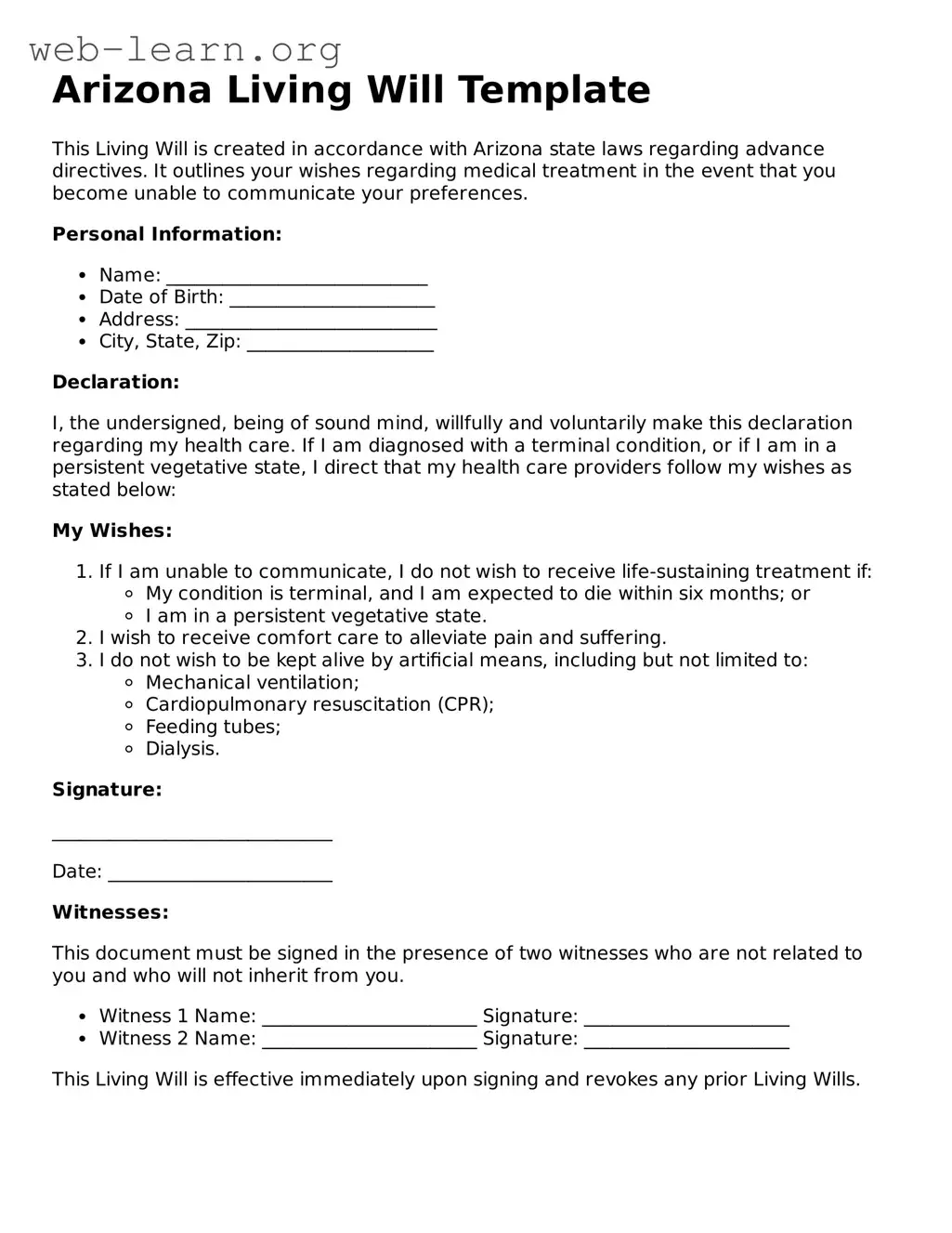
In Arizona, the Living Will form serves as a crucial tool for individuals to express their healthcare preferences in the event they become unable to communicate their wishes. This legal document outlines specific medical treatments one would or would not want under certain circumstances, particularly at the end of life. It empowers individuals to make decisions about life-sustaining measures, such as resuscitation efforts and artificial nutrition, ensuring that their values and desires are respected. The form must be signed in the presence of two witnesses or a notary public to be valid, which adds a layer of accountability. By completing a Living Will, individuals can alleviate the burden on family members and healthcare providers, guiding them in making difficult decisions during emotionally charged situations. Understanding the nuances of this form is essential for anyone looking to take charge of their healthcare decisions and ensure that their wishes are honored in times of crisis.
Arizona Living Will Template
This Living Will is created in accordance with Arizona state laws regarding advance directives. It outlines your wishes regarding medical treatment in the event that you become unable to communicate your preferences.
Personal Information:
Declaration:
I, the undersigned, being of sound mind, willfully and voluntarily make this declaration regarding my health care. If I am diagnosed with a terminal condition, or if I am in a persistent vegetative state, I direct that my health care providers follow my wishes as stated below:
My Wishes:
Signature:
______________________________
Date: ________________________
Witnesses:
This document must be signed in the presence of two witnesses who are not related to you and who will not inherit from you.
This Living Will is effective immediately upon signing and revokes any prior Living Wills.
| Fact Name | Description |
|---|---|
| Definition | A Living Will is a legal document that outlines an individual's wishes regarding medical treatment in case they become unable to communicate their preferences. |
| Governing Law | The Arizona Living Will is governed by Arizona Revised Statutes, Title 36, Chapter 32, specifically sections 36-3201 to 36-3220. |
| Eligibility | Any adult who is at least 18 years old and of sound mind can create a Living Will in Arizona. |
| Witness Requirement | The document must be signed in the presence of two witnesses who are not related to the individual or entitled to any part of their estate. |
| Revocation | An individual can revoke their Living Will at any time by destroying the document or by informing their healthcare provider. |
| Healthcare Proxy | A Living Will can be paired with a Healthcare Power of Attorney, which designates someone to make medical decisions on behalf of the individual. |
| Specific Instructions | Individuals can specify their preferences regarding life-sustaining treatments, such as resuscitation and artificial nutrition. |
| Storage and Accessibility | It is advisable to keep the Living Will in a safe place and provide copies to family members and healthcare providers to ensure accessibility when needed. |
Filling out the Arizona Living Will form is an important step in expressing your healthcare wishes. After completing the form, you will need to ensure that it is signed and witnessed properly to make it legally binding. Following the steps below will guide you through the process of filling out the form accurately.
What is a Living Will in Arizona?
A Living Will is a legal document that outlines a person's wishes regarding medical treatment in case they become unable to communicate their preferences. This document specifically addresses end-of-life care and can guide healthcare providers and family members in making decisions that align with the individual's values and desires.
Who can create a Living Will in Arizona?
Any adult who is at least 18 years old and of sound mind can create a Living Will in Arizona. It is important that the individual understands the implications of the document and what it entails.
What should be included in a Living Will?
A Living Will should clearly state the individual's preferences regarding medical treatments. Common topics include:
How do I create a Living Will in Arizona?
To create a Living Will, you can use a template or form that complies with Arizona law. It is essential to fill out the form completely and accurately. After completing the document, it must be signed in the presence of two witnesses or a notary public. This step is crucial for ensuring the document is legally valid.
Can I change or revoke my Living Will?
Yes, you can change or revoke your Living Will at any time as long as you are of sound mind. To make changes, you should create a new Living Will that clearly states your updated preferences. It is advisable to inform your healthcare providers and family members about any changes to ensure they are aware of your current wishes.
Is a Living Will the same as a Durable Power of Attorney for Healthcare?
No, a Living Will and a Durable Power of Attorney for Healthcare are different documents. A Living Will focuses on your wishes regarding medical treatment, while a Durable Power of Attorney allows you to appoint someone to make healthcare decisions on your behalf if you are unable to do so. Both documents can work together to ensure your healthcare preferences are honored.
Where should I keep my Living Will?
It is important to keep your Living Will in a safe but accessible place. You may want to provide copies to your healthcare providers, family members, and anyone you designate as your healthcare agent. This ensures that your wishes can be easily found and followed when necessary.
What happens if I do not have a Living Will?
If you do not have a Living Will, healthcare providers will follow standard medical procedures, and decisions may be made by family members or legal representatives based on what they believe you would have wanted. This can lead to confusion and disagreements among family members during difficult times.
Filling out an Arizona Living Will form is an important step in planning for future medical care. However, many people make mistakes that can lead to confusion or unintended consequences. One common mistake is not being specific enough about treatment preferences. For example, individuals may state they do not want life-sustaining treatment but fail to clarify what that means for specific situations. This lack of detail can lead to uncertainty for healthcare providers and loved ones during critical moments.
Another frequent error is failing to properly date the document. A Living Will must be dated to ensure it reflects the most current wishes of the individual. Without a date, healthcare providers may question the validity of the document, which could result in unwanted treatments being administered. Always remember to include the date when signing the form.
People also often overlook the importance of signatures. A Living Will requires the signatures of the individual creating it, and in some cases, witnesses or a notary may be needed. If the necessary signatures are missing, the document may not be considered valid. It’s essential to follow the signing requirements closely to ensure the document holds up when needed.
Additionally, individuals sometimes forget to discuss their wishes with family members or healthcare proxies. A Living Will is not just a piece of paper; it’s a reflection of one’s values and desires regarding medical treatment. Open conversations can help avoid misunderstandings and ensure that loved ones are prepared to honor those wishes.
Finally, many people fail to keep their Living Will updated. Life circumstances and personal beliefs can change over time. Regularly reviewing and revising the document ensures that it accurately represents current wishes. Neglecting to do so can lead to a situation where the Living Will no longer aligns with the individual’s intentions.
A Living Will is an essential document for expressing your wishes regarding medical treatment in the event you become unable to communicate. However, several other forms and documents often accompany it to ensure comprehensive planning for healthcare and legal matters. Here is a list of related documents that can complement your Arizona Living Will.
Each of these documents plays a crucial role in ensuring that your healthcare and legal wishes are respected. Having them in place can provide peace of mind for you and your loved ones during challenging times.
A Living Will is a crucial document that outlines an individual's wishes regarding medical treatment in situations where they may be unable to communicate those wishes themselves. Several other documents serve similar purposes, providing guidance on healthcare decisions. Here are six documents that are comparable to a Living Will:
When completing the Arizona Living Will form, it's essential to approach the task with care. Here are ten important guidelines to follow:
By following these guidelines, you can ensure that your Living Will accurately reflects your wishes and provides clarity for your loved ones and healthcare providers.
Understanding the Arizona Living Will form is essential for individuals planning their healthcare preferences. However, several misconceptions persist regarding its purpose and functionality. Below is a list of six common misconceptions:
A Living Will specifically addresses end-of-life decisions and the types of medical treatment one wishes to receive or refuse. In contrast, a Durable Power of Attorney for Healthcare appoints someone to make healthcare decisions on your behalf if you are unable to do so.
The Arizona Living Will can address a range of medical conditions, not just terminal illnesses. It provides guidance on treatment preferences in various scenarios, including irreversible conditions or persistent vegetative states.
Individuals can revoke or modify their Living Will at any time, as long as they are mentally competent. It is advisable to review and update the document periodically to reflect any changes in personal values or medical circumstances.
Anyone over the age of 18 can benefit from a Living Will. Unexpected medical emergencies can occur at any age, making it important for all adults to consider their healthcare preferences.
While healthcare providers are obligated to consider the Living Will, they may also take into account other factors, such as the patient's current medical condition and overall prognosis. This can sometimes lead to variations in treatment based on clinical judgment.
The Arizona Living Will is a legally recognized document that healthcare providers must honor, provided it meets state requirements. This legal status helps ensure that an individual's healthcare preferences are respected.
Clarifying these misconceptions can empower individuals to make informed decisions about their healthcare and end-of-life preferences.
Filling out a Living Will in Arizona is an important step in ensuring that your healthcare preferences are respected in the event that you cannot communicate them yourself. Here are some key takeaways to keep in mind:
Living Will Free Forms - A Living Will is a way to maintain control over your medical care preferences.
Arkansas Medical Power of Attorney - A Living Will can be created independently or with the help of an attorney.
Does an Advance Directive Need to Be Notarized - A Living Will can help ensure that your wishes are honored even in the absence of your verbal consent.