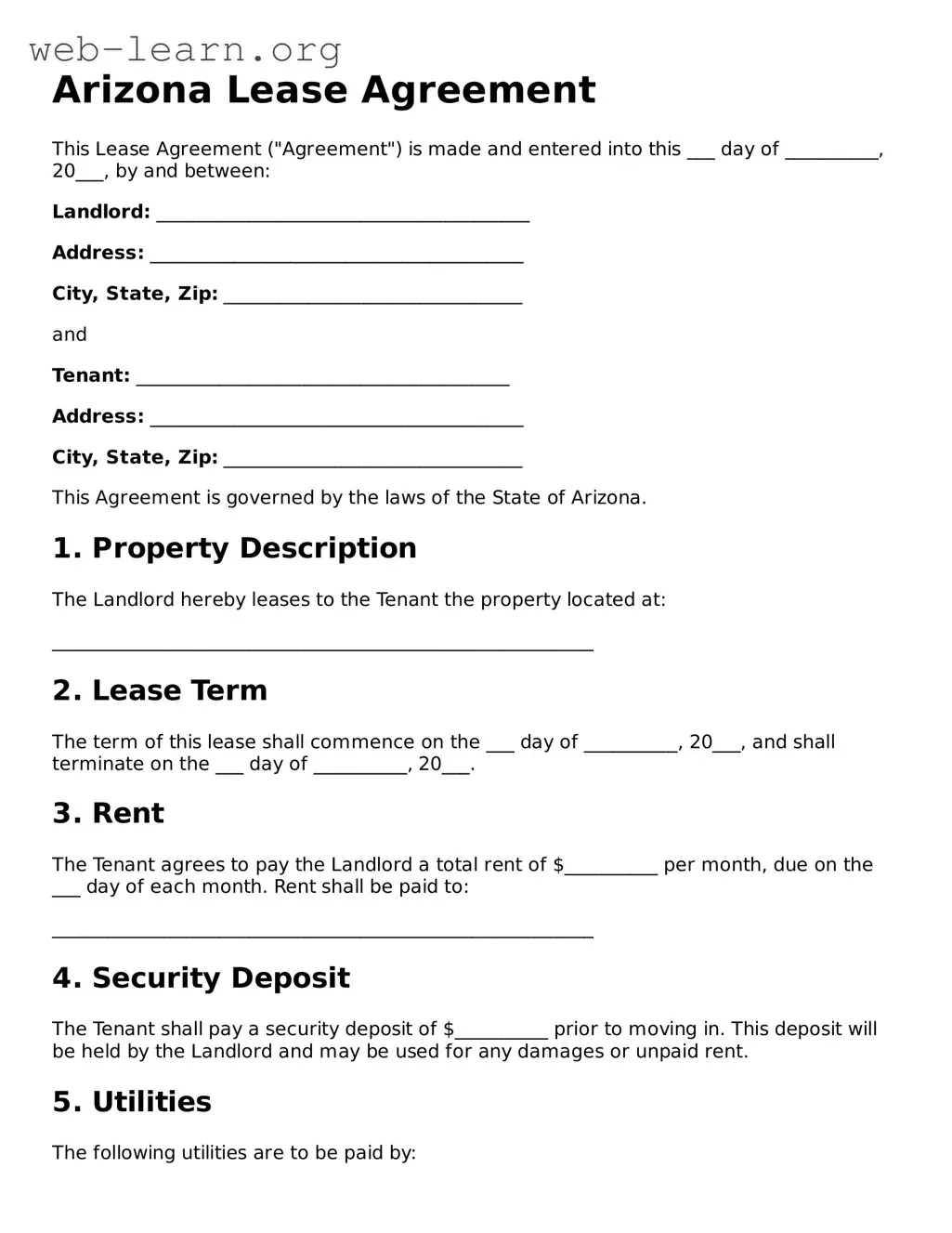
The Arizona Lease Agreement form serves as a critical document in the realm of residential and commercial leasing, ensuring that both landlords and tenants understand their rights and obligations. This legally binding agreement outlines essential terms such as the duration of the lease, rental payment details, security deposits, and maintenance responsibilities. It also addresses important aspects like property use, rules regarding pets, and the conditions under which the lease may be terminated. By clearly delineating these parameters, the form helps to mitigate disputes and fosters a transparent relationship between the parties involved. Additionally, the Arizona Lease Agreement may include provisions for late fees, utilities, and modifications to the property, providing a comprehensive framework that caters to various leasing scenarios. Understanding the intricacies of this form is vital for both parties to ensure compliance with state laws and to promote a harmonious living or working environment.
Arizona Lease Agreement
This Lease Agreement ("Agreement") is made and entered into this ___ day of __________, 20___, by and between:
Landlord: ________________________________________
Address: ________________________________________
City, State, Zip: ________________________________
and
Tenant: ________________________________________
Address: ________________________________________
City, State, Zip: ________________________________
This Agreement is governed by the laws of the State of Arizona.
1. Property Description
The Landlord hereby leases to the Tenant the property located at:
__________________________________________________________
2. Lease Term
The term of this lease shall commence on the ___ day of __________, 20___, and shall terminate on the ___ day of __________, 20___.
3. Rent
The Tenant agrees to pay the Landlord a total rent of $__________ per month, due on the ___ day of each month. Rent shall be paid to:
__________________________________________________________
4. Security Deposit
The Tenant shall pay a security deposit of $__________ prior to moving in. This deposit will be held by the Landlord and may be used for any damages or unpaid rent.
5. Utilities
The following utilities are to be paid by:
6. Maintenance and Repairs
The Tenant agrees to keep the property clean and in good condition. Any necessary repairs should be reported to the Landlord promptly.
7. Use of Property
The property shall be used solely for residential purposes. The Tenant shall not engage in any illegal activities on the premises.
8. Termination
Either party may terminate this Agreement by providing written notice of ___ days to the other party.
9. Governing Law
This Agreement shall be governed by and construed in accordance with the laws of the State of Arizona.
10. Signatures
By signing below, both parties agree to the terms of this Lease Agreement.
Landlord Signature: ___________________________ Date: _______________
Tenant Signature: ____________________________ Date: _______________
| Fact Name | Details |
|---|---|
| Governing Law | The Arizona Lease Agreement is governed by Arizona state law. |
| Types of Leases | It can be used for residential, commercial, and agricultural leases. |
| Required Information | Landlord and tenant names, property address, and lease term must be included. |
| Security Deposit | Arizona law limits the security deposit to one and a half months' rent for residential leases. |
| Disclosure Requirements | Landlords must disclose any known lead-based paint hazards for properties built before 1978. |
| Termination Notice | Notice periods for lease termination vary based on the lease duration and type. |
| Local Ordinances | Local laws may impose additional requirements on lease agreements, so check local regulations. |
Filling out the Arizona Lease Agreement form is a straightforward process that requires attention to detail. Completing this form accurately is essential for establishing clear terms between the landlord and tenant. Follow the steps below to ensure all necessary information is provided.
After completing the form, review it carefully for any errors or omissions. Both parties should keep a signed copy for their records. This will help ensure a smooth rental experience.
An Arizona Lease Agreement is a legal document that outlines the terms and conditions between a landlord and a tenant for renting a residential property in Arizona. This agreement specifies the rights and responsibilities of both parties, including the duration of the lease, rental amount, and rules regarding the property.
A comprehensive Arizona Lease Agreement typically includes the following elements:
Lease terms in Arizona can vary widely. Many leases are for a fixed term of one year, but month-to-month agreements are also common. It’s essential to choose a term that aligns with your needs and plans.
Generally, a landlord cannot increase rent during a fixed-term lease unless the lease agreement explicitly allows it. For month-to-month leases, the landlord must provide proper notice, usually 30 days, before raising the rent.
A security deposit is a sum of money collected by the landlord to cover potential damages or unpaid rent. In Arizona, landlords can charge up to one and a half times the monthly rent as a security deposit. However, this amount must be clearly stated in the lease agreement.
If a tenant wishes to break the lease early, they may be subject to penalties as outlined in the lease agreement. Common consequences include forfeiting the security deposit or having to pay rent until a new tenant is found. It's always best to communicate with the landlord and review the lease terms.
Yes, Arizona has specific laws that govern lease agreements, primarily found in the Arizona Residential Landlord and Tenant Act. These laws cover various aspects, including tenant rights, landlord responsibilities, and eviction processes. Familiarizing yourself with these laws can help ensure a smooth rental experience.
Subleasing is generally allowed, but it depends on the terms outlined in the lease agreement. Some landlords may require written consent before a tenant can sublease the property. Always check the lease for specific rules regarding subleasing.
If a dispute arises, it’s advisable to first communicate directly with the other party to resolve the issue amicably. If that fails, mediation or legal advice may be necessary. Understanding your rights as outlined in the lease agreement can also be helpful in addressing disputes.
When filling out the Arizona Lease Agreement form, individuals often overlook critical details that can lead to complications down the line. One common mistake is failing to include all necessary parties involved in the lease. Both the landlord and tenant must be clearly identified. Omitting a co-tenant or a property manager can create confusion and legal issues, especially if disputes arise.
Another frequent error is neglecting to specify the lease term. While it may seem straightforward, the duration of the lease—whether it is month-to-month or for a specific number of months—needs to be clearly stated. Without this information, both parties may have differing expectations about the length of their commitment.
People also often forget to detail the rental amount and payment terms. This section should include not only the monthly rent but also any additional fees, such as utilities or maintenance costs. Inadequate financial details can lead to misunderstandings and disputes regarding payments.
Additionally, tenants sometimes fail to read the fine print regarding security deposits. The lease should outline the amount of the deposit, the conditions for its return, and any deductions that may apply. Ignoring these details can result in unexpected financial losses when moving out.
Another mistake involves overlooking the rules regarding pets. If the lease agreement does not explicitly state the pet policy, misunderstandings may arise later. Landlords and tenants should clearly define whether pets are allowed, any associated fees, and any restrictions on types or sizes of pets.
People also tend to neglect the importance of maintenance responsibilities. The lease should specify who is responsible for repairs and maintenance. This clarity helps prevent conflicts when issues arise, ensuring both parties understand their obligations.
Finally, many individuals fail to sign and date the agreement properly. A lease without signatures is not legally binding. Both parties must sign and date the document to confirm their acceptance of the terms. Incomplete paperwork can render the lease unenforceable, leaving both parties vulnerable.
When entering into a rental agreement in Arizona, it’s important to consider additional documents that can complement the Lease Agreement. These forms help clarify responsibilities and protect the interests of both landlords and tenants. Below are four commonly used documents that often accompany the Arizona Lease Agreement.
Utilizing these documents alongside the Arizona Lease Agreement can create a clearer understanding between landlords and tenants. By ensuring that all parties are on the same page, potential disputes can be minimized, leading to a smoother rental experience.
Rental Agreement: Similar to a lease, this document outlines the terms of renting a property. It specifies the duration, payment terms, and responsibilities of both parties.
Sublease Agreement: This document allows a tenant to rent out their leased property to another person. It maintains the original lease terms while creating a new relationship between the subtenant and the original tenant.
Month-to-Month Agreement: This type of rental agreement offers flexibility. It allows tenants to occupy the property on a month-to-month basis, with terms that can be adjusted with notice.
Commercial Lease Agreement: Used for business properties, this document details the terms of renting commercial space. It includes specifics about business operations and often has different terms than residential leases.
Roommate Agreement: This document is designed for individuals sharing a rental space. It clarifies responsibilities regarding rent, utilities, and shared living conditions, ensuring harmony among roommates.
Property Management Agreement: This agreement is between a property owner and a management company. It outlines the management company's duties in maintaining and renting out the property.
Lease Purchase Agreement: This hybrid document combines elements of a lease and a purchase agreement. It allows tenants to rent a property with the option to buy it later, detailing terms for both renting and purchasing.
When filling out the Arizona Lease Agreement form, it is important to approach the process with care. Here are some essential dos and don'ts to keep in mind:
When it comes to lease agreements in Arizona, there are several common misconceptions that can lead to confusion. Understanding the facts can help both landlords and tenants navigate their responsibilities and rights more effectively. Here’s a list of ten misconceptions about the Arizona Lease Agreement form:
While it's best practice to have a written lease, oral agreements can also be valid in Arizona. However, proving the terms of an oral lease can be challenging.
This is not true. Arizona law requires landlords to provide proper notice before evicting a tenant, typically giving a few days to a month depending on the situation.
Actually, Arizona law limits security deposits to one and a half times the monthly rent for unfurnished properties. For furnished properties, the limit is two times the monthly rent.
Each lease agreement can vary significantly based on the property type, landlord preferences, and specific state laws. It’s important to read each one carefully.
This is a misconception. Tenants can only withhold rent in specific circumstances, such as when the property is uninhabitable due to serious issues.
This is not accurate. Landlords must provide reasonable notice, typically 24 hours, before entering a tenant’s home, except in emergencies.
Many leases have a specific end date and will not renew automatically unless both parties agree. Check the terms to understand renewal options.
While many terms can be negotiated, some landlords may have strict policies. Always discuss any desired changes with the landlord before signing.
Tenants also have the right to terminate a lease under certain conditions, such as domestic violence or if the property is unsafe.
This is incorrect. Both parties can agree to modify the lease terms, but any changes must be documented in writing and signed by both sides.
Understanding these misconceptions can help you navigate the leasing process more smoothly. Always consult with a knowledgeable professional if you have specific questions about your lease agreement.
When filling out and using the Arizona Lease Agreement form, keep these key takeaways in mind:
Alabama Lease Agreement - The document can outline the process for handling tenant complaints about the property.
Hawaii Residential Lease Agreement - A Lease Agreement outlines the terms between a landlord and tenant for renting a property.
Free Lease Agreement Florida - Outlines the process for handling property damage.
Free Rental Agreement Template - It establishes the security deposit amount and conditions for its return.