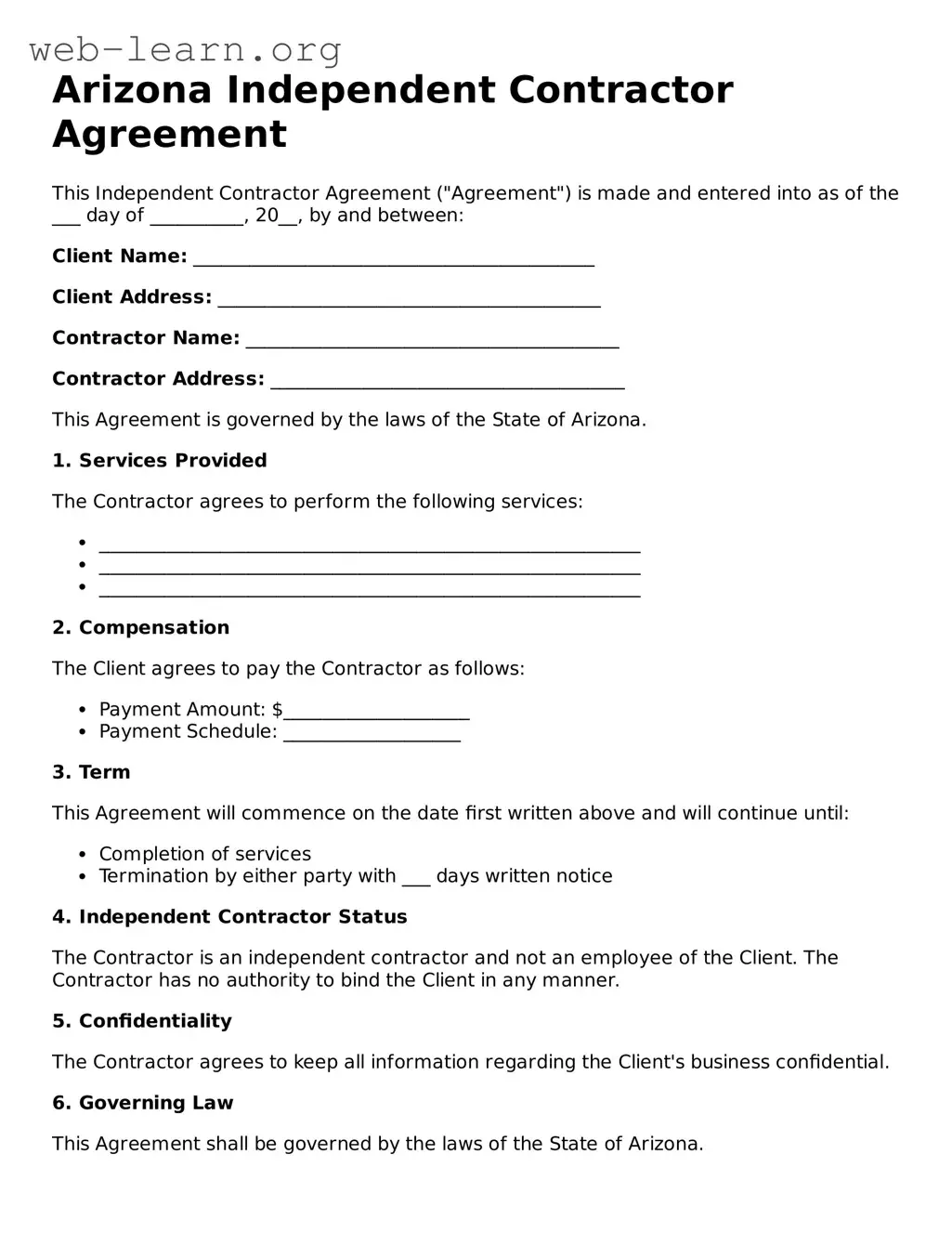
The Arizona Independent Contractor Agreement form serves as a crucial document for establishing the working relationship between a business and an independent contractor. This form outlines the expectations and responsibilities of both parties, ensuring clarity and reducing the risk of misunderstandings. Key components of the agreement include the scope of work, payment terms, and deadlines. Additionally, it specifies the independent contractor's status, making it clear that they are not an employee of the business. This distinction is vital for tax purposes and liability issues. The agreement also addresses confidentiality and intellectual property rights, protecting the interests of both the contractor and the hiring entity. By using this form, businesses can create a solid foundation for their working relationships, fostering trust and professionalism while adhering to Arizona's legal requirements.
Arizona Independent Contractor Agreement
This Independent Contractor Agreement ("Agreement") is made and entered into as of the ___ day of __________, 20__, by and between:
Client Name: ___________________________________________
Client Address: _________________________________________
Contractor Name: ________________________________________
Contractor Address: ______________________________________
This Agreement is governed by the laws of the State of Arizona.
1. Services Provided
The Contractor agrees to perform the following services:
2. Compensation
The Client agrees to pay the Contractor as follows:
3. Term
This Agreement will commence on the date first written above and will continue until:
4. Independent Contractor Status
The Contractor is an independent contractor and not an employee of the Client. The Contractor has no authority to bind the Client in any manner.
5. Confidentiality
The Contractor agrees to keep all information regarding the Client's business confidential.
6. Governing Law
This Agreement shall be governed by the laws of the State of Arizona.
7. Signatures
By signing below, both parties agree to the terms outlined in this Agreement.
Client Signature: ___________________________ Date: ___________
Contractor Signature: ________________________ Date: ___________
| Fact Name | Description |
|---|---|
| Definition | The Arizona Independent Contractor Agreement outlines the terms between a contractor and a hiring party. |
| Governing Law | This agreement is governed by Arizona state laws, specifically under Title 23 of the Arizona Revised Statutes. |
| Purpose | It serves to clarify the relationship between the contractor and the client, ensuring both parties understand their rights and obligations. |
| Tax Implications | Independent contractors are responsible for their own taxes, unlike employees who have taxes withheld by their employers. |
| Termination Clause | The agreement typically includes terms under which either party can terminate the contract, providing a clear exit strategy. |
Completing the Arizona Independent Contractor Agreement form requires careful attention to detail. This document outlines the relationship between the contractor and the hiring party, establishing terms and conditions for the work to be performed. Below are the steps to fill out the form accurately.
What is an Arizona Independent Contractor Agreement?
An Arizona Independent Contractor Agreement is a legal document that outlines the relationship between a business and an independent contractor. This agreement specifies the terms of the work arrangement, including the scope of work, payment terms, and duration of the contract. It helps protect both parties by clearly defining expectations and responsibilities.
Who should use this agreement?
Any business that hires independent contractors in Arizona can benefit from using this agreement. This includes freelancers, consultants, and service providers. By utilizing the agreement, businesses can ensure that they comply with state laws and protect their interests while clearly communicating the terms to the contractor.
What key elements should be included in the agreement?
An effective Arizona Independent Contractor Agreement should include the following key elements:
Including these elements helps prevent misunderstandings and disputes down the line.
How does this agreement differ from an employment contract?
The primary difference between an independent contractor agreement and an employment contract lies in the nature of the relationship. Independent contractors operate as self-employed individuals, meaning they have more control over how they complete their work. In contrast, employees work under the direction of their employer and typically receive benefits such as health insurance and paid time off. The agreement should reflect this distinction to avoid misclassification.
What are the benefits of using an Independent Contractor Agreement?
Using an Independent Contractor Agreement provides several advantages:
These benefits contribute to a smoother working relationship and can enhance productivity.
Can the agreement be modified after it is signed?
Yes, the Arizona Independent Contractor Agreement can be modified after it is signed, but both parties must agree to the changes. It is advisable to document any modifications in writing and have both parties sign the revised agreement. This ensures that there is a clear record of the changes and helps maintain transparency in the working relationship.
Filling out the Arizona Independent Contractor Agreement form can be straightforward, but many people make common mistakes that can lead to complications down the line. One frequent error is failing to clearly define the scope of work. It’s essential to outline exactly what services the contractor will provide. Without this clarity, misunderstandings can arise, leading to disputes.
Another mistake is neglecting to include payment terms. It's important to specify how much the contractor will be paid and when. Ambiguity in payment terms can cause frustration for both parties. Ensure that the payment schedule is clear and agreed upon to avoid any future conflicts.
Some individuals overlook the importance of including deadlines. Timelines for project completion should be explicitly stated in the agreement. Without deadlines, projects can drag on indefinitely, causing delays and potential financial losses for both the contractor and the hiring party.
People also often forget to address the issue of liability. Not including a clause that outlines who is responsible for damages or injuries can lead to serious issues. It's crucial to clarify liability to protect both parties from unforeseen circumstances.
Additionally, failing to include termination clauses is a common oversight. It’s wise to specify how either party can terminate the agreement. This provides a clear exit strategy if the working relationship does not meet expectations.
Lastly, many individuals do not take the time to review the agreement thoroughly before signing. Rushing through the process can lead to missed details that could have significant implications. Always read the entire document carefully to ensure all terms are understood and agreed upon.
When engaging an independent contractor in Arizona, several forms and documents often accompany the Arizona Independent Contractor Agreement. These documents help clarify the relationship, protect both parties, and ensure compliance with state and federal regulations. Below is a list of commonly used forms that complement the Independent Contractor Agreement.
Each of these documents plays a crucial role in establishing a clear and professional relationship between independent contractors and hiring entities. By utilizing these forms, both parties can ensure a smooth collaboration and protect their respective interests.
The Independent Contractor Agreement is a crucial document for defining the relationship between a contractor and a client. However, it shares similarities with several other documents. Here’s a list of nine documents that resemble the Independent Contractor Agreement and how they relate:
Understanding these documents can help clarify the nature of various professional relationships and ensure that all parties are on the same page regarding their roles and responsibilities.
When filling out the Arizona Independent Contractor Agreement form, it’s important to ensure accuracy and clarity. Here are some dos and don'ts to consider:
Understanding the Arizona Independent Contractor Agreement form is essential for both contractors and hiring parties. However, several misconceptions can lead to confusion. Here are nine common misunderstandings:
This is false. Independent contractors have rights under various federal and state laws, including those related to discrimination and safety regulations.
Each agreement can vary significantly based on the specific terms negotiated between the parties. It is important to tailor the agreement to fit the unique nature of the work.
Contracts can be amended if both parties agree to the changes. It’s always a good practice to document any modifications in writing.
This is incorrect. Independent contractors are responsible for their own taxes, including self-employment taxes, and should keep accurate records of their income and expenses.
Signing an Independent Contractor Agreement clearly indicates a contractor relationship, not an employee relationship. The distinction is crucial for tax and liability purposes.
In fact, the agreement serves to protect both parties by outlining expectations, responsibilities, and the scope of work, creating a clear understanding of the relationship.
Independent contractors often work for multiple clients simultaneously. This flexibility is one of the benefits of being an independent contractor.
While many independent contractors may need a business license depending on their profession and location, not all are required to have one. It’s important to check local regulations.
While verbal agreements can be enforceable, written agreements provide clearer evidence of the terms and are generally recommended to avoid misunderstandings.
By addressing these misconceptions, both independent contractors and hiring parties can better navigate their agreements and foster successful working relationships.
When filling out and using the Arizona Independent Contractor Agreement form, keep the following key takeaways in mind:
By following these key points, you can create a comprehensive and effective Independent Contractor Agreement that protects the interests of both parties involved.
New York Independent Contractor Test - Liability and indemnification terms may be included to protect both parties from legal claims.
Contract Template for Independent Contractor - The agreement can be customized to fit the specific needs of the project or industry.
Independent Contractor Agreement Illinois - The agreement specifies the duration of the contractor's engagement.