In the state of Arizona, a Durable Power of Attorney (DPOA) serves as a critical legal tool that empowers individuals to designate someone they trust to make financial and legal decisions on their behalf, particularly during times of incapacity. This form remains effective even if the principal becomes mentally or physically unable to manage their affairs, ensuring that their wishes are honored and their interests protected. By executing a DPOA, individuals can specify the scope of authority granted to their agent, which may include managing bank accounts, real estate transactions, and other financial matters. Importantly, the DPOA must be signed in accordance with Arizona law, which typically requires the presence of a notary public or witnesses to validate the document. Furthermore, the principal can choose to limit the powers granted or establish conditions under which the authority becomes effective, thereby tailoring the arrangement to their specific needs and preferences. Understanding the nuances of this form is essential for anyone looking to secure their financial future and ensure that their affairs are handled according to their wishes in the event of unforeseen circumstances.
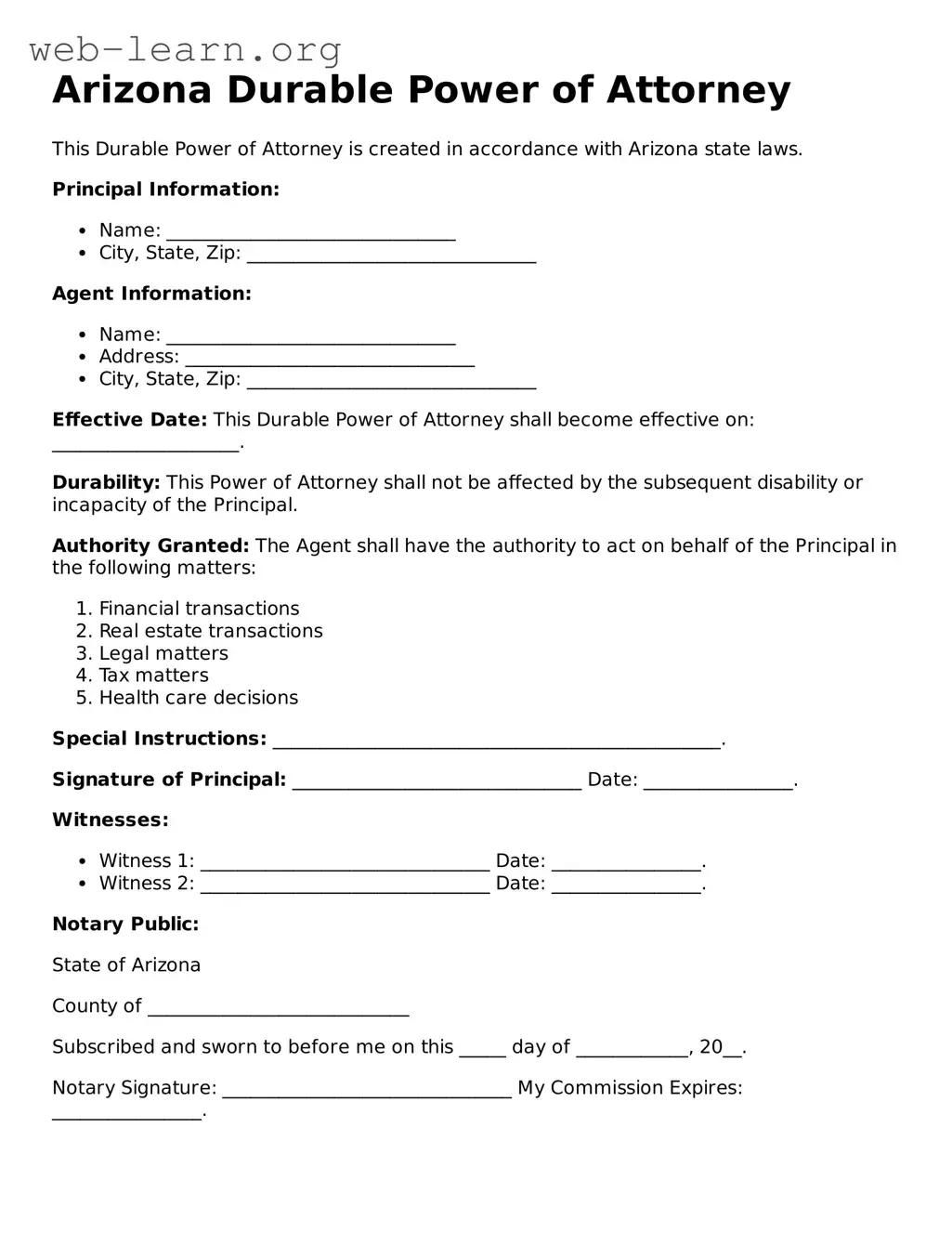
Arizona Durable Power of Attorney
This Durable Power of Attorney is created in accordance with Arizona state laws.
Principal Information:
Agent Information:
Effective Date: This Durable Power of Attorney shall become effective on: ____________________.
Durability: This Power of Attorney shall not be affected by the subsequent disability or incapacity of the Principal.
Authority Granted: The Agent shall have the authority to act on behalf of the Principal in the following matters:
Special Instructions: ________________________________________________.
Signature of Principal: _______________________________ Date: ________________.
Witnesses:
Notary Public:
State of Arizona
County of ____________________________
Subscribed and sworn to before me on this _____ day of ____________, 20__.
Notary Signature: _______________________________ My Commission Expires: ________________.
| Fact Name | Description |
|---|---|
| Definition | The Arizona Durable Power of Attorney allows a person to designate another individual to make decisions on their behalf, even if they become incapacitated. |
| Governing Law | The form is governed by Arizona Revised Statutes, Title 14, Chapter 5. |
| Durability | This power of attorney remains effective even if the principal becomes incapacitated, which distinguishes it from a regular power of attorney. |
| Principal | The individual granting the authority is known as the principal. |
| Agent | The person designated to act on behalf of the principal is referred to as the agent or attorney-in-fact. |
| Scope of Authority | The agent can be granted broad or limited powers, depending on the principal's preferences as outlined in the document. |
| Signing Requirements | The form must be signed by the principal and notarized or witnessed to be legally valid in Arizona. |
| Revocation | The principal can revoke the durable power of attorney at any time, as long as they are mentally competent. |
| Effective Date | The power of attorney can become effective immediately upon signing or can be set to activate upon a specific event, such as incapacity. |
Filling out the Arizona Durable Power of Attorney form is a straightforward process. After completing the form, it is important to ensure that all necessary parties understand the contents and implications of the document. This will help ensure that your wishes are respected and followed.
A Durable Power of Attorney is a legal document that allows an individual, known as the principal, to appoint someone else, referred to as the agent or attorney-in-fact, to make decisions on their behalf. This document remains effective even if the principal becomes incapacitated. In Arizona, a DPOA can be tailored to cover financial matters, healthcare decisions, or both.
Creating a DPOA can provide peace of mind. It ensures that your financial and healthcare decisions are made according to your wishes if you are unable to communicate them yourself. It also helps avoid potential disputes among family members and can streamline decision-making during challenging times.
To create a DPOA in Arizona, you must be at least 18 years old and mentally competent. You will need to complete a DPOA form that includes specific information about your agent, the powers granted, and any limitations. It is advisable to have the document signed in the presence of a notary public to ensure its validity.
Yes, you have the right to revoke or change your DPOA at any time, as long as you are mentally competent. To revoke the document, you should provide written notice to your agent and any institutions or individuals who may have a copy of the DPOA. Creating a new DPOA will automatically revoke the previous one, provided that it explicitly states so.
You can grant your agent a wide range of powers, which may include:
It is essential to clearly outline the powers you wish to grant, as well as any limitations, in the DPOA document.
If you do not have a DPOA and become incapacitated, a court may need to appoint a guardian or conservator to manage your affairs. This process can be lengthy, costly, and may not reflect your personal wishes. Establishing a DPOA can help avoid this situation and ensure that your preferences are honored.
Filling out the Arizona Durable Power of Attorney form can be a straightforward process, but many individuals make common mistakes that can lead to complications. One frequent error is not clearly identifying the agent. It’s essential to provide the full name and contact information of the person you are designating to act on your behalf. Omitting this information can create confusion and delays when the document is needed.
Another common mistake is failing to specify the powers granted to the agent. The form should clearly outline what decisions the agent can make, whether it’s related to financial matters, healthcare, or other areas. Vague language can lead to misunderstandings about the extent of the agent's authority.
Some individuals neglect to date the document. A date is crucial as it establishes when the Durable Power of Attorney becomes effective. Without a date, there may be uncertainty regarding the validity of the document, which could complicate matters when it is needed.
Not having the document properly signed is another significant oversight. Arizona law requires that the principal (the person creating the document) signs the form in the presence of a notary public or witnesses, depending on the specific requirements. Failing to do so can render the document invalid.
Additionally, people often forget to update their Durable Power of Attorney when their circumstances change. Life events such as marriage, divorce, or the death of an agent can necessitate changes to the document. Keeping it current is vital to ensure that your wishes are respected.
Another mistake is not discussing the decision with the chosen agent beforehand. It’s important to ensure that the person you designate is willing and able to take on the responsibilities. A lack of communication can lead to confusion and potential conflicts when the time comes for the agent to act.
Some individuals may overlook the need for alternate agents. Designating a backup agent can provide peace of mind in case the primary agent is unable or unwilling to fulfill their duties. This step is often neglected, leaving individuals without a clear plan.
People sometimes fail to consider state-specific requirements. Arizona has particular laws governing Durable Power of Attorney documents, and not adhering to these can lead to issues. Familiarity with state regulations is essential for ensuring the document is enforceable.
Another common mistake is not keeping the document in a safe but accessible location. It should be stored where trusted individuals can easily find it when needed. Hiding the document away can lead to delays in decision-making during critical times.
Finally, individuals may not seek legal advice when needed. While it is possible to complete the form independently, consulting with a legal professional can help avoid errors and ensure that the document accurately reflects your wishes. Engaging with an expert can provide clarity and peace of mind.
A Durable Power of Attorney is a crucial document that allows an individual to designate someone to make decisions on their behalf, especially regarding financial matters, in the event they become incapacitated. However, it is often used in conjunction with other important documents that help ensure a comprehensive approach to managing one’s affairs. Here are four additional forms and documents that are frequently associated with the Durable Power of Attorney in Arizona.
These documents work together to create a robust plan for managing both financial and healthcare decisions. By understanding and utilizing these forms, individuals can ensure their wishes are respected and that their affairs are handled according to their preferences, even in challenging situations.
The Durable Power of Attorney (DPOA) is an important legal document that allows one person to make decisions on behalf of another. It shares similarities with several other documents that also grant authority or outline preferences regarding personal and financial matters. Below are eight documents that are similar to the Durable Power of Attorney:
Understanding these documents can help individuals make informed decisions about their legal and healthcare preferences, ensuring their wishes are respected in various situations.
When filling out the Arizona Durable Power of Attorney form, it is essential to approach the process with care and consideration. Below is a list of things you should and shouldn't do to ensure that your document is valid and serves your intended purpose.
By following these guidelines, you can help ensure that your Durable Power of Attorney form is completed correctly and effectively reflects your wishes.
Understanding the Arizona Durable Power of Attorney form is crucial for effective estate planning. However, several misconceptions can lead to confusion. Here are ten common misconceptions:
Being informed about these misconceptions can help individuals make better decisions regarding their estate planning needs.
Filling out and using the Arizona Durable Power of Attorney form can be a straightforward process if you keep a few key points in mind. Here are some essential takeaways:
By keeping these points in mind, you can ensure that your Durable Power of Attorney serves its intended purpose effectively.
Living Will Kansas - This document helps to clarify your wishes regarding medical treatment and financial management.
Power of Attorney Illinois - This form remains effective even if the principal becomes incapacitated.
General Power of Attorney Hawaii - Having a Durable Power of Attorney can reduce stress for family members.
Power of Attorney Form Colorado - Consulting with a legal professional can clarify your options.