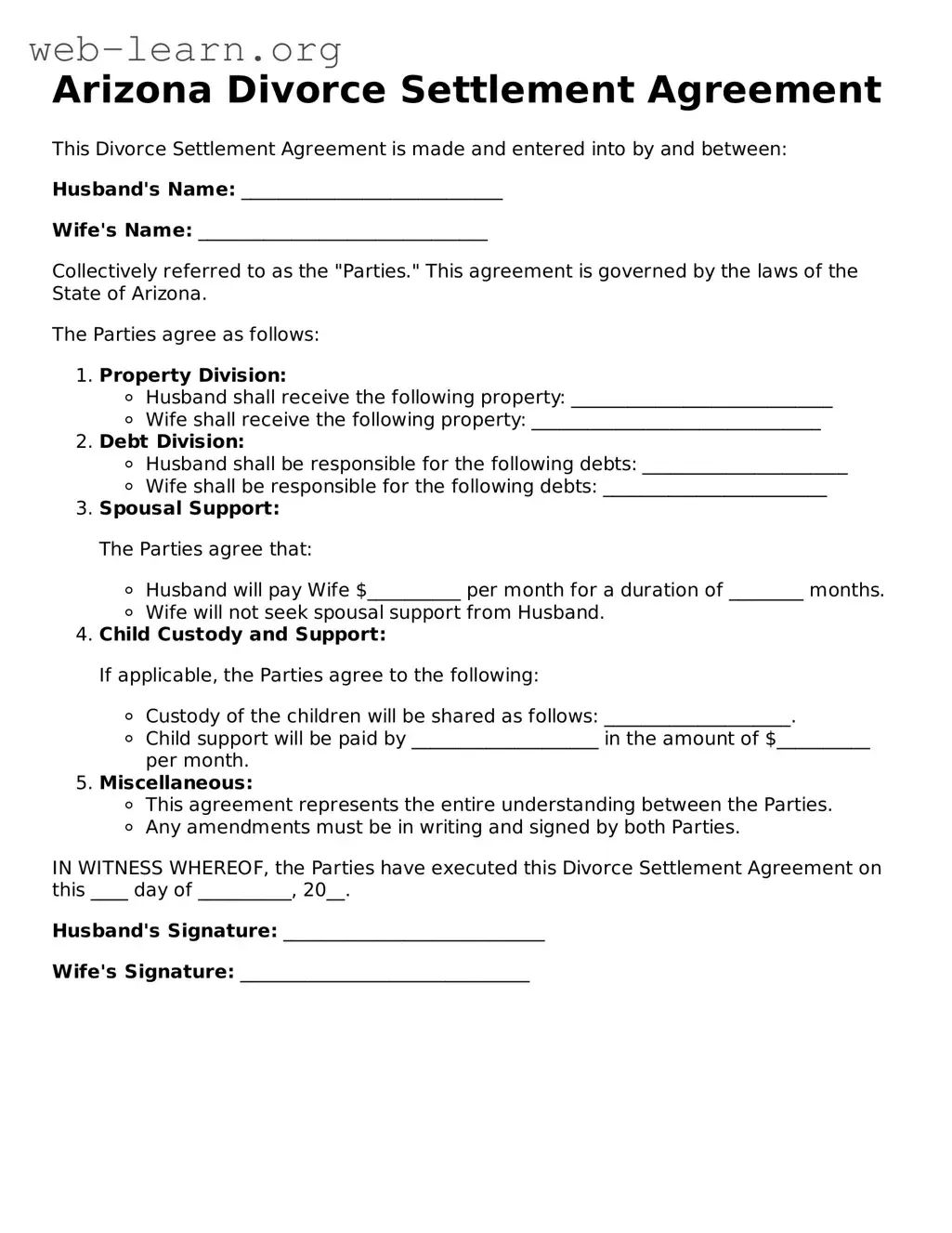
In Arizona, navigating the divorce process involves several critical steps, one of which is the completion of the Divorce Settlement Agreement form. This essential document outlines the terms agreed upon by both parties regarding the division of assets and debts, child custody arrangements, and spousal support. It serves as a binding contract that ensures both individuals adhere to the agreed-upon terms post-divorce. Key elements include the identification of marital property, the allocation of responsibilities for any shared debts, and the specifics of child support and visitation schedules if children are involved. Clarity and precision are paramount in this form, as it not only facilitates an amicable separation but also lays the groundwork for future interactions. Understanding each component of the agreement is vital for both parties to ensure that their rights and interests are protected during and after the divorce process.
Arizona Divorce Settlement Agreement
This Divorce Settlement Agreement is made and entered into by and between:
Husband's Name: ____________________________
Wife's Name: _______________________________
Collectively referred to as the "Parties." This agreement is governed by the laws of the State of Arizona.
The Parties agree as follows:
The Parties agree that:
If applicable, the Parties agree to the following:
IN WITNESS WHEREOF, the Parties have executed this Divorce Settlement Agreement on this ____ day of __________, 20__.
Husband's Signature: ____________________________
Wife's Signature: _______________________________
| Fact Name | Description |
|---|---|
| Purpose | The Arizona Divorce Settlement Agreement form is designed to outline the terms of a divorce, including property division, spousal support, and child custody arrangements. |
| Governing Law | This form is governed by Arizona Revised Statutes, specifically Title 25, which addresses marital and family law. |
| Filing Requirement | Both parties must sign the agreement for it to be considered valid and enforceable by the court. |
| Modification | Once approved by the court, the terms of the settlement can only be modified under specific circumstances, such as a significant change in financial status. |
| Child Support Guidelines | The agreement must comply with Arizona's child support guidelines, which calculate support based on the income of both parents and the needs of the child. |
| Importance of Legal Advice | It is advisable for both parties to seek legal counsel before signing the agreement to ensure their rights and interests are protected. |
After gathering all necessary information and documents, you are ready to fill out the Arizona Divorce Settlement Agreement form. This form is crucial for outlining the terms of your divorce, including property division, child custody, and support arrangements. Completing it accurately will help streamline the divorce process and ensure that both parties understand their rights and responsibilities moving forward.
Once the form is filled out and signed, it should be submitted to the court as part of your divorce proceedings. This will help facilitate the finalization of your divorce and ensure that the agreed-upon terms are legally recognized.
What is a Divorce Settlement Agreement in Arizona?
A Divorce Settlement Agreement is a legally binding document that outlines the terms of a divorce. It details how assets, debts, and responsibilities will be divided between the spouses. This agreement can cover various aspects, including property division, child custody, visitation rights, and spousal support. By reaching an agreement, couples can often avoid a lengthy court battle.
Who should prepare the Divorce Settlement Agreement?
While either spouse can draft the Divorce Settlement Agreement, it is often beneficial to seek assistance from a legal professional or a document preparer. This ensures that the document complies with Arizona laws and accurately reflects the intentions of both parties. Having a neutral third party can also help facilitate communication and negotiation.
What should be included in the Divorce Settlement Agreement?
The Divorce Settlement Agreement should address several key components:
Including these elements helps ensure clarity and reduces the likelihood of future disputes.
How is the Divorce Settlement Agreement enforced?
Once the Divorce Settlement Agreement is signed by both parties and approved by the court, it becomes enforceable. If one party fails to comply with the terms, the other party can seek enforcement through the court. Enforcement may involve requesting a modification or even legal penalties for non-compliance.
Can the Divorce Settlement Agreement be modified?
Yes, the Divorce Settlement Agreement can be modified, but only under certain circumstances. Changes in life situations, such as job loss, relocation, or changes in the needs of children, may warrant a modification. Both parties must agree to the changes, and the court must approve any modifications to ensure they are legally binding.
Do I need to go to court to finalize the Divorce Settlement Agreement?
Typically, yes. After both parties have signed the agreement, it must be submitted to the court for approval. A judge will review the document to ensure it is fair and complies with Arizona law. Once approved, the agreement becomes part of the final divorce decree.
What happens if we cannot agree on the terms?
If spouses cannot reach an agreement, they may need to go through mediation or, in some cases, litigation. Mediation involves a neutral third party who helps facilitate discussions and negotiations. If mediation fails, the case may proceed to court, where a judge will make the final decisions regarding the divorce terms.
Is legal representation necessary when preparing a Divorce Settlement Agreement?
While it is not strictly necessary to have legal representation, it is highly recommended. Legal professionals can provide valuable guidance, ensure that the agreement is fair, and help navigate any complexities that may arise. Having an attorney can also offer peace of mind that your rights are protected throughout the process.
When navigating the complexities of a divorce, completing the Arizona Divorce Settlement Agreement form can feel overwhelming. Many individuals make mistakes that can have lasting consequences. Understanding these common pitfalls can help ensure a smoother process.
One frequent error is failing to provide accurate financial information. It’s essential to disclose all income, assets, and debts honestly. Incomplete or misleading information can lead to disputes later on, potentially affecting the division of property and support obligations.
Another mistake is not considering tax implications. Many people overlook how property division and alimony can impact their tax situation. Consulting with a financial advisor or tax professional can shed light on these issues, ensuring that you make informed decisions.
Many individuals also neglect to address all relevant issues in the agreement. This can include child custody, visitation schedules, and spousal support. Omitting these details may lead to confusion or conflict down the line, making it crucial to cover all bases.
In addition, some people rush through the process, failing to review the agreement thoroughly before signing. Taking the time to read and understand every section is vital. Rushing can result in misunderstandings or acceptance of unfavorable terms.
Another common oversight is not seeking legal advice. While it may seem tempting to handle the divorce without professional help, the complexities of the law can be daunting. An attorney can provide valuable insights and help protect your rights.
Additionally, individuals often underestimate the importance of clear language. Vague terms can lead to differing interpretations. Using precise language helps ensure that both parties have a mutual understanding of the agreement.
Finally, many forget to consider future changes in circumstances. Life is unpredictable, and what seems fair today may not hold true in the future. Including provisions for modifications can save time and conflict later on.
By being aware of these common mistakes, individuals can navigate the Arizona Divorce Settlement Agreement process more effectively. Taking the time to understand the implications of each section can lead to a more equitable and satisfactory resolution.
When navigating the process of divorce in Arizona, it's essential to understand that the Divorce Settlement Agreement is just one piece of the puzzle. Several other forms and documents can help facilitate a smoother transition and ensure that all legal matters are addressed. Below are some commonly used documents that often accompany the Divorce Settlement Agreement.
Understanding these documents can significantly ease the divorce process. Each one plays a vital role in ensuring that both parties are informed and that their rights are protected throughout this challenging time.
When filling out the Arizona Divorce Settlement Agreement form, it is crucial to approach the task with care and attention to detail. Here is a list of things you should and shouldn't do to ensure a smooth process.
Understanding the Arizona Divorce Settlement Agreement form can be challenging, especially with the many misconceptions that surround it. Here are nine common myths debunked to help clarify the process.
Many people believe that a Divorce Settlement Agreement is necessary only if children are involved. However, this form is essential for all divorcing couples, regardless of whether they have kids, as it outlines the division of assets and debts.
While the agreement holds significant weight, it doesn’t become legally binding until a judge approves it. Until that point, both parties can negotiate and make changes as needed.
While many aspects can be negotiated, certain laws and regulations dictate what can and cannot be altered in a settlement. Understanding these limitations is crucial for a fair agreement.
This is not entirely true. If both parties agree, modifications can be made even after signing. However, these changes must also be approved by the court.
Both parties must participate in completing the Divorce Settlement Agreement. This ensures that all interests are represented and that the agreement is fair to both sides.
While the form may seem straightforward, seeking legal advice can help ensure that all terms are fair and legally sound. This can prevent future disputes and complications.
Completing the form is just one step in the divorce process. Other factors, such as court schedules and the complexity of the case, can affect the timeline.
Not all financial issues are addressed by the Divorce Settlement Agreement. Additional matters, like tax implications or retirement accounts, may require separate attention.
Even in uncontested divorces, a Divorce Settlement Agreement is essential. It provides a clear understanding of how assets and responsibilities will be divided, regardless of the level of conflict.
By clearing up these misconceptions, individuals can approach the Arizona Divorce Settlement Agreement with a better understanding and a more informed mindset.
When filling out and utilizing the Arizona Divorce Settlement Agreement form, several important considerations should be kept in mind. These considerations can significantly impact the outcome of the divorce process.
These takeaways highlight the significance of careful preparation and understanding when using the Arizona Divorce Settlement Agreement form.
Mutual Divorce Agreement Sample - This form helps ensure that both parties feel heard and respected in the divorce process.
Divorce Contract Template - It can outline the process for modifying child support or custody in the future.
Vital Records Idaho - The settlement can be modified if both parties consent to changes.
Mutual Divorce Agreement Sample - It can provide a framework for resolving conflicts in the future.