When dealing with real estate transactions in Arizona, understanding the Arizona Deed form is essential for both buyers and sellers. This legal document serves as a critical instrument in the transfer of property ownership, ensuring that the rights of all parties are clearly defined and protected. The form includes important details such as the names of the grantor and grantee, a description of the property, and any conditions or restrictions that may apply. It is vital to accurately complete this form to avoid potential disputes in the future. Additionally, the Arizona Deed form may vary depending on the type of deed being used, such as a warranty deed or a quitclaim deed, each serving different purposes and offering varying levels of protection. Understanding these nuances can help individuals make informed decisions during the property transfer process, ensuring a smoother and more secure transaction.
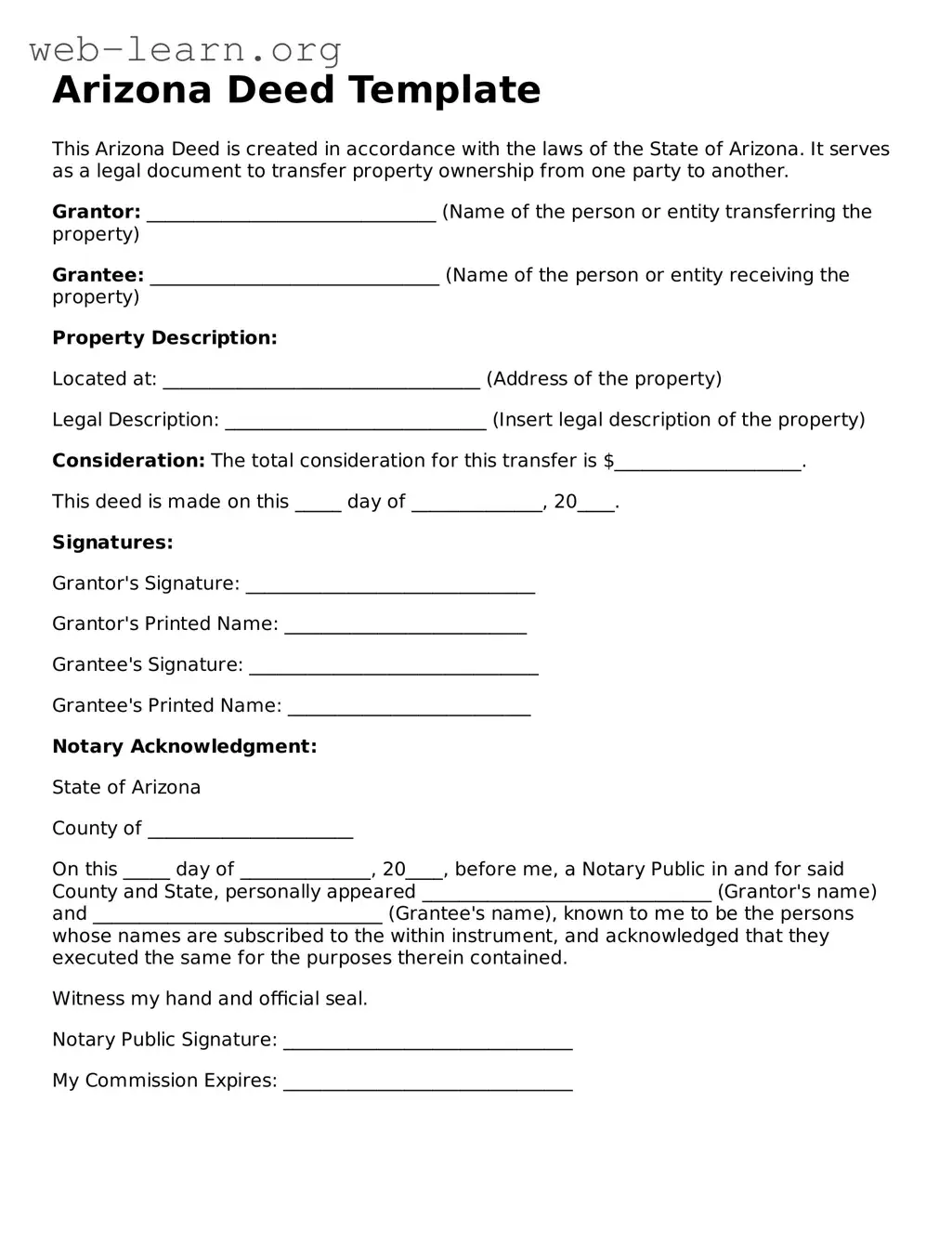
Arizona Deed Template
This Arizona Deed is created in accordance with the laws of the State of Arizona. It serves as a legal document to transfer property ownership from one party to another.
Grantor: _______________________________ (Name of the person or entity transferring the property)
Grantee: _______________________________ (Name of the person or entity receiving the property)
Property Description:
Located at: __________________________________ (Address of the property)
Legal Description: ____________________________ (Insert legal description of the property)
Consideration: The total consideration for this transfer is $____________________.
This deed is made on this _____ day of ______________, 20____.
Signatures:
Grantor's Signature: _______________________________
Grantor's Printed Name: __________________________
Grantee's Signature: _______________________________
Grantee's Printed Name: __________________________
Notary Acknowledgment:
State of Arizona
County of ______________________
On this _____ day of ______________, 20____, before me, a Notary Public in and for said County and State, personally appeared _______________________________ (Grantor's name) and _______________________________ (Grantee's name), known to me to be the persons whose names are subscribed to the within instrument, and acknowledged that they executed the same for the purposes therein contained.
Witness my hand and official seal.
Notary Public Signature: _______________________________
My Commission Expires: _______________________________
| Fact Name | Description |
|---|---|
| Governing Law | The Arizona Deed form is governed by Arizona state law, specifically Title 33 of the Arizona Revised Statutes. |
| Types of Deeds | Arizona recognizes several types of deeds, including warranty deeds, quitclaim deeds, and special warranty deeds. |
| Transfer of Property | The deed serves as a legal document to transfer ownership of real property from one party to another. |
| Signature Requirement | The grantor, or person transferring the property, must sign the deed for it to be valid. |
| Notarization | In Arizona, notarization of the deed is required to ensure its authenticity and legal standing. |
| Recording | After signing, the deed should be recorded with the county recorder's office to provide public notice of the property transfer. |
| Legal Description | The deed must include a legal description of the property, detailing its boundaries and location. |
Once you have the Arizona Deed form in hand, the next steps involve carefully filling out the required fields to ensure the document is complete and accurate. This process is essential for the proper transfer of property ownership.
What is an Arizona Deed form?
An Arizona Deed form is a legal document used to transfer ownership of real property from one party to another within the state of Arizona. It serves as proof of the transfer and outlines the details of the transaction, including the names of the parties involved, a description of the property, and any conditions or restrictions related to the transfer.
What types of Deeds are available in Arizona?
In Arizona, there are several types of deeds, including:
How do I complete an Arizona Deed form?
To complete an Arizona Deed form, follow these steps:
Do I need to have the Deed notarized?
Yes, in Arizona, the Deed must be notarized for it to be legally valid. The notary public verifies the identities of the signers and ensures that they are signing the document voluntarily.
Where do I file the Arizona Deed form?
The completed and notarized Deed should be filed with the County Recorder's Office in the county where the property is located. This filing makes the transfer of ownership a matter of public record.
Are there any fees associated with filing a Deed in Arizona?
Yes, there are typically filing fees that vary by county. It is advisable to check with the local County Recorder's Office for the exact fee schedule and any additional requirements that may apply.
What happens after I file the Deed?
Once the Deed is filed, it becomes part of the public record. The new owner (grantee) will receive a copy of the recorded Deed, which serves as proof of ownership. It's important to keep this document in a safe place for future reference.
Filling out the Arizona Deed form can be a straightforward process, but many individuals make common mistakes that can lead to complications. One frequent error is failing to include the correct legal description of the property. It’s essential to provide an accurate and complete description to avoid issues with ownership.
Another common mistake is neglecting to identify all parties involved. Both the grantor and grantee must be clearly named. Omitting a party can create confusion and potentially invalidate the deed.
Many people also overlook the importance of signing the deed. A signature is required from the grantor to validate the document. Without it, the deed is not legally binding, and the transfer of property may not be recognized.
In addition, using the wrong notary public can be problematic. The deed must be notarized by an authorized individual. Failing to do so may lead to challenges in the future regarding the authenticity of the document.
Another mistake is not providing the date of execution. Including the date helps establish when the transfer of property occurred, which is crucial for legal records.
Some individuals mistakenly believe that a simple form will suffice. However, the Arizona Deed form requires specific information, such as the tax parcel number. Omitting this detail can cause delays in processing.
Improperly formatting names can also lead to issues. Names should match the identification documents of the parties involved. Any discrepancies can raise questions about the validity of the deed.
Many people fail to check local regulations. Each county may have specific requirements regarding the deed. Not adhering to these can result in rejection of the filing.
Additionally, neglecting to pay the necessary fees can halt the process. Ensure that all fees are paid at the time of filing to avoid delays.
Finally, not keeping copies of the completed deed can create problems later on. Always retain a copy for personal records. This can be invaluable in case of disputes or questions about ownership in the future.
When transferring property ownership in Arizona, various forms and documents accompany the Arizona Deed form to ensure a smooth and legally binding transaction. Understanding these documents is essential for both buyers and sellers.
Each of these documents plays a crucial role in the property transfer process in Arizona. Ensuring that all necessary forms are completed accurately can help avoid disputes and facilitate a successful transaction.
Title Insurance Policy: This document provides protection against financial loss from defects in a property title. Like a deed, it ensures that the ownership of the property is clear and legally recognized.
Mortgage Agreement: A mortgage outlines the terms under which a borrower agrees to repay a loan used to purchase property. Both documents establish legal rights concerning ownership and financial obligations.
Lease Agreement: This contract allows one party to use another's property for a specified time in exchange for rent. Similar to a deed, it conveys rights to use property but does not transfer ownership.
Quitclaim Deed: This type of deed transfers whatever interest a person has in a property without any guarantees. It is similar to a standard deed but is often used to clear up title issues.
Bill of Sale: A bill of sale is a document that transfers ownership of personal property. While a deed is specific to real estate, both serve to legally document the transfer of ownership.
Property Transfer Agreement: This document outlines the terms of transferring ownership of real estate. It functions similarly to a deed by establishing the legal transfer of property rights.
Affidavit of Title: This sworn statement confirms a person's ownership of a property and that there are no undisclosed liens or claims. Like a deed, it supports the validity of ownership.
Warranty Deed: A warranty deed guarantees that the grantor holds clear title to a property and has the right to sell it. It provides more protection than a quitclaim deed, but both serve to transfer property ownership.
Power of Attorney: This document allows one person to act on behalf of another in legal matters, including real estate transactions. It can facilitate the signing of a deed, making it similar in purpose.
Real Estate Purchase Agreement: This contract outlines the terms of a property sale, including price and contingencies. While it does not transfer ownership, it sets the stage for the eventual deed transfer.
When filling out the Arizona Deed form, attention to detail is crucial. Here are seven things to do and avoid:
Following these guidelines will help ensure the deed is properly completed and accepted for recording.
Understanding the Arizona Deed form can be challenging, especially with the number of misconceptions surrounding it. Here are ten common misunderstandings:
By understanding these misconceptions, individuals can better navigate the process of creating and executing an Arizona Deed form.
When filling out and using the Arizona Deed form, it is important to keep several key points in mind. The following takeaways will guide you through the process effectively:
By following these guidelines, you can ensure that the process of filling out and using the Arizona Deed form is smooth and compliant with state requirements.
What Does a House Deed Look Like in Michigan - Can specify conditions or restrictions on the property.
Quit Claim Deed Broward County - Helps prevent disputes over property ownership in the future.
Indiana Quit Claim Deed Form - They can simplify the process of transferring property between businesses.
Quick Claim Deeds Kansas - Be aware of any liens or encumbrances before completing the Deed form.