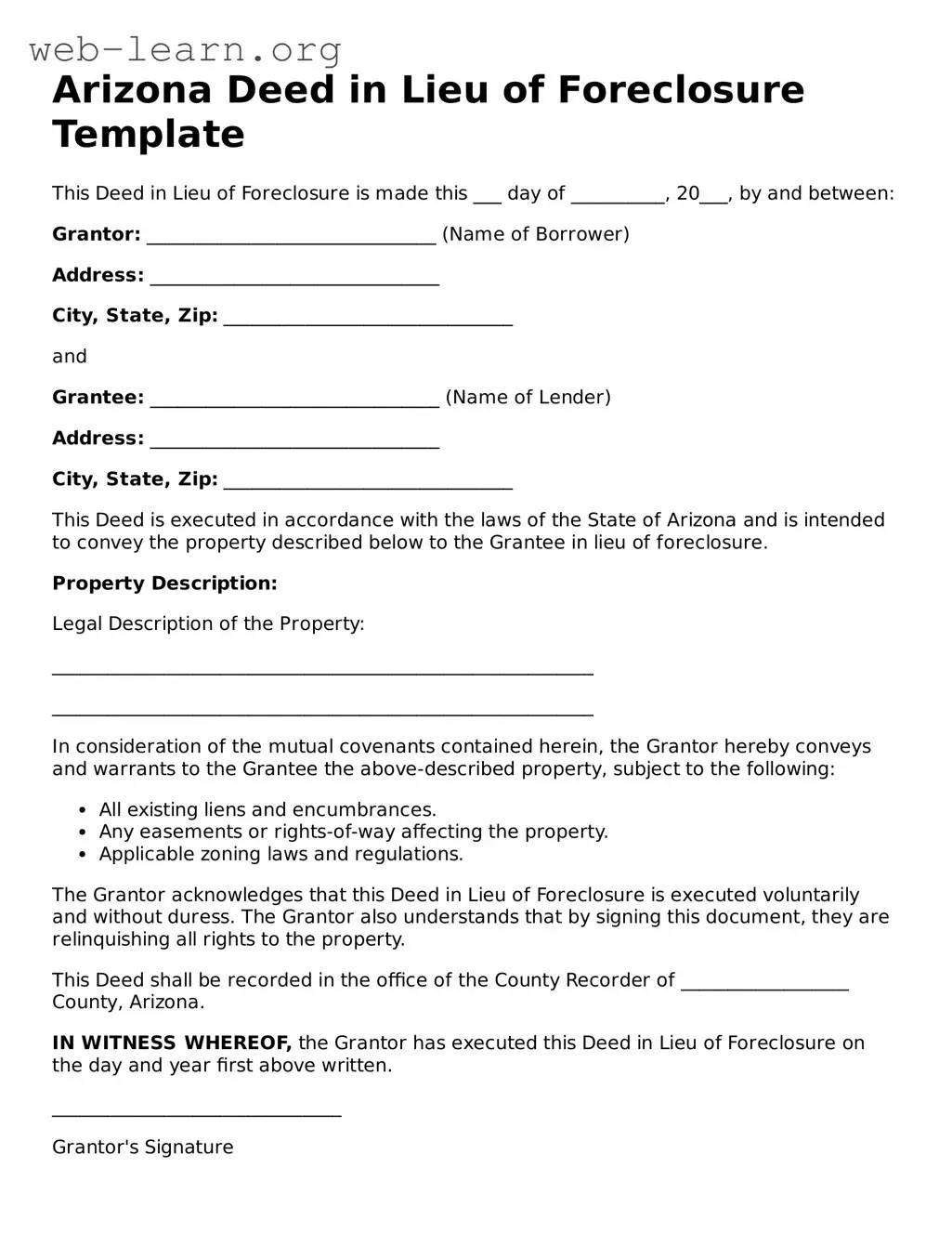
The Arizona Deed in Lieu of Foreclosure is a significant legal instrument that provides homeowners facing financial distress with an alternative to the traditional foreclosure process. This form allows property owners to voluntarily transfer the title of their home to the lender, effectively relinquishing ownership in exchange for the cancellation of their mortgage debt. By utilizing this method, homeowners can avoid the lengthy and often costly foreclosure proceedings, while also mitigating the negative impact on their credit score. The process typically requires the lender's approval and may involve negotiations to ensure that the homeowner is not held liable for any remaining balance on the mortgage. Additionally, the Deed in Lieu of Foreclosure can offer a more amicable resolution for both parties, as it allows for a smoother transition and can potentially preserve the homeowner’s dignity during a challenging financial period. Understanding the implications and requirements of this form is crucial for anyone considering this option as a means to address their mortgage challenges.
Arizona Deed in Lieu of Foreclosure Template
This Deed in Lieu of Foreclosure is made this ___ day of __________, 20___, by and between:
Grantor: _______________________________ (Name of Borrower)
Address: _______________________________
City, State, Zip: _______________________________
and
Grantee: _______________________________ (Name of Lender)
Address: _______________________________
City, State, Zip: _______________________________
This Deed is executed in accordance with the laws of the State of Arizona and is intended to convey the property described below to the Grantee in lieu of foreclosure.
Property Description:
Legal Description of the Property:
__________________________________________________________
__________________________________________________________
In consideration of the mutual covenants contained herein, the Grantor hereby conveys and warrants to the Grantee the above-described property, subject to the following:
The Grantor acknowledges that this Deed in Lieu of Foreclosure is executed voluntarily and without duress. The Grantor also understands that by signing this document, they are relinquishing all rights to the property.
This Deed shall be recorded in the office of the County Recorder of __________________ County, Arizona.
IN WITNESS WHEREOF, the Grantor has executed this Deed in Lieu of Foreclosure on the day and year first above written.
_______________________________
Grantor's Signature
_______________________________
Print Name
_______________________________
Grantee's Signature
_______________________________
Print Name
_______________________________
Witness Signature
_______________________________
Print Name
_______________________________
Notary Public
My Commission Expires: _______________
| Fact Name | Description |
|---|---|
| Definition | A Deed in Lieu of Foreclosure allows a homeowner to transfer ownership of their property to the lender to avoid foreclosure. |
| Governing Law | This process is governed by Arizona Revised Statutes, Title 33, Chapter 6. |
| Eligibility | Homeowners must be facing financial hardship and unable to keep up with mortgage payments. |
| Benefits | It can help homeowners avoid the lengthy foreclosure process and its negative impact on credit scores. |
| Process | The homeowner must submit a request to the lender, along with required documentation. |
| Property Condition | The property should be in good condition; lenders may require repairs before acceptance. |
| Tax Implications | Homeowners may face tax consequences, as forgiven debt could be considered taxable income. |
| Legal Advice | Consulting with a real estate attorney is recommended to understand all implications before proceeding. |
After completing the Arizona Deed in Lieu of Foreclosure form, the next steps involve submitting the document to the appropriate parties. Make sure to keep copies for your records. You may also need to inform your lender and follow any additional procedures they require.
What is a Deed in Lieu of Foreclosure?
A Deed in Lieu of Foreclosure is a legal process that allows a homeowner to voluntarily transfer ownership of their property back to the lender in order to avoid foreclosure. This can be a beneficial option for homeowners facing financial difficulties, as it can help them avoid the lengthy and often stressful foreclosure process.
What are the benefits of choosing a Deed in Lieu of Foreclosure?
There are several advantages to this option:
What are the potential downsides?
While a Deed in Lieu of Foreclosure can be beneficial, it is important to consider some potential drawbacks:
How do I initiate a Deed in Lieu of Foreclosure?
To start the process, you should:
Will I need legal assistance?
While it is not mandatory, seeking legal assistance can be very helpful. An attorney can guide you through the process, help you understand your rights, and ensure that the terms of the deed are fair and in your best interest.
What happens to my credit score?
Although a Deed in Lieu of Foreclosure is less damaging than a foreclosure, it can still affect your credit score. The impact will depend on various factors, including your overall credit history and how your lender reports the deed to credit agencies.
Can I stay in my home during the process?
In many cases, homeowners can remain in their homes until the Deed in Lieu of Foreclosure is finalized. However, this can vary based on the lender's policies, so it is important to clarify this with your lender.
What should I do after the Deed in Lieu of Foreclosure is completed?
After the process is complete, it’s wise to monitor your credit report for accuracy. Additionally, consider seeking financial counseling to help you recover and plan for the future. Understanding your financial situation will be crucial as you move forward.
Filling out the Arizona Deed in Lieu of Foreclosure form can be a straightforward process, but many individuals make critical mistakes that can complicate their situation. One common error is failing to provide accurate property information. The form requires specific details about the property, including the legal description and address. Omitting or incorrectly entering this information can lead to delays or even rejection of the deed.
Another frequent mistake involves not obtaining the necessary signatures. All parties with an interest in the property must sign the form. If a co-owner or spouse is not included, the deed may not be legally binding. It is essential to ensure that everyone who holds an interest in the property reviews and signs the document to avoid future disputes.
People also often neglect to consider outstanding liens or other encumbrances on the property. The deed in lieu of foreclosure does not eliminate these debts. If there are existing liens, the lender may not accept the deed, or the borrower may still be held responsible for those debts. It is advisable to address any outstanding financial obligations before proceeding with the deed.
Lastly, some individuals fail to consult with a legal professional before submitting the form. While the process may seem simple, legal implications can arise. A lawyer can provide valuable insights and help ensure that the form is filled out correctly. This step can prevent complications down the line and offer peace of mind during a challenging time.
When navigating the process of a Deed in Lieu of Foreclosure in Arizona, several other documents may be necessary to ensure a smooth transition. Each of these forms serves a specific purpose and can help clarify the rights and responsibilities of both parties involved. Below is a list of commonly used documents in conjunction with the Deed in Lieu of Foreclosure.
Understanding these documents can be crucial for both borrowers and lenders. Each plays a role in the overall process, helping to clarify expectations and protect the interests of all parties involved. Being informed can lead to a smoother resolution during challenging financial times.
The Deed in Lieu of Foreclosure form is similar to several other documents that help manage property ownership and financial obligations. Here are four documents that share similarities with the Deed in Lieu of Foreclosure:
When filling out the Arizona Deed in Lieu of Foreclosure form, it's crucial to approach the process with care. Here are five things you should and shouldn't do:
Following these guidelines can help ensure a smoother process when dealing with a Deed in Lieu of Foreclosure in Arizona.
When it comes to the Arizona Deed in Lieu of Foreclosure, several misconceptions can cloud understanding. Here are five common myths, along with clarifications to help you navigate this option more effectively.
Many believe that signing a Deed in Lieu of Foreclosure automatically wipes out all financial obligations. However, this is not always the case. While it may release you from the mortgage debt, other liens or obligations could still remain.
Some homeowners think that a Deed in Lieu is a fast solution to prevent foreclosure. In reality, the process can take time and requires lender approval. It’s essential to understand that this option may not be as immediate as it seems.
Not all lenders are willing to accept a Deed in Lieu of Foreclosure. Each lender has its own policies and may prefer to proceed with a foreclosure process instead. Always check with your lender to understand their stance.
While both options can affect your credit score, a Deed in Lieu may have a less severe impact compared to a foreclosure. The specifics can vary based on individual circumstances, so it’s wise to consult a financial expert.
Many assume that executing a Deed in Lieu is simple and free of issues. However, there can be legal and financial complexities involved, including tax implications and the need for proper documentation. It's important to be fully informed before proceeding.
Understanding these misconceptions can help you make informed decisions about your options. Always consider seeking professional advice tailored to your specific situation.
When dealing with a Deed in Lieu of Foreclosure in Arizona, there are several important points to keep in mind. Below are key takeaways that can help navigate this process effectively.
By keeping these key points in mind, you can approach the Deed in Lieu of Foreclosure process with greater confidence and clarity.
Sample Deed in Lieu of Foreclosure - In some cases, lenders may offer relocation assistance as part of the agreement.
Foreclosure Georgia - Homeowners should explore all options before committing to a deed.