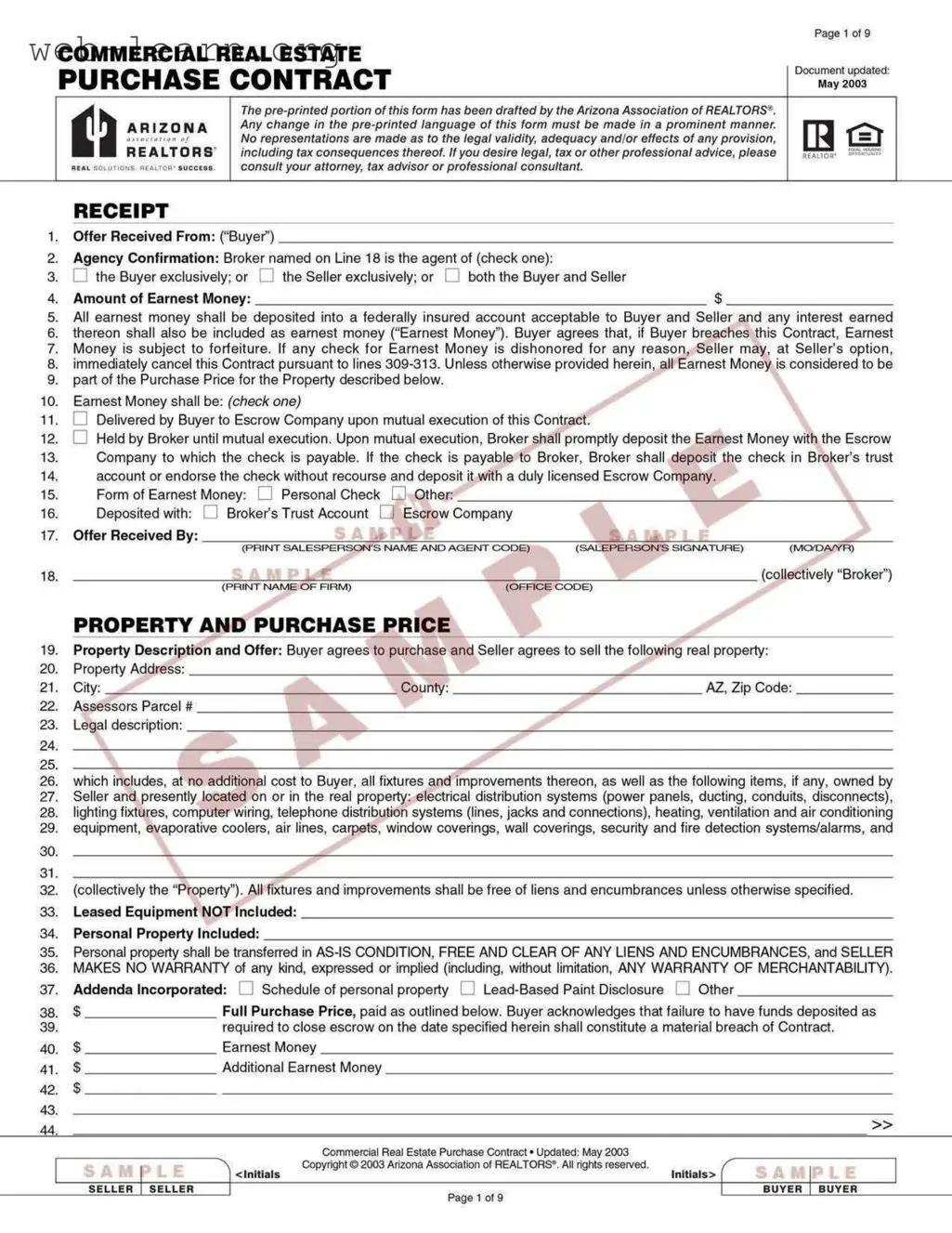
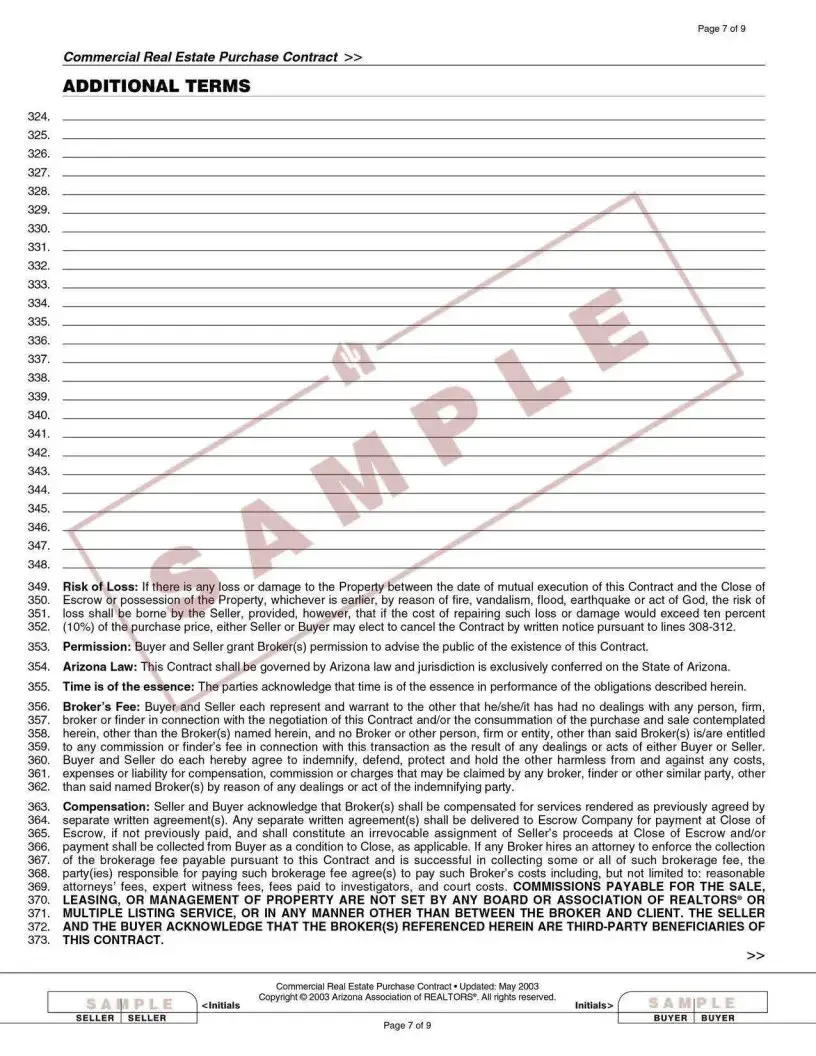
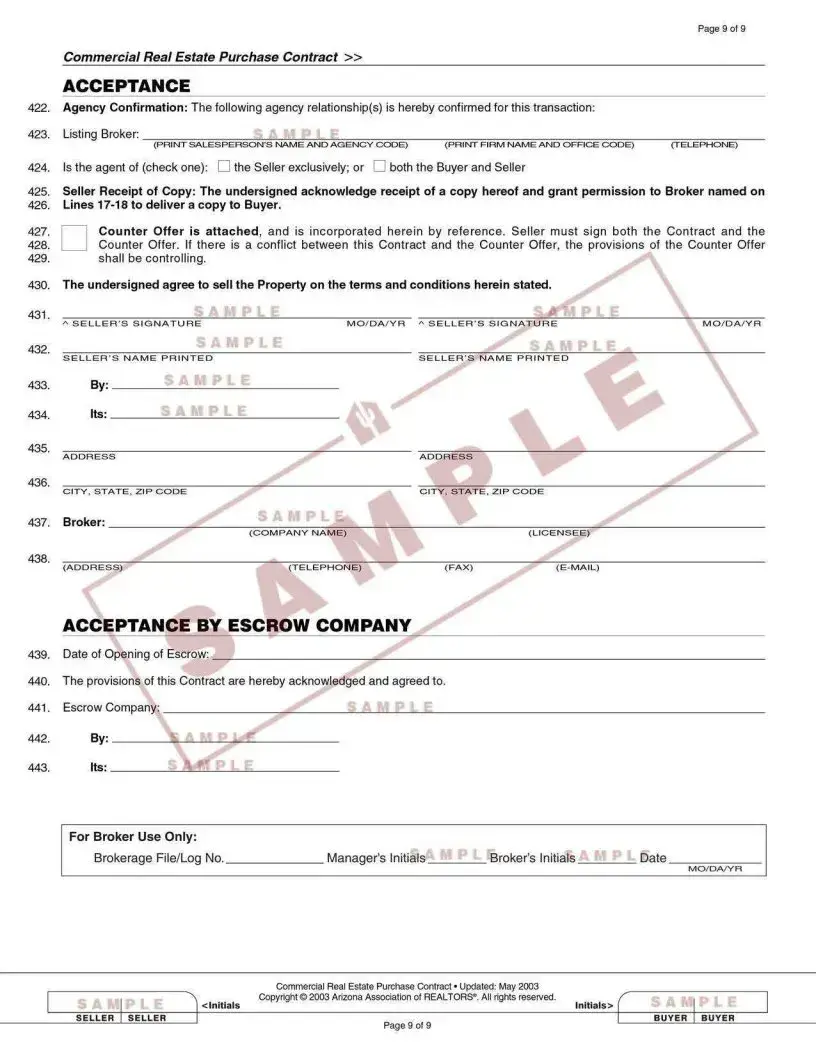
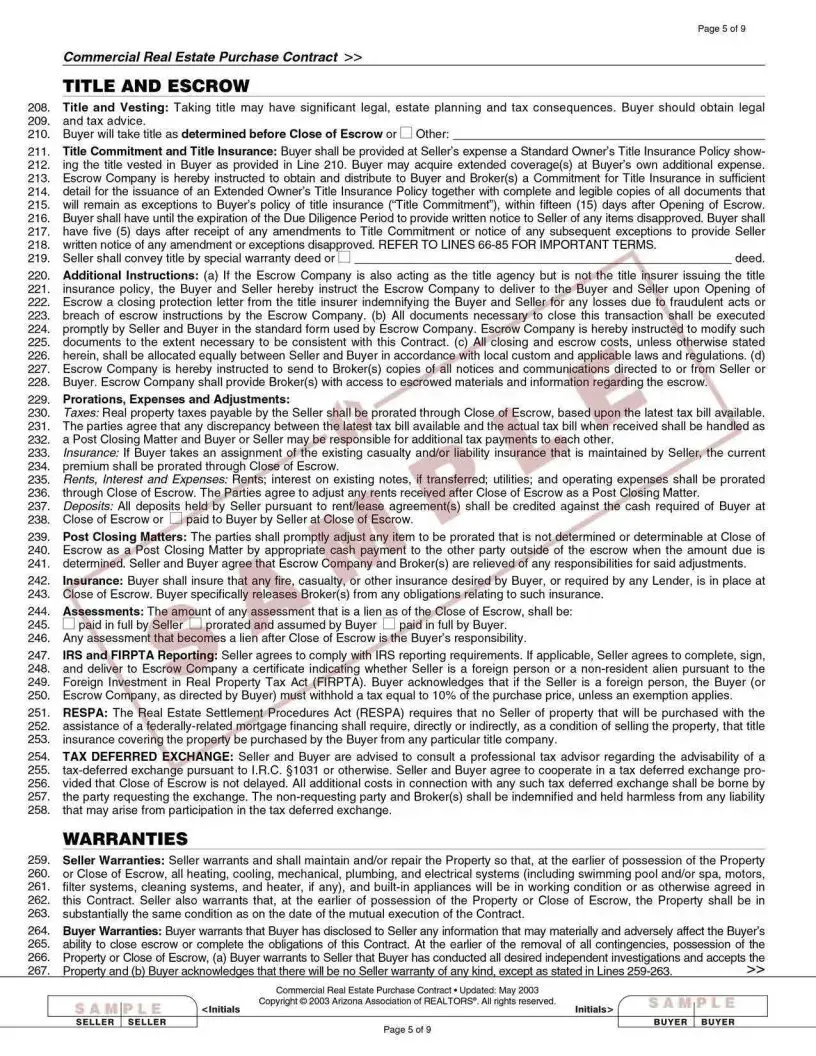
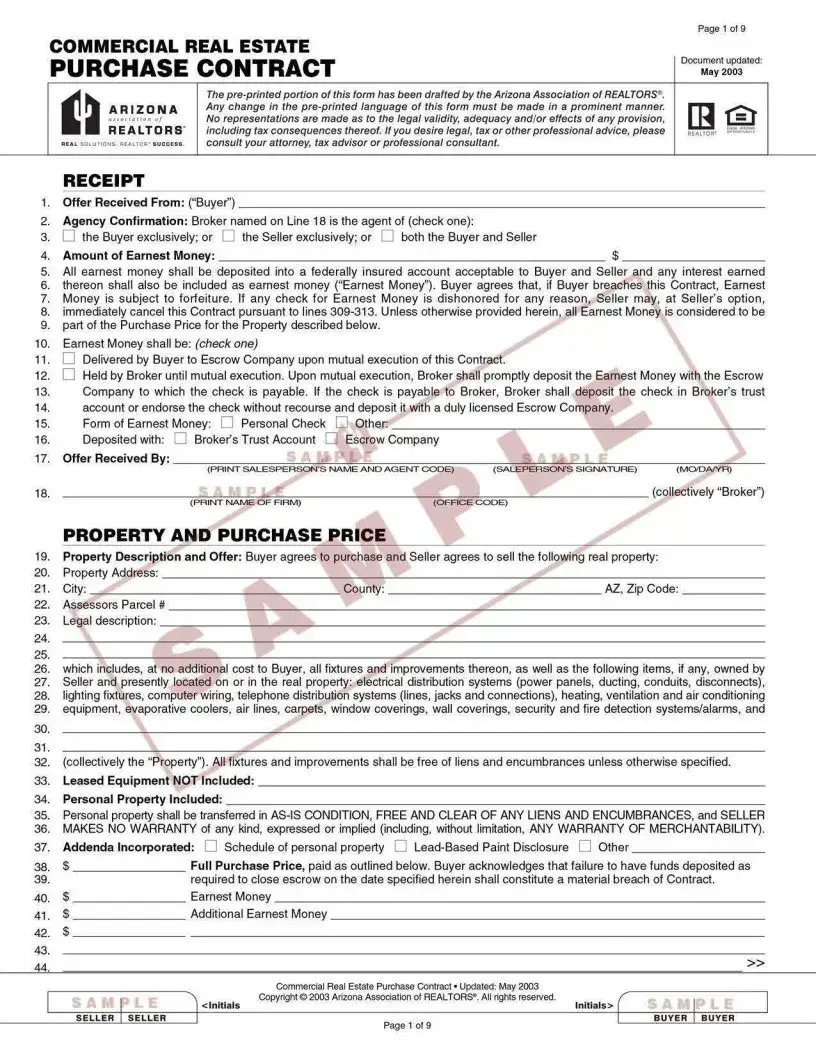
The Arizona Commercial Real Estate Purchase Contract is a crucial document for anyone involved in the buying or selling of commercial properties in the state. This form provides a comprehensive framework that outlines the responsibilities and expectations of both buyers and sellers. It includes essential sections such as the property description, purchase price, and earnest money details, ensuring that all parties are on the same page. The contract specifies how earnest money should be handled, including where it should be deposited and the consequences of any breaches. Additionally, it outlines the due diligence period, allowing buyers to thoroughly inspect the property and assess its suitability for their needs. Important provisions regarding the closing process, possession of the property, and any necessary repairs or corrections are also included. By addressing these key aspects, the Arizona Commercial Real Estate Purchase Contract helps facilitate a smooth transaction while protecting the interests of all involved.
| Fact Name | Details |
|---|---|
| Governing Law | The Arizona Commercial Real Estate Purchase Contract is governed by the laws of the State of Arizona. |
| Earnest Money Requirement | Earnest money must be deposited into a federally insured account acceptable to both Buyer and Seller. |
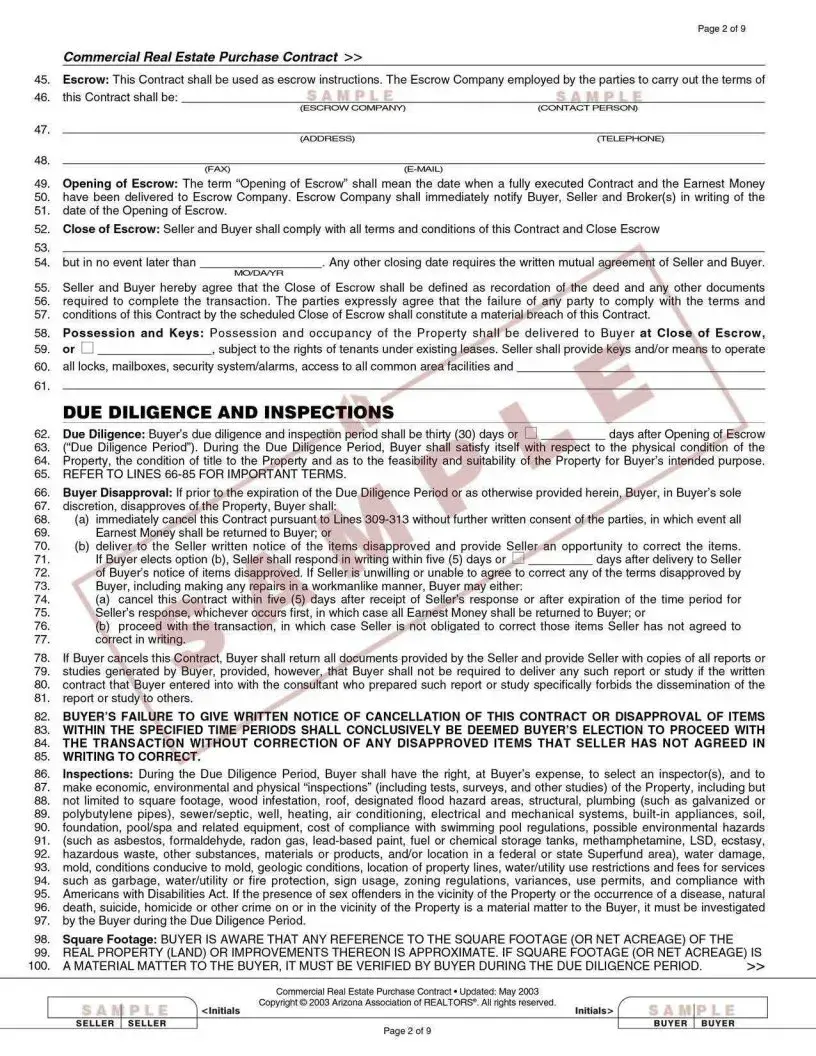
| Inspection Period | Buyers have a Due Diligence Period of 30 days after the Opening of Escrow to inspect the property. |
| Possession Timing | Possession of the property is delivered to the Buyer at Close of Escrow unless otherwise agreed. |
| Disapproval Rights | Buyers can cancel the contract if they disapprove of the property within the Due Diligence Period, and all earnest money will be returned. |
| Inclusion of Fixtures | The contract includes all fixtures and improvements on the property, free of liens unless specified otherwise. |
| Amendments | Any changes to the pre-printed language must be made prominently within the contract. |
Filling out the Arizona Commercial Real Contract form involves several important steps. Each section of the form requires specific information about the buyer, seller, property, and terms of the sale. It is essential to ensure accuracy in every detail, as this document will guide the transaction process.
Once all sections are completed, it is advisable to review the entire form for accuracy before submitting it to the appropriate parties. This careful attention to detail will help facilitate a smoother transaction process.
The Arizona Commercial Real Contract form is designed to facilitate the purchase and sale of commercial real estate in Arizona. It outlines the rights and obligations of both the buyer and the seller, ensuring that all parties understand the terms of the transaction. The form includes sections on earnest money, property description, and due diligence, among other important aspects.
Earnest money is a deposit made by the buyer to demonstrate serious intent to purchase the property. According to the contract, earnest money must be deposited into a federally insured account acceptable to both the buyer and seller. If the buyer breaches the contract, the earnest money may be forfeited. The contract allows for different methods of handling earnest money, including direct deposit with the escrow company or holding it with the broker until mutual execution.
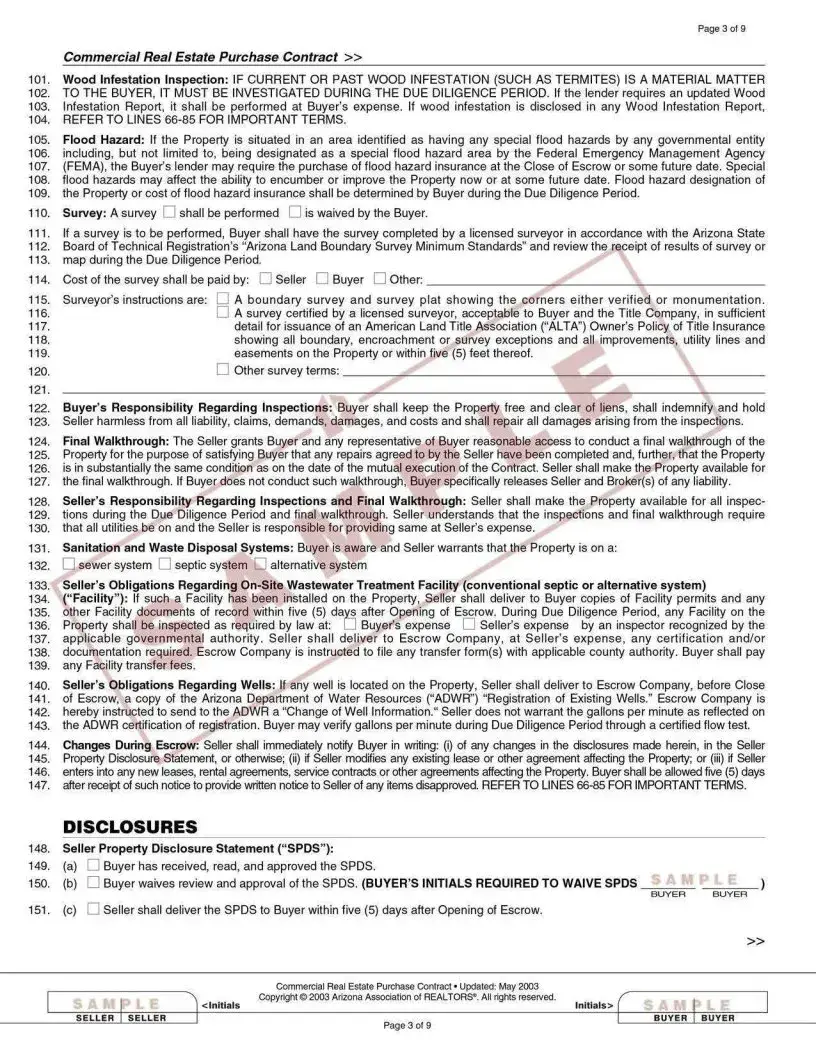
The due diligence period is a specified timeframe, typically thirty days, during which the buyer can inspect the property and assess its condition. This includes evaluating the physical state of the property, reviewing the title, and determining if it meets the buyer's intended use. If the buyer disapproves of any aspect of the property, they have the option to cancel the contract and receive their earnest money back, provided they notify the seller within the due diligence period.
If the buyer disapproves of the property during the due diligence period, they can either cancel the contract or notify the seller of their concerns. If the buyer chooses to notify the seller, the seller has five days to respond. If the seller is unwilling or unable to address the buyer's concerns, the buyer can cancel the contract and receive their earnest money back. Alternatively, the buyer may choose to proceed with the transaction, accepting the property as-is.
The close of escrow is the final step in the transaction where ownership of the property is officially transferred from the seller to the buyer. This is defined as the recordation of the deed and any other necessary documents. Both parties must comply with the terms of the contract by the scheduled closing date, or they may face a material breach of the contract.
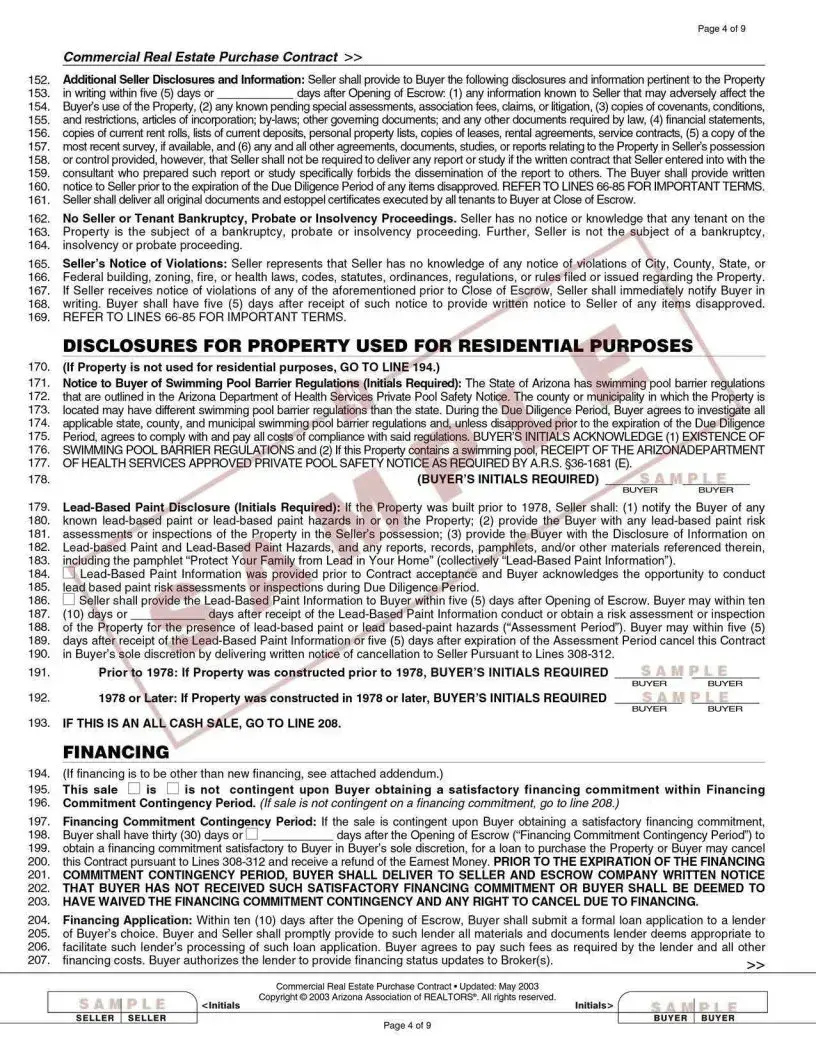
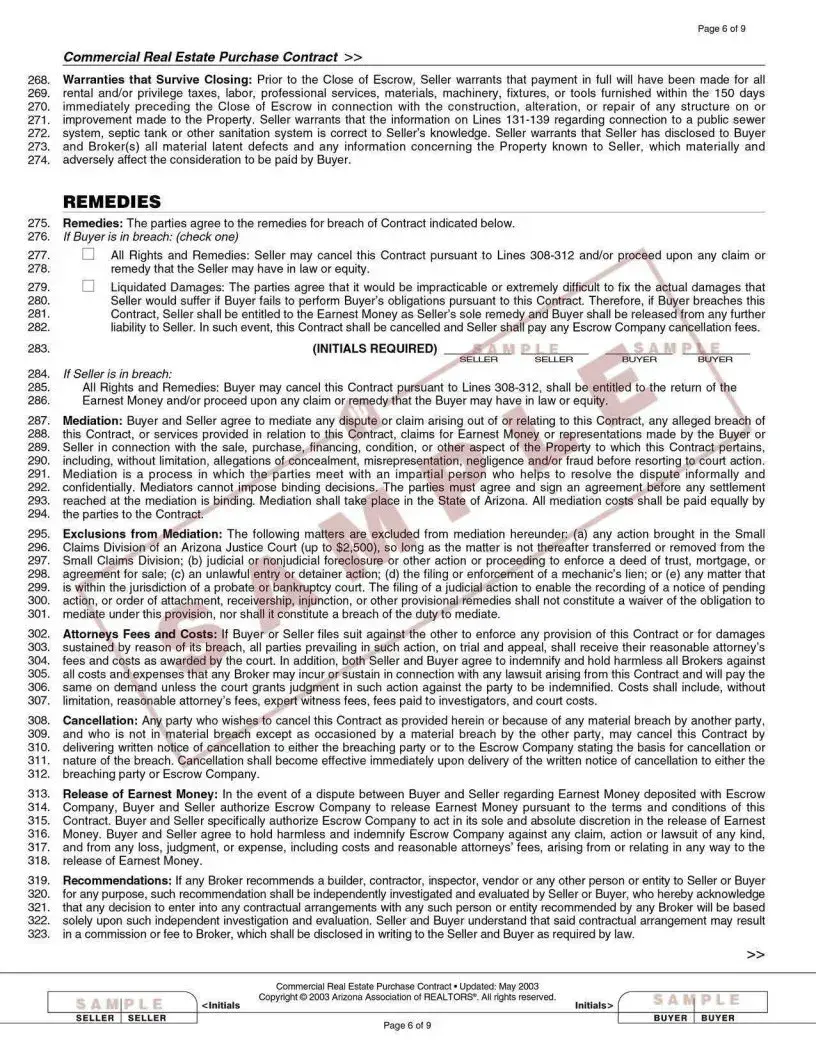
No warranties are provided by the seller regarding the personal property included in the sale. The contract states that personal property will be transferred in as-is condition, free of any liens and encumbrances. The seller makes no express or implied warranties, including any warranty of merchantability. Buyers should conduct thorough inspections to understand the condition of the property before finalizing the purchase.
Buyers are encouraged to seek professional advice if they have questions or concerns about the Arizona Commercial Real Contract form. Consulting with an attorney, tax advisor, or other professional can help clarify any legal, tax, or procedural implications of the contract. It is important for buyers to fully understand their rights and obligations before proceeding with a commercial real estate transaction.
Filling out the Arizona Commercial Real Estate Purchase Contract can be straightforward, but there are common mistakes that people often make. Understanding these pitfalls can save time and prevent potential legal issues.
One frequent error is neglecting to provide a complete property description. Buyers should ensure that the property address, city, county, and assessor's parcel number are accurately filled in. Incomplete information can lead to confusion and disputes later on.
Another mistake involves the earnest money section. Some buyers forget to specify the amount of earnest money or the form in which it will be delivered. This oversight can complicate the contract and may even jeopardize the transaction. Always confirm that the earnest money is deposited into an appropriate account.
Failing to check the agency confirmation box is also a common error. Buyers and sellers must clearly indicate whether the broker represents the buyer, the seller, or both. This clarity is crucial for understanding the broker's role and obligations in the transaction.
Additionally, buyers sometimes overlook the importance of the due diligence period. This period allows buyers to inspect the property and assess its condition. Neglecting to specify the duration of this period can lead to rushed decisions and missed opportunities for negotiation.
Another mistake is not addressing the inclusion or exclusion of personal property. Buyers should be clear about what is included in the sale. If personal property is to be transferred, it should be explicitly stated in the contract to avoid misunderstandings.
Buyers may also fail to provide adequate notice of disapproval during the due diligence period. If issues arise, it is essential to notify the seller in writing within the specified timeframe. Missing this deadline can result in the buyer losing the right to cancel the contract.
Another common oversight is not specifying the closing date. Leaving this blank or vague can create uncertainty and lead to conflicts between the parties. A clear closing date helps ensure that both parties are aligned on expectations.
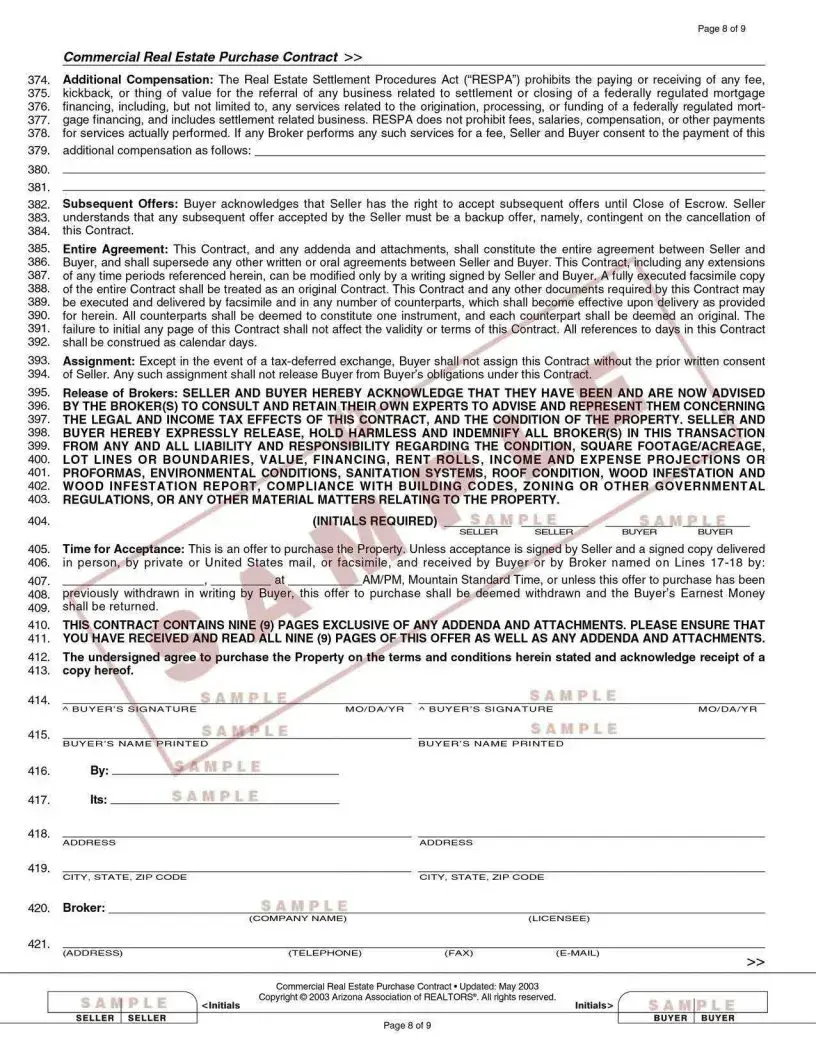
Finally, some buyers do not review the contract thoroughly before signing. It is crucial to read all sections carefully, including any addenda. Taking the time to understand the terms can prevent future disputes and ensure a smoother transaction process.
The Arizona Commercial Real Estate Purchase Contract is a vital document in real estate transactions, but it is often accompanied by several other important forms and documents. Each of these documents serves a specific purpose and helps to ensure that the transaction proceeds smoothly and legally. Below is a list of documents frequently used alongside the Arizona Commercial Real Estate Purchase Contract.
Understanding these documents is crucial for anyone involved in a commercial real estate transaction in Arizona. Each form plays a significant role in protecting the interests of both buyers and sellers, ensuring a clear and legally compliant process. Being well-informed about these documents can facilitate a smoother transaction and help avoid potential disputes down the line.
The Arizona Commercial Real Estate Purchase Contract form shares similarities with several other legal documents used in real estate transactions. Below are four documents that are comparable to this contract, along with a brief explanation of their similarities:
When filling out the Arizona Commercial Real Estate Purchase Contract form, it is essential to approach the process with care. Here are some key dos and don’ts to keep in mind:
Understanding the Arizona Commercial Real Estate Purchase Contract form is essential for both buyers and sellers in the commercial real estate market. However, several misconceptions can lead to confusion and potential pitfalls. Below are some common misunderstandings regarding this contract.
This is not true. The contract allows for contingencies, such as due diligence periods and financing clauses, which can protect the buyer's interests.
Earnest money can be refunded under specific circumstances, particularly if the buyer disapproves of the property during the due diligence period.
While sellers are expected to disclose property conditions, they are not necessarily obligated to make repairs unless specifically agreed upon in the contract.
In fact, the contract can be negotiated. Buyers and sellers may amend terms, including price and contingencies, as long as both parties agree.
Personal property is only included if explicitly stated in the contract. Any items not listed may not be part of the sale.
Closing dates are typically set in the contract and require mutual written agreement to change. Failing to adhere to these dates can lead to breaches.
Each transaction is unique, and the contract can be tailored to fit specific needs and circumstances of the buyer and seller.