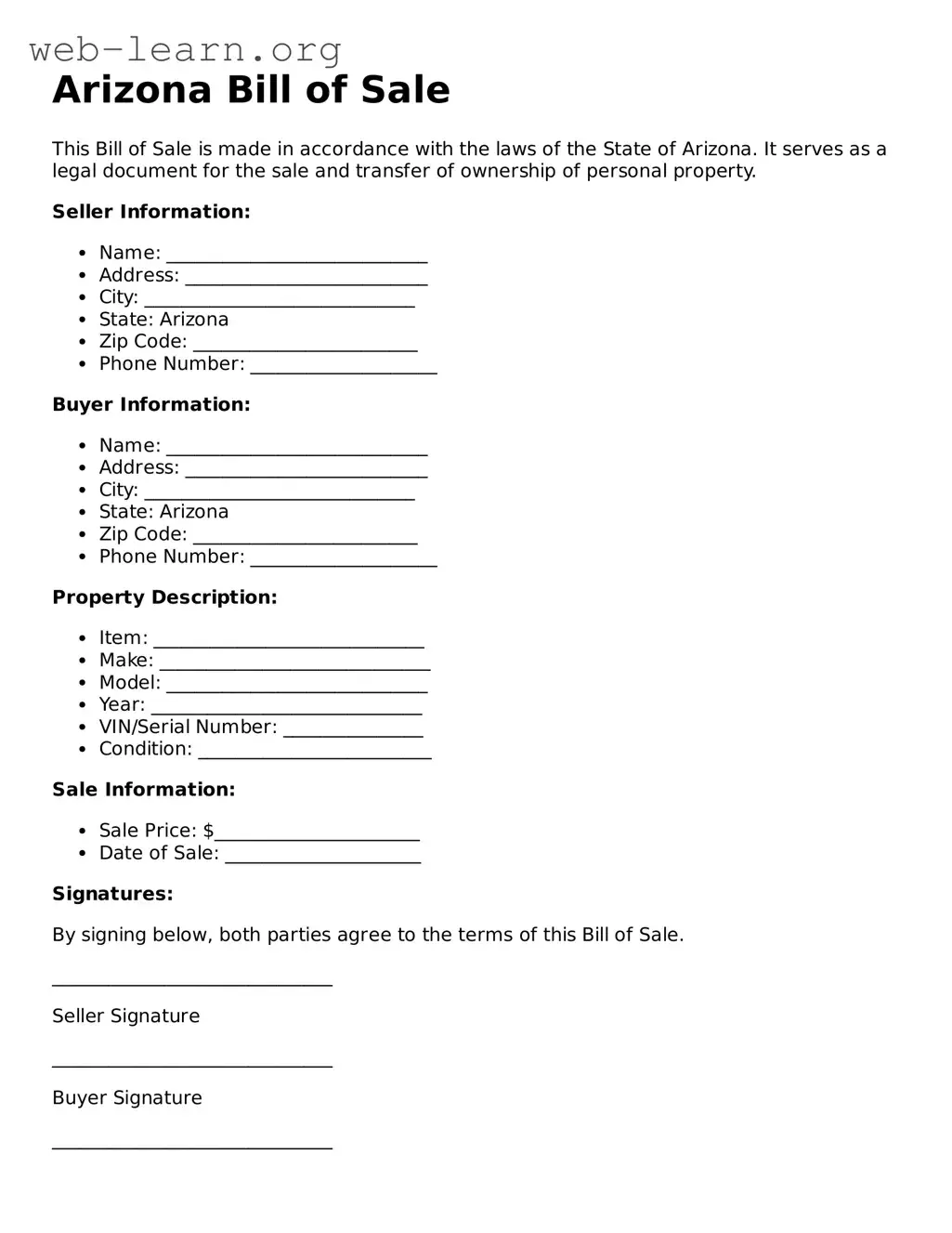
When engaging in the buying or selling of personal property in Arizona, a Bill of Sale form plays a crucial role in documenting the transaction. This form serves as a written record that outlines the details of the sale, including the identities of both the buyer and seller, a description of the item being sold, and the agreed-upon purchase price. It can be used for various types of transactions, from vehicles to household items, providing legal protection for both parties involved. Additionally, the Bill of Sale can help establish ownership and may be required for registration purposes, especially in the case of vehicles or trailers. By ensuring that all pertinent information is clearly stated, this document can help prevent misunderstandings and disputes in the future. Understanding the significance of the Bill of Sale in Arizona not only streamlines the sales process but also fosters transparency and trust between buyers and sellers.
Arizona Bill of Sale
This Bill of Sale is made in accordance with the laws of the State of Arizona. It serves as a legal document for the sale and transfer of ownership of personal property.
Seller Information:
Buyer Information:
Property Description:
Sale Information:
Signatures:
By signing below, both parties agree to the terms of this Bill of Sale.
______________________________
Seller Signature
______________________________
Buyer Signature
______________________________
Date
This document is intended for use in the State of Arizona and should be completed in full to ensure compliance with state laws.
| Fact Name | Description |
|---|---|
| Purpose | The Arizona Bill of Sale form serves as a legal document to record the transfer of ownership of personal property from one individual to another. |
| Governing Laws | This form is governed by the Arizona Revised Statutes, specifically Title 44, Chapter 2, which covers sales and contracts. |
| Required Information | Essential details include the names and addresses of both the buyer and seller, a description of the item being sold, and the sale price. |
| Usage | While not always required, having a Bill of Sale can help protect both parties in case of disputes or legal issues arising from the sale. |
Completing the Arizona Bill of Sale form is an important step in finalizing the sale of a vehicle or personal property. Once you have filled out the form, you will need to ensure that both parties retain a copy for their records. This will help provide proof of the transaction and protect both the buyer and seller.
An Arizona Bill of Sale is a legal document used to transfer ownership of personal property from one party to another. It serves as proof of the transaction and outlines the details of the sale, including the items sold, purchase price, and the names and addresses of both the buyer and seller.
A Bill of Sale is often necessary when selling or purchasing items such as vehicles, boats, or equipment. While not all transactions legally require a Bill of Sale, having one can protect both the buyer and seller by providing a record of the sale.
An Arizona Bill of Sale typically includes the following information:
Yes, a Bill of Sale is required for vehicle sales in Arizona. It helps establish the transfer of ownership and is often needed when registering the vehicle with the Arizona Department of Transportation. The form must be completed and signed by both the buyer and seller.
Yes, you can create your own Bill of Sale in Arizona. However, it is important to ensure that it includes all necessary information and complies with state laws. Templates are available online, which can help guide you in creating a comprehensive document.
A notary is not required for a Bill of Sale in Arizona, but having the document notarized can provide an additional layer of security and authenticity. It may be beneficial, especially for high-value transactions, to have a notary present during the signing.
When filling out the Arizona Bill of Sale form, many individuals make common mistakes that can lead to confusion or even legal issues down the line. Awareness of these pitfalls can help ensure that the transaction goes smoothly and that all necessary details are correctly documented.
One frequent error is failing to include the date of the transaction. This date is crucial as it establishes when the sale took place. Without it, there may be ambiguity regarding the timeline of ownership transfer, which can complicate matters if disputes arise later.
Another mistake involves not providing complete information about the vehicle or item being sold. Buyers and sellers should include the make, model, year, and VIN for vehicles, or a detailed description for other items. Omitting these details can lead to misunderstandings about what exactly was sold.
Additionally, individuals sometimes forget to include the purchase price. This figure is essential for both parties, as it confirms the agreed-upon amount for the transaction. Leaving this blank can create issues if either party needs to reference the sale in the future.
Not having both the buyer's and seller's signatures is another common oversight. Both parties must sign the form to validate the sale. If one signature is missing, the document may not hold up if legal issues arise later.
People also often neglect to include their contact information. Providing a phone number or email address can facilitate communication if there are questions or concerns after the sale. This small detail can make a significant difference in resolving any post-transaction issues.
Some individuals mistakenly assume that a Bill of Sale is only necessary for large transactions. In reality, it’s a good practice to have a Bill of Sale for any sale, regardless of size. This document serves as proof of the transaction and protects both parties.
Another common error is not keeping a copy of the completed Bill of Sale. After the form is filled out and signed, both parties should retain a copy for their records. This ensures that both have proof of the transaction, which can be useful for future reference.
Misunderstanding the purpose of the Bill of Sale can lead to mistakes as well. Some people think it serves as a title transfer document, but it does not replace the need for an official title transfer with the Arizona Department of Transportation. It’s essential to understand the difference to avoid potential issues.
Lastly, individuals sometimes rush through the process without reviewing the entire document. Taking the time to read through the Bill of Sale before finalizing it can help catch any errors or omissions. A careful review can save time and trouble later on.
When engaging in the sale or transfer of personal property in Arizona, the Bill of Sale form is a crucial document. However, several other forms and documents often accompany it to ensure a smooth and legally sound transaction. Here are some commonly used documents that may enhance the process:
Incorporating these documents alongside the Arizona Bill of Sale can provide clarity and protection for both parties involved in the transaction. Ensuring that all necessary paperwork is completed not only fosters a transparent exchange but also helps in maintaining accurate records for future reference.
The Bill of Sale form serves as a critical document in various transactions, particularly in the sale of personal property. Several other documents share similarities with the Bill of Sale, each serving a unique purpose while maintaining a common theme of transferring ownership or documenting a transaction. Below is a list of nine such documents:
When filling out the Arizona Bill of Sale form, it’s important to follow certain guidelines to ensure that the document is valid and effective. Here’s a list of things you should and shouldn’t do:
Many people hold misconceptions about the Arizona Bill of Sale form. Here are four common misunderstandings and the clarifications for each:
This is not true. While many people associate Bills of Sale primarily with vehicle sales, they are also essential for other transactions involving personal property, such as boats, trailers, and even certain types of equipment.
In Arizona, a Bill of Sale does not require notarization to be valid. However, having it notarized can add an extra layer of protection and authenticity, especially for high-value transactions.
While both documents serve important roles in a transaction, they are not the same. A Bill of Sale acts as proof of purchase, while a title transfer officially changes ownership of a vehicle or property in the state records.
This is misleading. A Bill of Sale provides protection for both the buyer and the seller. It outlines the terms of the sale, including the condition of the item, which can be beneficial if disputes arise later.
When filling out and using the Arizona Bill of Sale form, there are several important points to keep in mind. This document serves as proof of a transaction between a buyer and a seller. Here are key takeaways to ensure a smooth process:
By adhering to these guidelines, you can ensure that your Bill of Sale is properly filled out and legally binding.
Bill of Sale in Alabama - A Bill of Sale is often used in real estate transactions for personal property included in the sale.
Free Bill of Sale Georgia - This document helps protect both parties by providing a record of the sale.