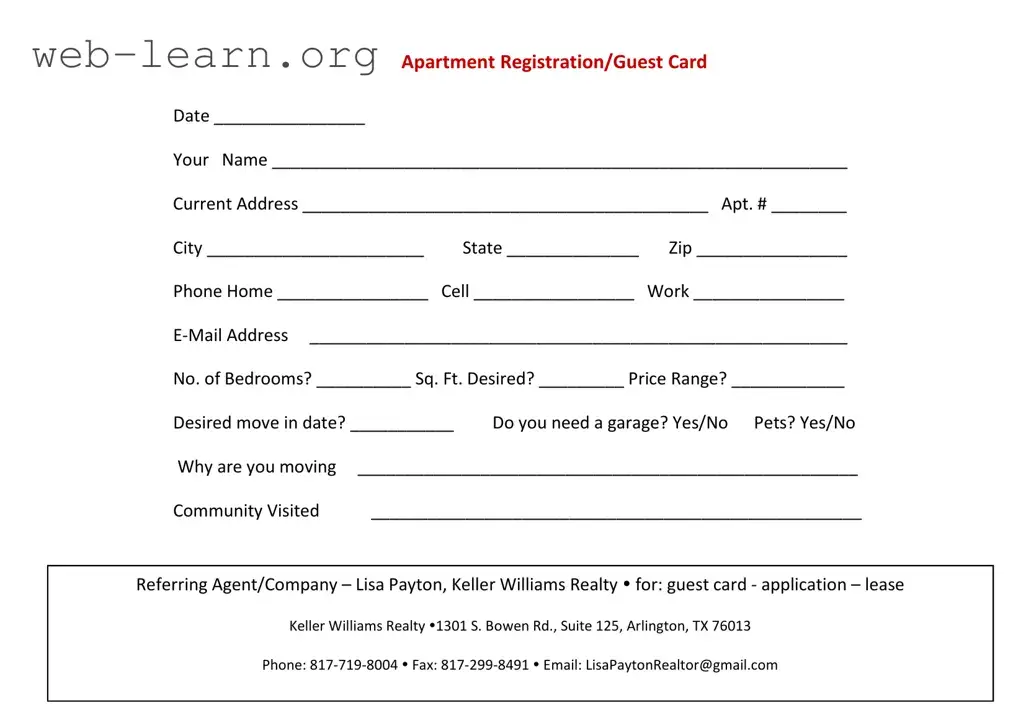
The Apartment Card form serves as a vital tool in the apartment rental process, facilitating communication between prospective tenants and property management. It collects essential information such as the applicant's name, current address, and contact details, ensuring that property managers can reach out effectively. The form also inquires about the number of bedrooms desired, square footage preferences, and budget constraints, allowing for a tailored search for suitable housing options. Additionally, it captures the intended move-in date and whether the applicant requires a garage, which are critical factors in the leasing process. The inclusion of pet preferences and the reason for moving provides further context to property managers, helping them better understand the needs of potential tenants. This form also acknowledges the referring agent, in this case, Lisa Payton from Keller Williams Realty, ensuring that all parties are informed and engaged in the process. By providing comprehensive details, the Apartment Card form streamlines the application process and enhances the overall efficiency of securing a new residence.

| Fact Name | Description |
|---|---|
| Purpose | The Apartment Card form is used to gather essential information from prospective tenants for rental applications. |
| Information Collected | It collects personal details such as name, address, contact information, desired move-in date, and preferences regarding pets and garage needs. |
| Governing Law | In Texas, the Texas Property Code governs rental agreements and related forms, including the Apartment Card. |
| Referring Agent | The form includes a section for the referring agent, which helps in tracking leads and facilitating communication. |
| Contact Information | It provides contact details for the referring agent, ensuring prospective tenants can easily reach out for further inquiries. |
| Usage | Real estate agents and property managers utilize this form to streamline the tenant screening process and improve rental management efficiency. |
Completing the Apartment Card form is a straightforward process. Follow these steps carefully to ensure that all necessary information is accurately provided. Once you finish filling out the form, you can submit it to the appropriate contact for further assistance.
What is the Apartment Card form?
The Apartment Card form is a registration tool used by potential renters to provide their information to property management. It helps streamline the leasing process by collecting essential details such as contact information, desired living arrangements, and preferences.
Who should fill out the Apartment Card form?
Anyone interested in renting an apartment should complete the Apartment Card form. This includes individuals looking for a new place to live, as well as those who may be considering a move in the near future.
What information do I need to provide?
You will need to provide your name, current address, phone numbers, email address, and preferences regarding the apartment. This includes the number of bedrooms, square footage, price range, desired move-in date, garage needs, and pet ownership status.
Is there a fee to submit the Apartment Card form?
No, there is no fee associated with submitting the Apartment Card form. It is a free way for potential renters to express their interest and gather information about available apartments.
How is my information used?
Your information is used by property management to understand your needs and preferences. This helps them match you with suitable apartments and facilitate the leasing process. Your data is kept confidential and only shared with relevant parties involved in the leasing process.
Can I submit the form online?
This may vary by property management. Some may offer an online submission option, while others might require a physical form. Check with your local property management for specific submission methods.
What if I change my mind after submitting the form?
If you decide not to pursue an apartment after submitting the form, simply inform the property management. There are no obligations tied to your submission, and you can withdraw your interest at any time.
Who do I contact if I have questions about the form?
You can reach out to Lisa Payton at Keller Williams Realty for any questions regarding the Apartment Card form. You can contact her via phone at 817-719-8004 or email at [email protected].
What happens after I submit the Apartment Card form?
After submission, a representative from the property management will review your information. They may reach out to you to discuss available apartments that meet your criteria or to schedule a tour. Expect to hear back shortly after you submit the form.
Filling out an Apartment Card form may seem straightforward, but many people overlook crucial details that can impact their application. One common mistake is leaving out essential contact information. This includes phone numbers and email addresses. If a landlord cannot reach you for follow-up questions or updates, your application could be delayed or even rejected.
Another frequent error involves not specifying the desired move-in date. Without this information, property managers cannot assess whether the apartment will be available when you need it. This may lead to misunderstandings or missed opportunities for securing a unit that fits your timeline.
People often underestimate the importance of filling in the price range accurately. Providing a range that is too broad can signal indecision or a lack of seriousness about the application. Conversely, if the range is too low, it may limit your options or lead to disappointment when you find the perfect place just out of reach.
Many applicants forget to indicate whether they need a garage. This detail can be crucial for property managers who want to match you with the right unit. If you require parking but don’t mention it, you may miss out on suitable options that include this amenity.
Pet ownership is another area where mistakes are common. Some people neglect to specify whether they have pets or not. This is critical information, as many apartments have strict pet policies. Failing to disclose this can lead to complications later in the application process.
Another mistake is not providing a clear reason for why you are moving. This information helps landlords understand your situation and may even influence their decision. A vague answer could raise red flags or lead to assumptions that may not be favorable.
Additionally, many applicants overlook the importance of naming the community visited. This detail allows property managers to track interest and may help in the application process. Without this information, your application might seem incomplete or lack context.
Lastly, not mentioning the referring agent or company can be a missed opportunity. Including a referral can lend credibility to your application. It shows that you have a trusted source guiding you, which can make you a more attractive candidate for potential landlords.
When seeking to secure an apartment, the Apartment Card form is just one of several important documents that prospective tenants may encounter. These forms help streamline the application process, ensuring that both landlords and tenants have a clear understanding of expectations and requirements. Below is a list of other common forms and documents that often accompany the Apartment Card form.
Understanding these documents can greatly enhance the apartment hunting experience. Each form plays a crucial role in ensuring that both tenants and landlords are protected and informed throughout the rental process. Being prepared with the right paperwork can make a significant difference in securing the desired living space.
The Apartment Card form is an important document for potential renters, and it shares similarities with several other documents in the rental process. Here are six documents that are comparable to the Apartment Card form:
When filling out the Apartment Card form, there are important guidelines to follow. Here is a list of things you should and shouldn't do:
The Apartment Card form is often misunderstood. Here are seven common misconceptions about this document:
Many believe the Apartment Card form is exclusively for individuals seeking new housing. In reality, it can also be used by current residents looking to update their information or explore new options.
Some people think the form asks for too much personal data. However, it primarily collects essential information necessary for processing housing requests, such as name, contact details, and preferences.
There is a misconception that filling out the Apartment Card form automatically secures a rental unit. In truth, it serves as an initial inquiry and does not guarantee availability.
Some individuals assume the form is limited to certain apartment types. The Apartment Card can be used for various properties managed by the referring agent or company.
Many people mistakenly believe that completing the Apartment Card form constitutes a legal agreement. The form is merely a registration tool and does not create any binding obligations.
There is a notion that the Apartment Card form must be submitted electronically. It can also be filled out and submitted in person, providing flexibility for users.
Some think the form is intended solely for single applicants. In fact, families or groups looking for housing can also utilize the Apartment Card to express their needs.
Filling out the Apartment Card form is an important step in your apartment search. Here are some key takeaways to keep in mind:
By following these guidelines, you can ensure a smoother process as you search for your new apartment.