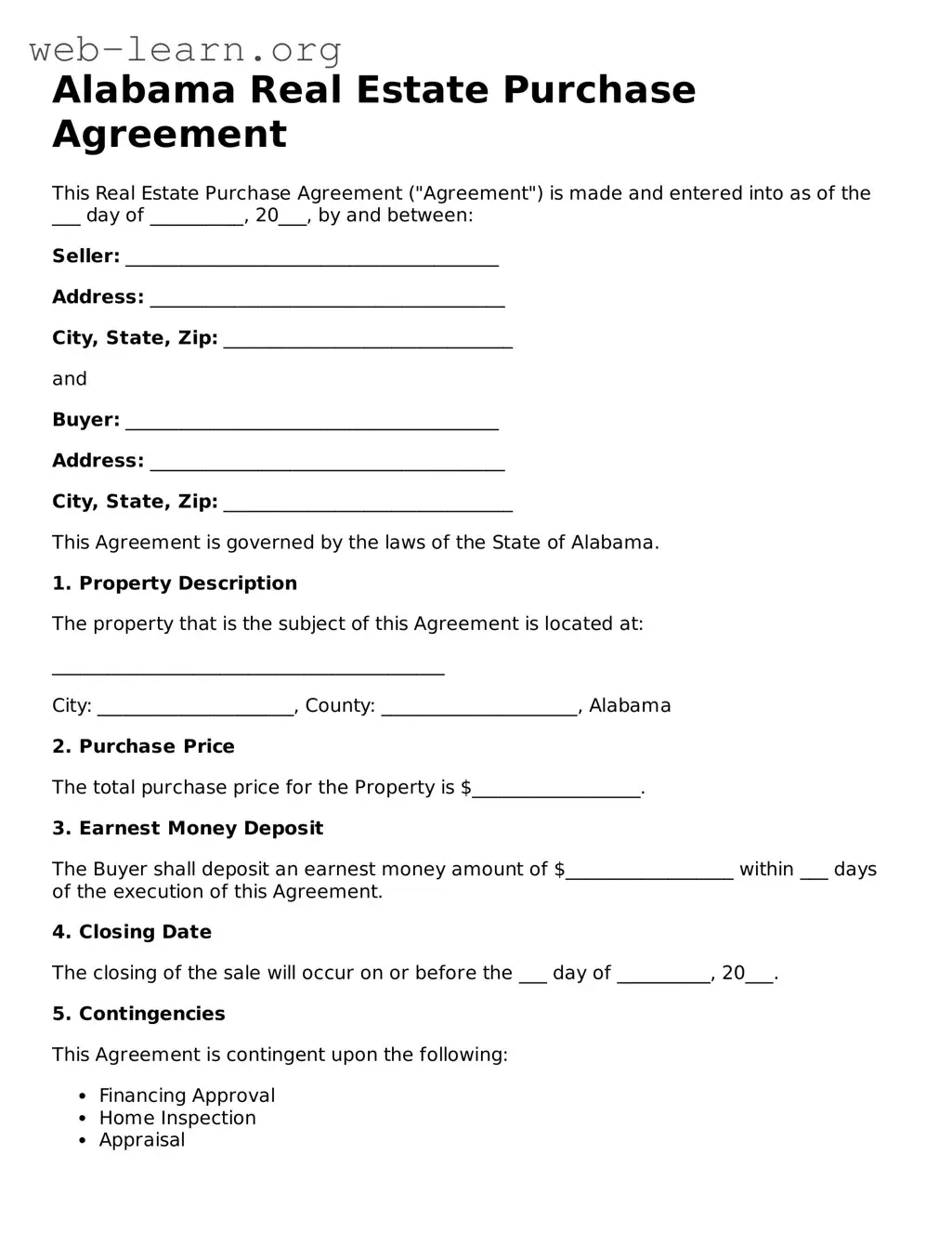
When it comes to buying or selling property in Alabama, having a clear and comprehensive Real Estate Purchase Agreement form is essential. This document serves as a binding contract between the buyer and seller, detailing key terms such as the purchase price, property description, and closing date. It outlines the responsibilities of both parties, ensuring that everyone is on the same page throughout the transaction. Additionally, the agreement includes provisions for contingencies, such as financing or inspections, which protect the interests of both the buyer and seller. By addressing issues like earnest money deposits and potential repairs, the form helps to minimize misunderstandings and disputes. Understanding the nuances of this agreement is crucial for anyone involved in a real estate transaction, whether you’re a seasoned investor or a first-time homebuyer.
Alabama Real Estate Purchase Agreement
This Real Estate Purchase Agreement ("Agreement") is made and entered into as of the ___ day of __________, 20___, by and between:
Seller: ________________________________________
Address: ______________________________________
City, State, Zip: _______________________________
and
Buyer: ________________________________________
Address: ______________________________________
City, State, Zip: _______________________________
This Agreement is governed by the laws of the State of Alabama.
1. Property Description
The property that is the subject of this Agreement is located at:
__________________________________________
City: _____________________, County: _____________________, Alabama
2. Purchase Price
The total purchase price for the Property is $__________________.
3. Earnest Money Deposit
The Buyer shall deposit an earnest money amount of $__________________ within ___ days of the execution of this Agreement.
4. Closing Date
The closing of the sale will occur on or before the ___ day of __________, 20___.
5. Contingencies
This Agreement is contingent upon the following:
6. Title and Possession
The Seller agrees to provide a clear title to the Buyer at closing, and possession of the Property will be delivered to the Buyer on the closing date.
7. Additional Terms
Any additional terms or conditions agreed upon by both parties should be outlined here:
____________________________________________________
____________________________________________________
8. Signatures
By signing below, both parties agree to the terms of this Agreement:
______________________________
Seller's Signature
______________________________
Buyer's Signature
______________________________
Date
| Fact Name | Details |
|---|---|
| Governing Law | The Alabama Real Estate Purchase Agreement is governed by the laws of the State of Alabama. |
| Purpose | This form serves as a legally binding contract between a buyer and a seller for the sale of real property. |
| Essential Components | Key elements include the purchase price, property description, and terms of the sale. |
| Earnest Money | The agreement often requires an earnest money deposit to demonstrate the buyer's commitment. |
| Contingencies | Buyers can include contingencies, such as financing or inspection, to protect their interests. |
| Disclosure Requirements | Sellers must comply with Alabama's disclosure laws, informing buyers of any known property issues. |
Filling out the Alabama Real Estate Purchase Agreement form is a critical step in the home buying process. Completing this form accurately will help facilitate a smooth transaction between the buyer and seller. Once you have filled out the form, it will be essential to review it thoroughly before submitting it to ensure all details are correct.
The Alabama Real Estate Purchase Agreement is a legally binding document that outlines the terms and conditions under which a property is sold. It serves as a contract between the buyer and the seller, detailing essential information such as the purchase price, property description, and closing date.
This form is primarily used by buyers and sellers of real estate in Alabama. Real estate agents, attorneys, and other professionals may also utilize the agreement to facilitate the transaction and ensure that all parties understand their rights and obligations.
The agreement typically includes:
Yes, the agreement can be modified, but both parties must agree to any changes. It is advisable to document any modifications in writing to avoid misunderstandings in the future.
If either the buyer or seller fails to meet their obligations as outlined in the agreement, the other party may have the right to seek legal remedies. This could include enforcing the contract or seeking damages. It’s essential to understand the implications of each party's responsibilities.
No, a real estate agent is not required to use the Alabama Real Estate Purchase Agreement, but it is highly recommended. Using a standardized form helps ensure that all necessary legal elements are included and can protect both parties in the transaction.
The purchase price is typically determined through negotiations between the buyer and seller. Factors influencing the price may include the property’s market value, condition, and location, as well as comparable sales in the area.
Contingencies are conditions that must be met for the sale to proceed. Common contingencies include financing approval, home inspections, and appraisal results. They are important because they protect the buyer by allowing them to back out of the agreement without penalty if specific conditions are not satisfied.
To ensure the agreement is legally binding, it should be signed by both parties and include all necessary details. It is also advisable to have the agreement reviewed by a real estate attorney to confirm that it complies with Alabama laws and regulations.
Copies of the Alabama Real Estate Purchase Agreement can be obtained from real estate agents, legal professionals, or online legal document services. Ensure that the version you use is up-to-date and complies with current Alabama real estate laws.
When filling out the Alabama Real Estate Purchase Agreement form, individuals often overlook key details that can lead to complications later on. One common mistake is failing to provide accurate property descriptions. It’s crucial to include the correct address and legal description of the property. Inaccuracies can create confusion and may even render the agreement unenforceable.
Another frequent error involves the omission of important dates. Buyers and sellers must clearly state the date of the agreement and any deadlines for contingencies or closing. Missing these dates can lead to misunderstandings and delays in the transaction process.
Many people also neglect to specify the purchase price. While this may seem obvious, it’s essential to clearly outline the total amount being agreed upon. Without this information, parties may find themselves at odds over financial expectations.
In addition, some individuals fail to include necessary contingencies. These are conditions that must be met for the sale to proceed, such as financing or inspection contingencies. Omitting these can leave buyers vulnerable to unforeseen issues.
Another mistake is not addressing how earnest money will be handled. Buyers typically provide a deposit to show their commitment to the purchase. Clearly stating the amount and conditions for the earnest money can prevent disputes later.
Misunderstandings about the closing costs can also arise. Buyers and sellers should explicitly outline who is responsible for which costs. This clarity helps avoid surprises at closing, ensuring a smoother transaction.
People often forget to include the signatures of all parties involved. An unsigned agreement is not legally binding. Therefore, it’s vital to ensure that everyone involved in the transaction has signed the document.
Another common oversight is not including any disclosures required by Alabama law. Sellers must disclose known issues with the property, such as structural problems or pest infestations. Failing to do so can lead to legal repercussions.
Furthermore, individuals sometimes overlook the importance of reviewing the entire agreement before submission. Skimming through the document can lead to missed errors or unclear terms. Taking the time to read everything carefully can save significant headaches down the line.
Lastly, many people do not seek legal advice when completing the form. Real estate transactions can be complex, and having a knowledgeable professional review the agreement can help identify potential pitfalls. Engaging with a lawyer can provide peace of mind and ensure that all legal requirements are met.
When engaging in a real estate transaction in Alabama, several important documents accompany the Real Estate Purchase Agreement. These documents help ensure that both parties are protected and that the transaction proceeds smoothly. Below is a list of commonly used forms and documents.
Understanding these documents is vital for anyone involved in a real estate transaction. Each plays a specific role in protecting the interests of both buyers and sellers, ensuring a successful closing process. Be sure to review each document carefully and seek professional advice if needed.
Lease Agreement: This document outlines the terms and conditions under which a landlord allows a tenant to occupy a property. Like the Real Estate Purchase Agreement, it specifies the parties involved, the property description, and the obligations of each party.
Option to Purchase Agreement: This agreement grants a buyer the right, but not the obligation, to purchase a property at a later date. Similar to a Real Estate Purchase Agreement, it includes terms regarding price and conditions for the eventual sale.
Sales Contract: Often used in various types of transactions, this document outlines the terms of sale for goods or services. It shares the same structure as a Real Estate Purchase Agreement, detailing the parties, property, and terms of sale.
Purchase and Sale Agreement: This document is specifically used for real estate transactions. It contains many of the same elements as the Real Estate Purchase Agreement, including price, financing, and contingencies.
Real Estate Listing Agreement: This agreement is between a property owner and a real estate agent. It outlines the terms of the listing and shares similarities in terms of property description and obligations of the parties.
Joint Venture Agreement: In real estate development, this document outlines the partnership between parties to develop a property. It includes terms similar to those in a Real Estate Purchase Agreement, such as contributions and profit-sharing.
Title Transfer Document: This document is used to transfer ownership of property from one party to another. It serves a similar purpose to a Real Estate Purchase Agreement, ensuring that ownership rights are clearly defined.
Financing Agreement: When a buyer secures a loan to purchase property, this document outlines the terms of the financing. It parallels the Real Estate Purchase Agreement by detailing the financial obligations involved in the transaction.
Home Inspection Agreement: This agreement is between a buyer and a home inspector. It details the terms of the inspection process, similar to how a Real Estate Purchase Agreement outlines terms related to the sale of the property.
Escrow Agreement: This document outlines the terms under which a neutral third party holds funds or documents until certain conditions are met. It shares a focus on the conditions of the transaction, much like a Real Estate Purchase Agreement.
When filling out the Alabama Real Estate Purchase Agreement form, there are several important considerations to keep in mind. Here’s a list of things you should and shouldn't do:
By following these guidelines, you can help ensure that the process goes smoothly and that the agreement is valid and enforceable.
Misconceptions about the Alabama Real Estate Purchase Agreement form can lead to confusion for buyers and sellers. Here are nine common misunderstandings:
While having a lawyer can be beneficial, it is not mandatory. Many individuals successfully complete transactions without legal representation.
While signing indicates intent, certain conditions, such as financing or inspections, may need to be satisfied before the agreement becomes fully binding.
Both the buyer and seller must sign the agreement for it to be valid. Each party's signature indicates acceptance of the terms.
Many terms can be negotiated, including the purchase price, closing date, and any contingencies. Open communication can lead to mutually beneficial changes.
In Alabama, a real estate purchase agreement must be in writing to be enforceable. Oral agreements are generally not recognized.
There are circumstances under which a seller may be able to back out, particularly if specific contingencies have not been met.
Only items specifically listed in the agreement are included in the sale. Buyers should clarify what personal property is included.
Depending on the terms of the agreement, the seller may be responsible for certain repairs before closing. Buyers should review these terms carefully.
While closing dates are important, they can often be adjusted if both parties agree to the change. Flexibility can help accommodate unforeseen circumstances.
When dealing with the Alabama Real Estate Purchase Agreement form, it is important to keep several key points in mind. Understanding these aspects can help ensure a smoother transaction process.
Following these guidelines can help facilitate a successful real estate transaction in Alabama.
Oregon Real Estate Purchase Agreement - The agreement includes contingencies that may affect the sale, such as financing or inspections.
Agreement of Sale Hawaii - Sets a timeline for the closing date of the transaction.
For Sale by Owner Contract Arkansas - Specifies the condition in which the property must be delivered.