The Alabama Power of Attorney form is a crucial document that allows individuals to appoint someone they trust to make decisions on their behalf. This form can cover a wide range of responsibilities, from managing financial matters to making healthcare decisions. It is important to understand that the person you appoint, known as the agent or attorney-in-fact, will have the authority to act in your best interest, but their powers can be tailored to fit your specific needs. Whether you need someone to handle your finances while you are away or to make medical decisions during a health crisis, this form is designed to provide clarity and legal backing. Additionally, the Alabama Power of Attorney form can be durable, meaning it remains effective even if you become incapacitated, or it can be limited to a specific time frame or purpose. Understanding the nuances of this document is essential for ensuring your wishes are honored and your affairs are managed appropriately when you cannot do so yourself.
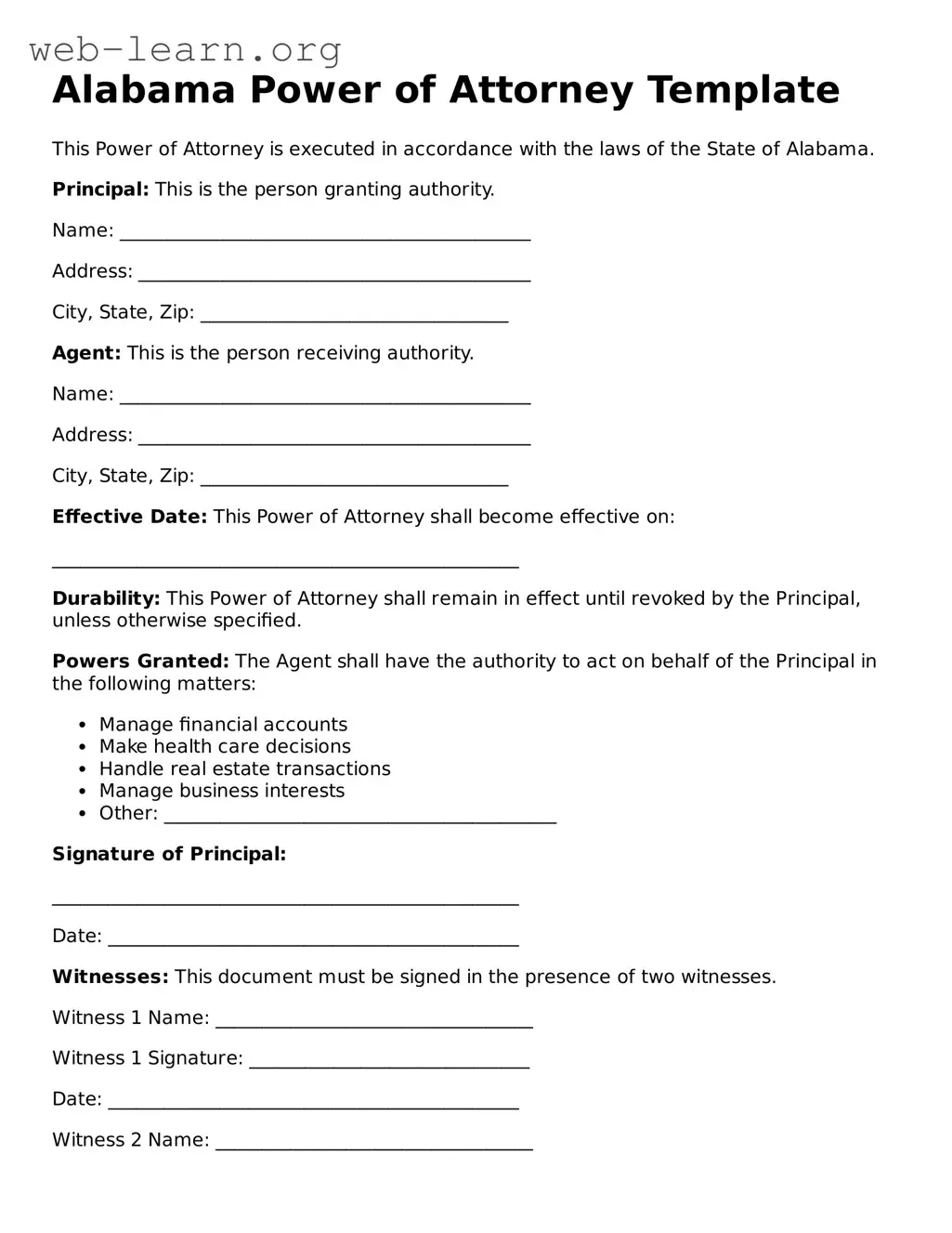
Alabama Power of Attorney Template
This Power of Attorney is executed in accordance with the laws of the State of Alabama.
Principal: This is the person granting authority.
Name: ____________________________________________
Address: __________________________________________
City, State, Zip: _________________________________
Agent: This is the person receiving authority.
Name: ____________________________________________
Address: __________________________________________
City, State, Zip: _________________________________
Effective Date: This Power of Attorney shall become effective on:
__________________________________________________
Durability: This Power of Attorney shall remain in effect until revoked by the Principal, unless otherwise specified.
Powers Granted: The Agent shall have the authority to act on behalf of the Principal in the following matters:
Signature of Principal:
__________________________________________________
Date: ____________________________________________
Witnesses: This document must be signed in the presence of two witnesses.
Witness 1 Name: __________________________________
Witness 1 Signature: ______________________________
Date: ____________________________________________
Witness 2 Name: __________________________________
Witness 2 Signature: ______________________________
Date: ____________________________________________
Notarization: This document must be notarized to be valid.
State of Alabama
County of ________________________________
On this _____ day of ____________, 20____, before me, a Notary Public, personally appeared the Principal and the witnesses, known to me to be the persons whose names are subscribed to this Power of Attorney.
Notary Public Signature: __________________________
My Commission Expires: __________________________
| Fact Name | Description |
|---|---|
| Definition | The Alabama Power of Attorney form allows an individual to designate another person to act on their behalf in legal or financial matters. |
| Governing Law | The Alabama Uniform Power of Attorney Act governs the use and execution of Power of Attorney forms in Alabama. |
| Types | There are different types of Power of Attorney, including General, Limited, and Durable, each serving specific purposes. |
| Durability | A Durable Power of Attorney remains effective even if the principal becomes incapacitated, unlike a standard Power of Attorney. |
| Execution Requirements | The form must be signed by the principal in the presence of a notary public and two witnesses to be valid. |
| Revocation | The principal can revoke the Power of Attorney at any time, provided they do so in writing. |
| Limitations | Some actions, such as making a will or certain healthcare decisions, may not be authorized under a Power of Attorney. |
Once you have the Alabama Power of Attorney form in hand, you can begin the process of filling it out. This form allows you to designate someone to act on your behalf in legal matters. Follow these steps carefully to ensure that all necessary information is included and accurate.
After completing the form, ensure that all parties involved understand their roles. Keep the original document in a safe place and provide copies to your agent and any relevant institutions.
A Power of Attorney (POA) is a legal document that allows one person, known as the principal, to authorize another person, called the agent or attorney-in-fact, to act on their behalf. This can include making financial decisions, managing property, or handling legal matters. In Alabama, a POA can be general or limited in scope, depending on the needs of the principal.
In Alabama, there are several types of Power of Attorney forms:
To create a Power of Attorney in Alabama, the principal must complete a written document that clearly states their intentions. The document must be signed by the principal in the presence of a notary public. Additionally, witnesses may be required depending on the type of POA being created. It's essential to ensure that the form complies with Alabama state laws.
Yes, a principal can revoke a Power of Attorney at any time as long as they are mentally competent. To revoke the POA, the principal should create a written revocation document and provide copies to the agent and any institutions or individuals that relied on the original POA. This ensures that all parties are aware of the change.
If the principal becomes incapacitated, a Durable Power of Attorney remains in effect, allowing the agent to continue making decisions on behalf of the principal. However, if the POA is not durable, it will become void upon the principal's incapacitation. Therefore, it's crucial to consider the type of POA when planning for potential incapacity.
The agent has a fiduciary duty to act in the best interests of the principal. This includes managing the principal's finances responsibly, keeping accurate records of transactions, and avoiding conflicts of interest. The agent must also follow any specific instructions outlined in the Power of Attorney document.
A Power of Attorney created in Alabama is generally valid in other states, but it is advisable to check the specific laws of the other state. Some states may have different requirements for POA documents. To ensure validity, consider consulting with a legal professional if the agent needs to use the POA outside of Alabama.
Yes, a Medical Power of Attorney specifically allows an agent to make healthcare decisions on behalf of the principal. This type of POA is crucial for ensuring that medical choices align with the principal's wishes if they cannot communicate their preferences due to illness or injury.
Power of Attorney forms for Alabama can be found online through various legal websites, or they may be available at local legal aid offices and libraries. It is important to use a form that complies with Alabama state laws to ensure its validity.
Filling out the Alabama Power of Attorney form requires careful attention to detail. One common mistake is failing to specify the powers granted. Without clear definitions, the agent may not have the authority to act in the principal's best interest. Always outline the specific powers you wish to confer.
Another frequent error is neglecting to date the document. A missing date can lead to confusion about when the powers take effect. Always include the date to establish a clear timeline.
People often overlook the importance of signing the form correctly. The principal must sign the document in the presence of a notary. If this step is skipped, the form may be deemed invalid. Ensure that all signatures are present and properly notarized.
Some individuals fail to name a successor agent. If the primary agent is unable or unwilling to serve, this oversight can create complications. Designating a backup agent ensures that someone is always available to act on your behalf.
Inadequate witness requirements are another pitfall. Alabama law requires two witnesses for the Power of Attorney to be valid. Not including witnesses can invalidate the document, so always ensure compliance with this requirement.
People sometimes use outdated forms. Laws change, and using an old version of the Power of Attorney form can lead to issues. Always verify that you are using the most current version of the form.
Another mistake is failing to communicate with the appointed agent. It's vital to discuss your intentions and expectations with the agent before completing the form. This conversation helps ensure that they understand your wishes and can act accordingly.
Some individuals forget to review the document after completion. Errors can occur during the filling process, and a final review can catch mistakes. Take the time to double-check all information for accuracy.
People also sometimes neglect to store the document safely. A Power of Attorney is a crucial legal document, and losing it can create significant issues. Keep it in a secure location and inform trusted individuals about its whereabouts.
Lastly, many fail to update the Power of Attorney when their circumstances change. Life events, such as marriage or divorce, may affect your choices. Regularly review and update the document to reflect your current wishes.
When creating a Power of Attorney in Alabama, there are several other documents that may be beneficial to consider. Each of these documents serves a unique purpose and can help ensure that your wishes are clearly communicated and legally upheld. Below is a list of common forms that often accompany a Power of Attorney.
Understanding these documents can help you make informed decisions about your legal and healthcare preferences. Consulting with a legal professional can provide further clarity and ensure that all necessary forms are correctly prepared and executed.
The Power of Attorney (POA) form allows one person to make decisions on behalf of another. While it serves a unique purpose, several other documents share similarities in terms of granting authority or managing affairs. Here are ten documents that are similar to a Power of Attorney:
When filling out the Alabama Power of Attorney form, it’s important to proceed with care. Here’s a list of things to do and avoid to ensure the document is completed correctly.
Understanding the Alabama Power of Attorney form is essential for anyone considering its use. However, several misconceptions often arise. Here are ten common misunderstandings, along with clarifications.
Addressing these misconceptions can help individuals make informed decisions about using a Power of Attorney in Alabama.
Filling out and using the Alabama Power of Attorney form is an important process that requires careful attention. Here are some key takeaways to consider:
Being informed about these aspects can help ensure that your Power of Attorney is effective and aligns with your intentions.
Poa Papers - A Power of Attorney can also provide guidance on your healthcare preferences.
Hawaii Poa - A Power of Attorney can help in situations where you are out of the country.