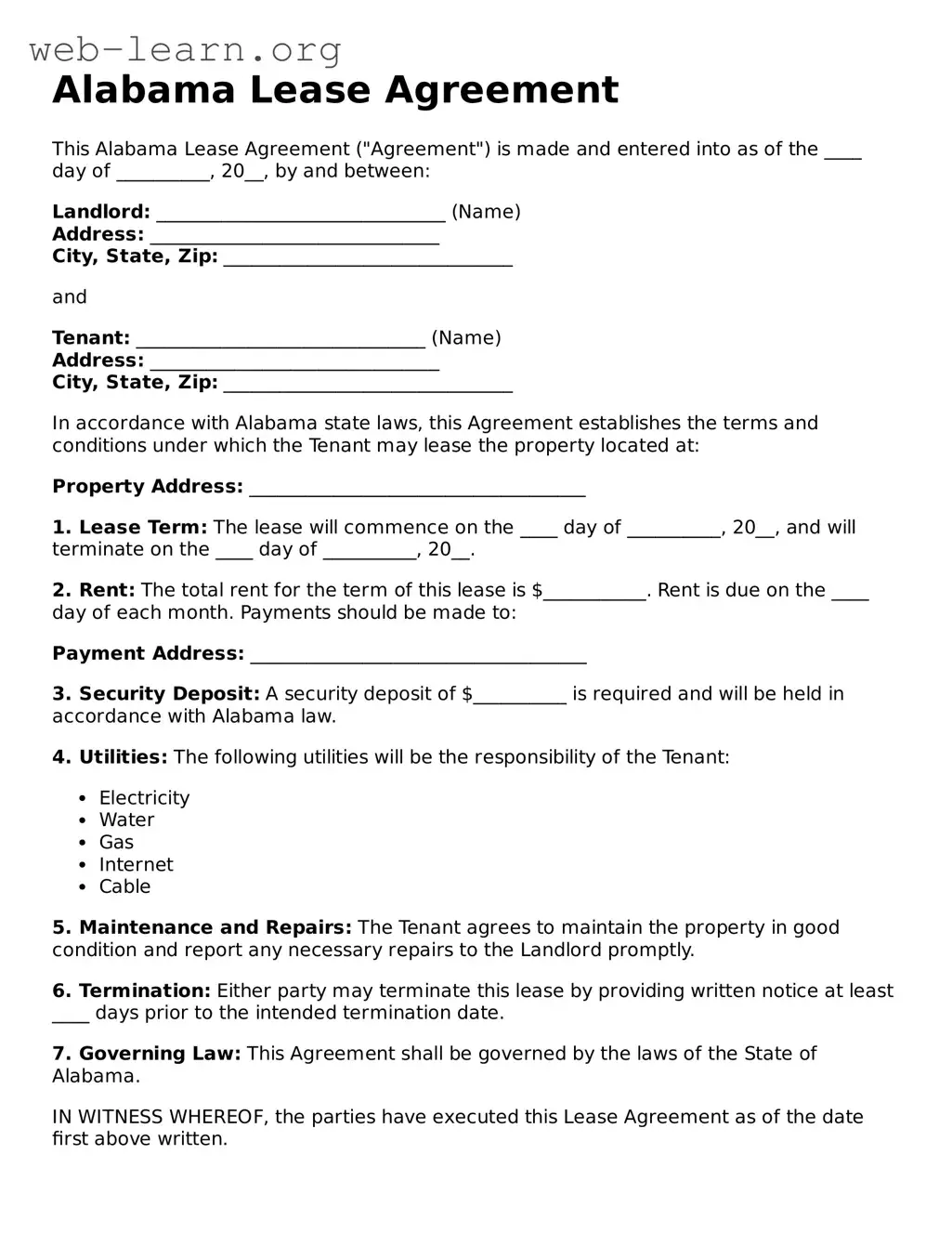
When renting a property in Alabama, understanding the Lease Agreement form is essential for both landlords and tenants. This document serves as a binding contract that outlines the rights and responsibilities of each party throughout the rental period. Key components of the lease include the duration of the tenancy, the amount of rent due, and the security deposit requirements. Additionally, the agreement addresses maintenance responsibilities, rules regarding pets, and conditions for terminating the lease. By clearly defining these elements, the Lease Agreement helps to prevent misunderstandings and disputes, ensuring a smoother rental experience. Whether you are a seasoned landlord or a first-time renter, familiarizing yourself with this form can empower you to navigate the rental process with confidence and clarity.
Alabama Lease Agreement
This Alabama Lease Agreement ("Agreement") is made and entered into as of the ____ day of __________, 20__, by and between:
Landlord: _______________________________ (Name)
Address: _______________________________
City, State, Zip: _______________________________
and
Tenant: _______________________________ (Name)
Address: _______________________________
City, State, Zip: _______________________________
In accordance with Alabama state laws, this Agreement establishes the terms and conditions under which the Tenant may lease the property located at:
Property Address: ____________________________________
1. Lease Term: The lease will commence on the ____ day of __________, 20__, and will terminate on the ____ day of __________, 20__.
2. Rent: The total rent for the term of this lease is $___________. Rent is due on the ____ day of each month. Payments should be made to:
Payment Address: ____________________________________
3. Security Deposit: A security deposit of $__________ is required and will be held in accordance with Alabama law.
4. Utilities: The following utilities will be the responsibility of the Tenant:
5. Maintenance and Repairs: The Tenant agrees to maintain the property in good condition and report any necessary repairs to the Landlord promptly.
6. Termination: Either party may terminate this lease by providing written notice at least ____ days prior to the intended termination date.
7. Governing Law: This Agreement shall be governed by the laws of the State of Alabama.
IN WITNESS WHEREOF, the parties have executed this Lease Agreement as of the date first above written.
Landlord Signature: _______________________________
Date: ___________
Tenant Signature: _______________________________
Date: ___________
| Fact Name | Description |
|---|---|
| Governing Law | The Alabama Lease Agreement is governed by the Alabama Code Title 35, Chapter 9. |
| Parties Involved | The lease agreement involves a lessor (landlord) and a lessee (tenant). |
| Lease Duration | The agreement specifies the duration of the lease, which can be fixed-term or month-to-month. |
| Security Deposit | Alabama law allows landlords to collect a security deposit, typically not exceeding one month's rent. |
| Rental Payments | The agreement outlines the amount of rent, payment due dates, and acceptable payment methods. |
| Maintenance Responsibilities | The lease defines maintenance responsibilities for both the landlord and the tenant. |
| Termination Clause | Terms for lease termination, including notice periods, must be clearly stated in the agreement. |
| Pet Policy | The lease may include a pet policy, detailing whether pets are allowed and any associated fees. |
| Alterations | Any rules regarding alterations to the property by the tenant should be specified in the lease. |
| Dispute Resolution | The agreement may outline procedures for resolving disputes between the landlord and tenant. |
Filling out the Alabama Lease Agreement form requires careful attention to detail. Each section of the form needs to be completed accurately to ensure clarity and compliance with the lease terms. Below are the steps to successfully fill out the form.
Once the form is completed, both the landlord and tenant should retain copies for their records. This ensures that all parties have access to the agreed-upon terms of the lease.
What is an Alabama Lease Agreement?
An Alabama Lease Agreement is a legal document that outlines the terms and conditions under which a landlord rents property to a tenant. This agreement protects the rights of both parties and specifies important details such as rental amount, duration of the lease, and responsibilities for maintenance and repairs.
What should be included in the Lease Agreement?
Key elements of an Alabama Lease Agreement typically include:
Is a written Lease Agreement required in Alabama?
While oral agreements can be legally binding, having a written Lease Agreement is highly recommended. A written document provides clarity and serves as evidence in case of disputes. Alabama law does not mandate a written lease for leases shorter than one year, but it is always best to document the agreement in writing.
Can a Lease Agreement be modified?
Yes, a Lease Agreement can be modified, but any changes must be documented in writing and signed by both the landlord and tenant. Common modifications may include changes to the rent amount, lease duration, or terms regarding pets and maintenance responsibilities. Verbal agreements regarding modifications are not enforceable.
What happens if a tenant breaks the Lease Agreement?
If a tenant breaks the Lease Agreement, they may be held liable for any financial damages incurred by the landlord. This can include lost rent and costs associated with re-renting the property. The specific consequences depend on the terms outlined in the lease, as well as Alabama state laws. Landlords must follow proper legal procedures to evict a tenant if necessary.
When filling out the Alabama Lease Agreement form, many people overlook crucial details. One common mistake is failing to include the full names of all tenants. It’s essential to list everyone who will be living in the rental unit. Missing names can lead to confusion about who is responsible for the lease terms.
Another frequent error is neglecting to specify the rental property address completely. The address should include the street number, street name, city, and zip code. Omitting any part of this information can create issues with identification and enforcement of the lease.
People often forget to indicate the lease term. Whether it’s a month-to-month agreement or a fixed-term lease, this information must be clear. Not stating the duration can lead to misunderstandings about when the lease begins and ends.
Some individuals mistakenly leave out the rent amount. Clearly stating the monthly rent is vital. This amount should be agreed upon by both parties and recorded accurately to avoid disputes later on.
Another mistake is not including the security deposit terms. The lease should specify how much the deposit is, when it is due, and the conditions for its return. Without this information, tenants may not understand their financial obligations.
People sometimes fail to outline the maintenance responsibilities. It’s important to clarify who is responsible for repairs and upkeep. This prevents conflicts over who should handle issues that arise during the lease period.
Not including a clause about pets is another oversight. If pets are allowed, the lease should specify any restrictions or additional fees. If pets are not allowed, this should be clearly stated to avoid future complications.
Lastly, many overlook the importance of including a termination clause. This clause outlines how either party can end the lease early. Without it, tenants may find themselves stuck in a lease longer than they intended.
When entering into a lease agreement in Alabama, several additional forms and documents may be useful to ensure clarity and protection for both the landlord and tenant. Below are some common documents that often accompany the Alabama Lease Agreement.
Having these documents prepared and organized can help ensure a smooth leasing process. They provide essential information and protection for both parties involved in the rental agreement.
A Lease Agreement is a crucial document in the realm of rental and property management. It establishes the terms between a landlord and a tenant, ensuring both parties understand their rights and obligations. Similar documents serve various purposes in the realm of agreements and contracts. Here are nine documents that share similarities with a Lease Agreement:
Understanding these documents can help both landlords and tenants navigate their responsibilities and rights effectively. Each document serves a unique purpose, yet they all share foundational similarities with a Lease Agreement.
When filling out the Alabama Lease Agreement form, attention to detail is crucial. Here are some important dos and don’ts to ensure a smooth process.
Understanding the Alabama Lease Agreement form is crucial for both landlords and tenants. However, several misconceptions can lead to confusion. Below are some common misunderstandings about this important document.
Clarifying these misconceptions can help both landlords and tenants navigate their rights and responsibilities more effectively. Always consider consulting with a professional for specific guidance tailored to your situation.
When filling out and using the Alabama Lease Agreement form, there are several important points to keep in mind. Understanding these key takeaways can help ensure a smooth leasing process.
By paying attention to these key aspects, both landlords and tenants can create a clear and effective lease agreement that protects their rights and responsibilities.
Lease of Agreement - It can specify the tenant’s right to privacy in their rented space.
Lease Agreement Colorado - This document helps ensure that all rental conditions are agreed upon in writing.
Free Printable Lease Rental Agreement - The lease can detail the process for returning the security deposit.