In Alabama, families who choose to homeschool their children must complete a crucial step known as the Letter of Intent. This form serves as a formal notification to the local school district of a family's decision to educate their child at home. It typically includes essential information such as the names and ages of the children being homeschooled, the educational curriculum planned for the year, and the address of the residence where the homeschooling will take place. Parents are required to submit this letter annually, ensuring compliance with state regulations. The process is designed to keep educational authorities informed while allowing families the freedom to tailor their children’s learning experiences. Understanding the details of this form is vital for parents, as it not only fulfills legal obligations but also helps in establishing a structured approach to home education.
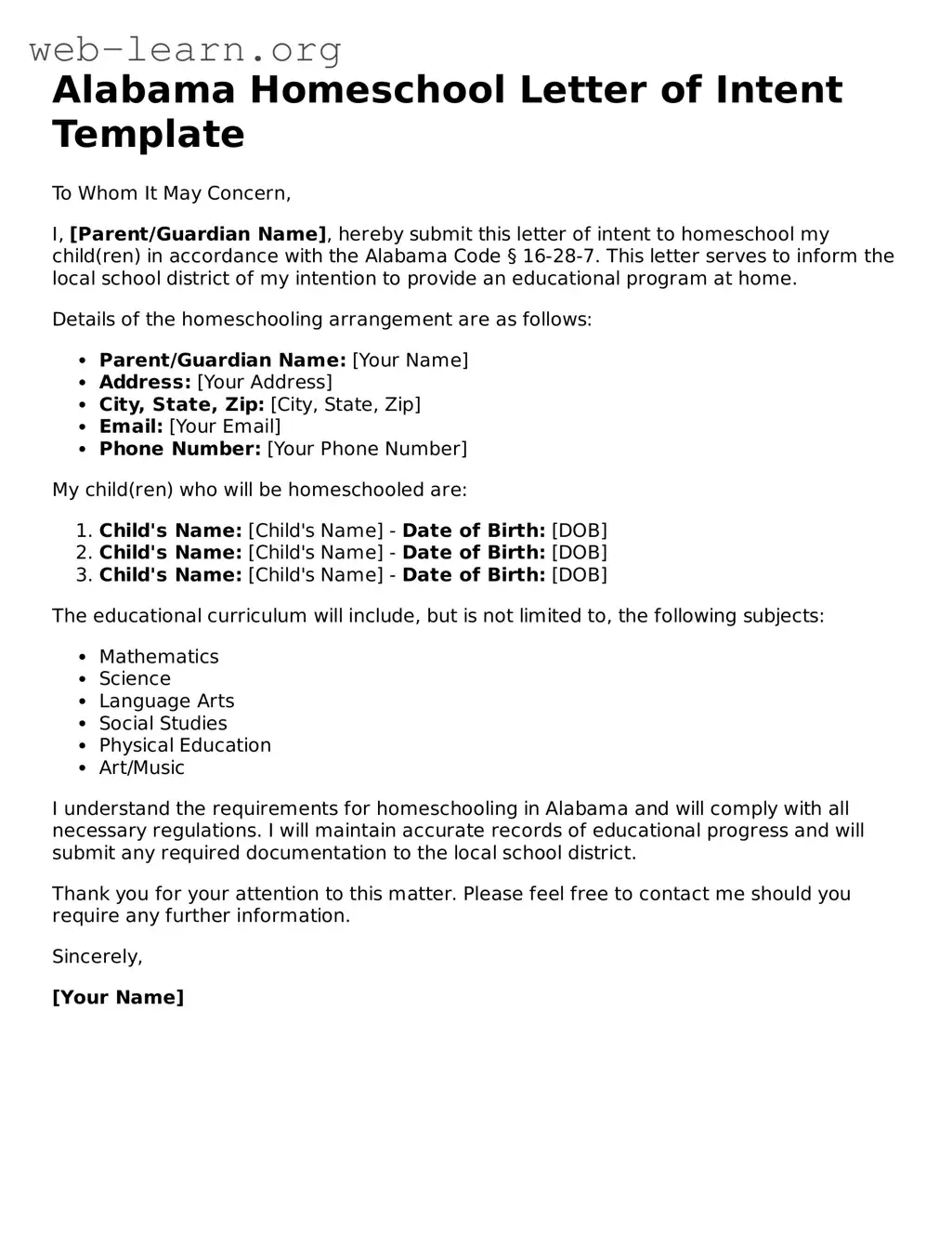
Alabama Homeschool Letter of Intent Template
To Whom It May Concern,
I, [Parent/Guardian Name], hereby submit this letter of intent to homeschool my child(ren) in accordance with the Alabama Code § 16-28-7. This letter serves to inform the local school district of my intention to provide an educational program at home.
Details of the homeschooling arrangement are as follows:
My child(ren) who will be homeschooled are:
The educational curriculum will include, but is not limited to, the following subjects:
I understand the requirements for homeschooling in Alabama and will comply with all necessary regulations. I will maintain accurate records of educational progress and will submit any required documentation to the local school district.
Thank you for your attention to this matter. Please feel free to contact me should you require any further information.
Sincerely,
[Your Name]
| Fact Name | Details |
|---|---|
| Governing Law | The Alabama Homeschool Letter of Intent is governed by Alabama Code § 16-28-7. |
| Purpose | This form serves as a notification to the local school district of the intent to homeschool a child. |
| Filing Requirement | Parents must submit the Letter of Intent within 30 days of beginning homeschooling. |
| Information Required | The form requires the child's name, age, and the educational program being used. |
| Annual Submission | The Letter of Intent does not need to be submitted annually; it is only required when starting homeschooling. |
| Signature Requirement | The form must be signed by the parent or legal guardian of the child. |
| Submission Method | Parents can submit the form by mail or in person to their local school district office. |
| Record Keeping | It is recommended that parents keep a copy of the submitted Letter of Intent for their records. |
Once you have the Alabama Homeschool Letter of Intent form in hand, you can begin the process of completing it. This form is essential for notifying the local school district of your intention to homeschool your child. Follow these steps to ensure the form is filled out accurately.
After submitting the form, you may want to familiarize yourself with local homeschooling regulations and resources to ensure a smooth educational journey for your child.
What is the Alabama Homeschool Letter of Intent?
The Alabama Homeschool Letter of Intent is a document that parents or guardians must submit to officially notify the local school system of their decision to homeschool their child. This form is a requirement under Alabama law to ensure that parents are following the proper legal steps to educate their children at home.
Who needs to file the Letter of Intent?
Any parent or guardian who wishes to homeschool their child in Alabama must file this letter. This includes families with children who are currently enrolled in public or private schools, as well as those who have never been enrolled in a formal school setting.
When should I submit the Letter of Intent?
The Letter of Intent should be submitted at least 15 days before you begin homeschooling. This gives the local school system time to process your request and ensures that you are compliant with state regulations.
What information do I need to include in the Letter of Intent?
Your Letter of Intent should include:
Where do I send the Letter of Intent?
You should send the Letter of Intent to the local school board office in the county where you reside. Check their website or contact them directly for the correct mailing address or any specific submission guidelines.
Is there a specific format I need to follow for the Letter of Intent?
While there is no official template, it is important to ensure that your letter is clear and includes all necessary information. A simple, straightforward letter that contains the required details will suffice.
What happens after I submit the Letter of Intent?
Once you submit your Letter of Intent, the local school board will acknowledge receipt. You may not receive a formal approval, but you are free to begin homeschooling as long as you have submitted the letter within the required time frame.
Do I need to renew the Letter of Intent every year?
Yes, you must submit a new Letter of Intent each year if you continue to homeschool. This keeps the local school board informed and ensures that you remain compliant with Alabama homeschooling laws.
When filling out the Alabama Homeschool Letter of Intent form, many families encounter common pitfalls that can lead to delays or complications in their homeschooling journey. One frequent mistake is failing to provide all required information. The form requests specific details about the student and the educational program. Omitting even a small piece of information can result in the form being rejected.
Another common error is not signing the form. While it may seem obvious, some parents overlook this step. A signature is essential to validate the intent to homeschool. Without it, the document lacks legal standing, and the school district may not recognize the homeschooling arrangement.
Incorrectly listing the name of the school district is another mistake. Parents often assume they know the correct name, but it’s crucial to double-check. Using the wrong name can lead to confusion and complications in communication with local education authorities.
Some individuals fail to submit the form within the designated time frame. In Alabama, the Letter of Intent must be filed before the school year begins. Missing this deadline can lead to unnecessary complications and may require families to scramble to rectify the situation.
Additionally, not keeping a copy of the submitted form can create issues down the line. Families should always retain a copy for their records. This practice helps in case of any disputes or questions regarding the homeschooling status.
Another mistake involves misunderstanding the educational plan requirements. The form asks for a brief description of the educational program, and vague or incomplete descriptions can lead to misunderstandings with local education officials.
Some parents also forget to update the form if there are changes in their homeschooling situation. If a family moves to a different district or if the educational approach changes, it’s important to notify the appropriate authorities. Failing to do so can lead to complications in the educational process.
Moreover, not researching local homeschooling laws can be detrimental. Each state has different requirements, and Alabama is no exception. Families should familiarize themselves with the laws to ensure compliance and avoid potential issues.
Another error is neglecting to include the correct number of students being homeschooled. The form requires accurate information about how many children are part of the homeschooling program. This detail helps local education authorities understand the scope of the homeschooling arrangement.
Lastly, some parents underestimate the importance of providing a thorough educational philosophy. While the form does not require an extensive essay, a clear and concise explanation can help clarify the family’s approach to education. This helps foster a better relationship with local education officials and can ease any potential concerns.
When families decide to homeschool in Alabama, submitting the Homeschool Letter of Intent is just the first step. Along with this important document, several other forms and records may be required or beneficial for a smooth homeschooling experience. Below is a list of additional documents that can assist in this process.
By preparing these documents alongside the Homeschool Letter of Intent, families can better navigate the homeschooling landscape in Alabama. Being organized and proactive can lead to a more effective and enriching educational experience for the child.
When filling out the Alabama Homeschool Letter of Intent form, it is essential to approach the process thoughtfully. Here are ten important dos and don'ts to keep in mind:
By adhering to these guidelines, you can ensure a smoother process in your homeschooling journey. Every detail matters when it comes to providing a nurturing educational environment for your child.
There are several misconceptions surrounding the Alabama Homeschool Letter of Intent form. Understanding these can help parents navigate the homeschooling process more effectively. Here’s a list of ten common misunderstandings:
By dispelling these misconceptions, parents can make informed decisions about their homeschooling journey in Alabama.
Filling out the Alabama Homeschool Letter of Intent is a crucial first step for parents wishing to educate their children at home.
Ensure that you provide accurate information about your child, including their full name and date of birth.
The form must be submitted to the local school superintendent. This establishes your intent to homeschool and keeps you compliant with state regulations.
It’s important to submit the letter by the deadline, which is typically within a few days of starting your homeschool program.
Keep a copy of the submitted form for your records. This documentation may be useful in the future.
While the form is straightforward, make sure to review it for any errors before submission.
After submitting the letter, you will not need to provide additional information unless requested by the school district.
Does the State Pay You to Homeschool - It is a proactive measure to ensure compliance with educational regulations.
Ghea Homeschool - A formal statement expressing the intent to homeschool.