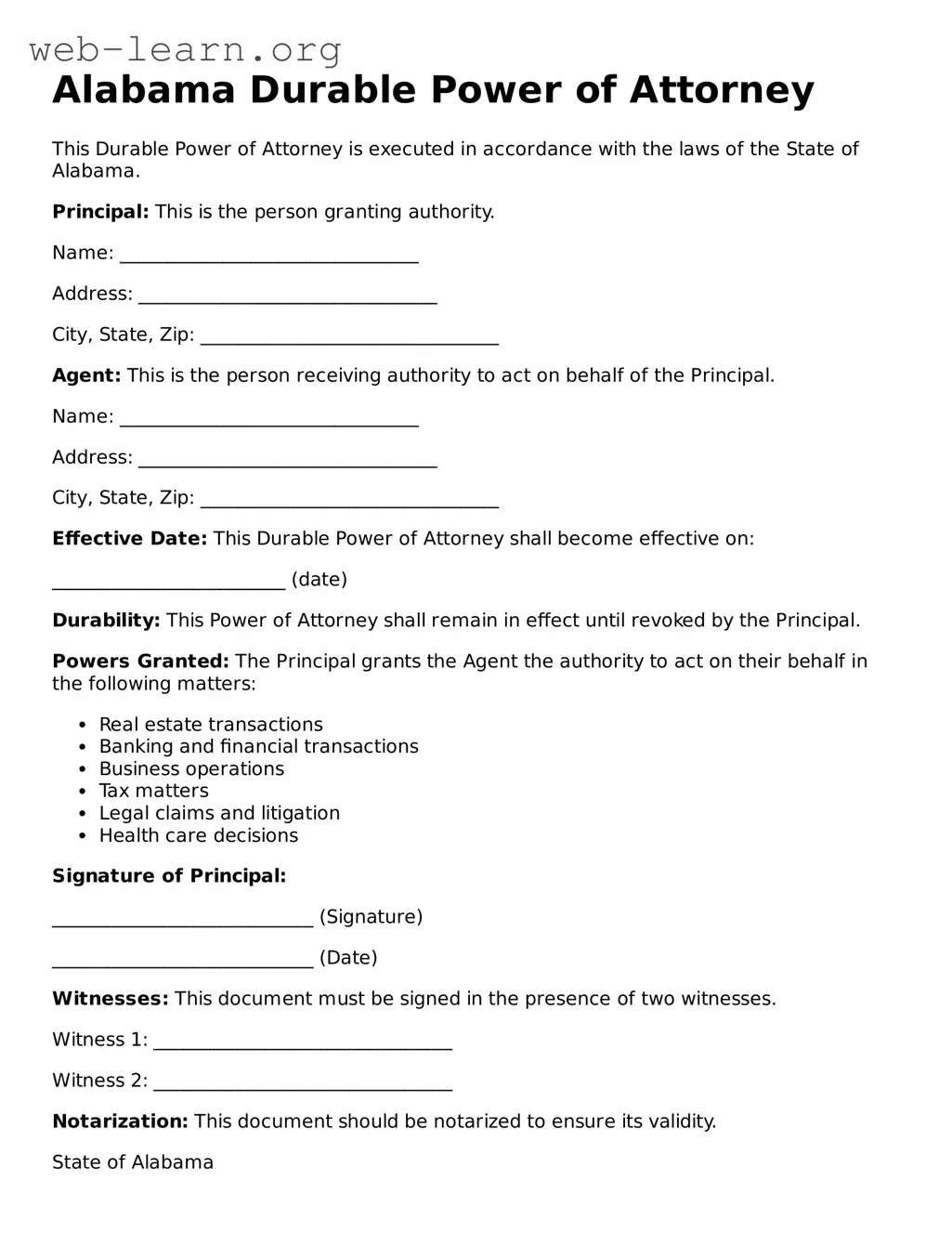
The Alabama Durable Power of Attorney form is an essential legal document that allows individuals to appoint someone they trust to make financial and legal decisions on their behalf. This form remains effective even if the person who created it becomes incapacitated, ensuring that their affairs can be managed without interruption. It covers a range of powers, including the ability to handle banking transactions, manage real estate, and make investment decisions. By designating an agent, individuals can ensure that their preferences are honored during times of need. The form also provides flexibility, allowing the principal to specify which powers are granted and under what circumstances. Understanding the importance of this document is crucial for anyone looking to safeguard their financial well-being and ensure their wishes are respected in challenging situations.
Alabama Durable Power of Attorney
This Durable Power of Attorney is executed in accordance with the laws of the State of Alabama.
Principal: This is the person granting authority.
Name: ________________________________
Address: ________________________________
City, State, Zip: ________________________________
Agent: This is the person receiving authority to act on behalf of the Principal.
Name: ________________________________
Address: ________________________________
City, State, Zip: ________________________________
Effective Date: This Durable Power of Attorney shall become effective on:
_________________________ (date)
Durability: This Power of Attorney shall remain in effect until revoked by the Principal.
Powers Granted: The Principal grants the Agent the authority to act on their behalf in the following matters:
Signature of Principal:
____________________________ (Signature)
____________________________ (Date)
Witnesses: This document must be signed in the presence of two witnesses.
Witness 1: ________________________________
Witness 2: ________________________________
Notarization: This document should be notarized to ensure its validity.
State of Alabama
County of ________________________________
Subscribed and sworn to before me this ____ day of ____________, 20__.
____________________________ (Notary Public)
My Commission Expires: ____________________
| Fact Name | Details |
|---|---|
| Definition | A Durable Power of Attorney allows an individual to appoint someone else to manage their financial and legal affairs, even if they become incapacitated. |
| Governing Law | The Alabama Durable Power of Attorney is governed by the Alabama Code, specifically Title 26, Chapter 1. |
| Durability | This form remains effective even if the principal becomes mentally or physically incapacitated, ensuring continuous management of affairs. |
| Principal and Agent | The person creating the document is known as the principal, while the person designated to act on their behalf is referred to as the agent or attorney-in-fact. |
| Revocation | The principal has the right to revoke the Durable Power of Attorney at any time, provided they are mentally competent to do so. |
| Signature Requirements | The document must be signed by the principal and witnessed by two individuals or notarized to be legally valid. |
| Limitations | While a Durable Power of Attorney grants broad powers, the principal can specify limitations on the agent's authority within the document. |
Filling out the Alabama Durable Power of Attorney form is an important step in designating someone to make decisions on your behalf. Once you have completed the form, it will be ready for you to sign and share with the designated agent, ensuring they have the authority to act in your best interest when needed.
What is a Durable Power of Attorney in Alabama?
A Durable Power of Attorney (DPOA) in Alabama is a legal document that allows an individual, known as the principal, to designate another person, referred to as the agent or attorney-in-fact, to make decisions on their behalf. This authority remains effective even if the principal becomes incapacitated, ensuring that their financial and legal matters can be managed without interruption.
What are the key benefits of having a Durable Power of Attorney?
There are several advantages to establishing a Durable Power of Attorney:
Who can serve as my agent in a Durable Power of Attorney?
Your agent can be anyone you trust to act in your best interests. Common choices include family members, close friends, or professionals such as attorneys. It is essential to choose someone who understands your values and wishes, as they will be making significant decisions on your behalf.
What powers can I grant to my agent?
You have the ability to grant a wide range of powers to your agent, including:
It is advisable to be specific about the powers you wish to grant to avoid any confusion later on.
How do I create a Durable Power of Attorney in Alabama?
To create a Durable Power of Attorney in Alabama, you must:
Can I revoke my Durable Power of Attorney?
Yes, you can revoke your Durable Power of Attorney at any time, as long as you are mentally competent. To do so, you must create a written revocation document and notify your agent and any institutions that may have a copy of the original DPOA. This ensures that your wishes are respected and any authority granted is terminated.
Is a Durable Power of Attorney effective immediately?
A Durable Power of Attorney can be effective immediately upon signing, or you can choose to make it effective only upon your incapacitation. This decision should be clearly stated in the document to avoid any confusion about when your agent can begin acting on your behalf.
What happens if I do not have a Durable Power of Attorney?
If you do not have a Durable Power of Attorney and become incapacitated, your family may need to go through the court system to obtain guardianship. This process can be time-consuming, expensive, and may not reflect your wishes. Establishing a DPOA can help ensure that your preferences are honored and that your affairs are managed smoothly.
Can I include healthcare decisions in my Durable Power of Attorney?
While a Durable Power of Attorney primarily addresses financial and legal matters, you can also include provisions for healthcare decisions. However, it is often recommended to have a separate document, such as a Healthcare Power of Attorney or an Advance Directive, specifically for medical decisions. This separation helps clarify your wishes regarding medical treatment and end-of-life care.
Filling out the Alabama Durable Power of Attorney form can be a straightforward process, but there are common mistakes that individuals often make. One significant error occurs when the principal, the person granting authority, fails to clearly identify themselves. It is crucial to provide full legal names and any relevant identifying information, such as addresses or Social Security numbers. Omitting this information can lead to confusion and potentially invalidate the document.
Another common mistake is not specifying the powers granted to the agent. The form should clearly outline what decisions the agent can make on behalf of the principal. Vague language can lead to misunderstandings or disputes down the line. It’s essential to be as specific as possible, detailing whether the agent has authority over financial matters, healthcare decisions, or both.
Additionally, many individuals overlook the importance of signatures. The Durable Power of Attorney form must be signed by the principal, but it also requires the signatures of witnesses or a notary, depending on the specific requirements of Alabama law. Failing to include the necessary signatures can render the document ineffective. Always double-check that all required parties have signed before finalizing the form.
Lastly, people often forget to review the document after it has been completed. It's important to read through the entire form to ensure that all information is accurate and that the document reflects the principal’s intentions. Mistakes or omissions can lead to significant legal issues later on. Taking the time to review the form carefully can save a great deal of trouble in the future.
A Durable Power of Attorney (DPOA) is an essential legal document that allows someone to make decisions on behalf of another person. However, it often works best when paired with other important forms. Here are four documents that are commonly used alongside the Alabama Durable Power of Attorney form:
Each of these documents serves a unique purpose and can complement the Durable Power of Attorney. Together, they create a comprehensive plan for managing both health and financial matters, ensuring that an individual's wishes are honored and their interests protected.
The Durable Power of Attorney (DPOA) is a vital document that allows an individual, known as the principal, to designate someone else, called an agent, to make decisions on their behalf. While the DPOA is unique in its purpose and function, several other documents serve similar roles in terms of authority and decision-making. Here are nine documents that share similarities with the Durable Power of Attorney:
Understanding these documents can help individuals make informed decisions about their legal and financial planning. Each serves a specific purpose, and knowing the differences can ensure that the right choices are made for personal circumstances.
When filling out the Alabama Durable Power of Attorney form, it is crucial to approach the process with care. Here are nine essential dos and don'ts to ensure that your document is valid and effective.
By adhering to these guidelines, you can create a Durable Power of Attorney that effectively meets your needs and protects your interests.
Understanding the Alabama Durable Power of Attorney (DPOA) is crucial for anyone considering this important legal document. However, several misconceptions can lead to confusion. Here are eight common misunderstandings:
This is not entirely accurate. A Durable Power of Attorney can be effective immediately upon signing, depending on how it is drafted. You can choose to have it activated only in the event of incapacity, but that needs to be explicitly stated in the document.
While your agent has broad authority, there are limitations. Certain actions, like making medical decisions or changing beneficiaries on life insurance policies, may require specific language in the DPOA.
This is a common misconception. A Durable Power of Attorney deals with financial and legal matters, while a living will specifically addresses medical decisions and end-of-life care.
You can revoke or modify your Durable Power of Attorney at any time, as long as you are mentally competent. It’s important to inform your agent and any institutions that may have a copy of the original document.
This is not true. A spouse does not automatically have the authority to act on your behalf unless you have formally designated them as your agent through a DPOA.
People of all ages can benefit from a Durable Power of Attorney. It’s a proactive measure that can help anyone manage their affairs in case of unexpected situations.
While your agent does have significant authority, they are still obligated to act in your best interest. They must keep accurate records and may be held accountable for any misuse of their authority.
This is a misconception. Each state has its own laws and requirements regarding Durable Power of Attorney forms. It’s essential to use a form that complies with Alabama laws to ensure it is valid.
By understanding these misconceptions, individuals can make informed decisions about their legal and financial planning. Always consult with a legal professional for guidance tailored to your specific situation.
Filling out and using the Alabama Durable Power of Attorney form is an important step in managing your affairs. Here are key takeaways to consider:
Taking these steps can help ensure that your Durable Power of Attorney functions as intended when needed most.
Power of Attorney Form Colorado - This document remains effective even if you become incapacitated.
Power of Attorney Michigan - This form can help protect your interests and ensure your voice is heard, even when you're not able to speak for yourself.