Homepage Blank Aha Em 385 Form
Outline

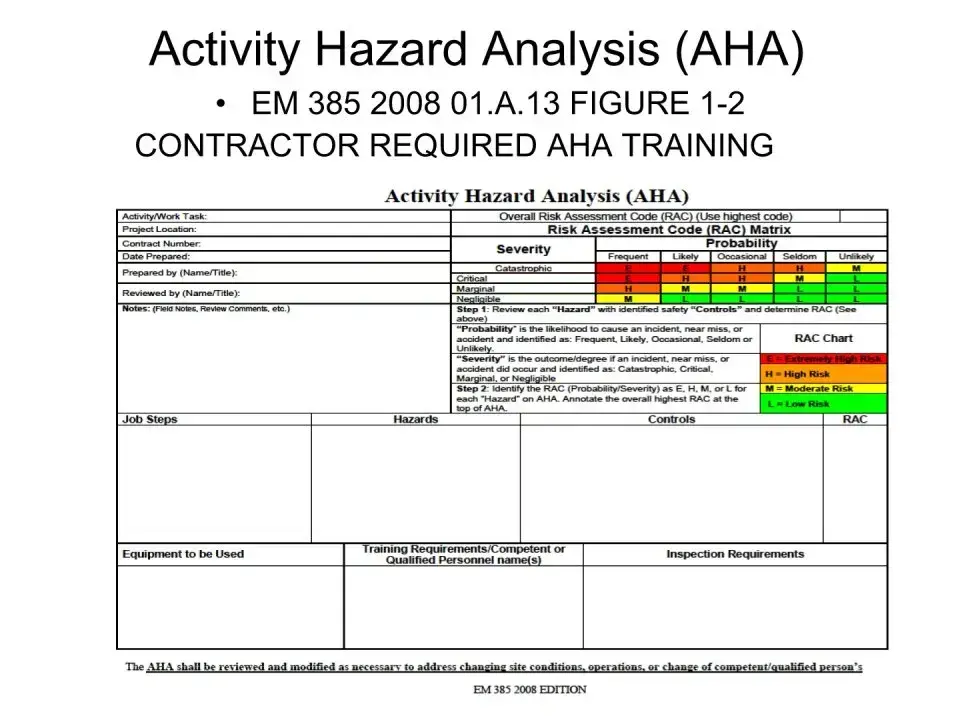
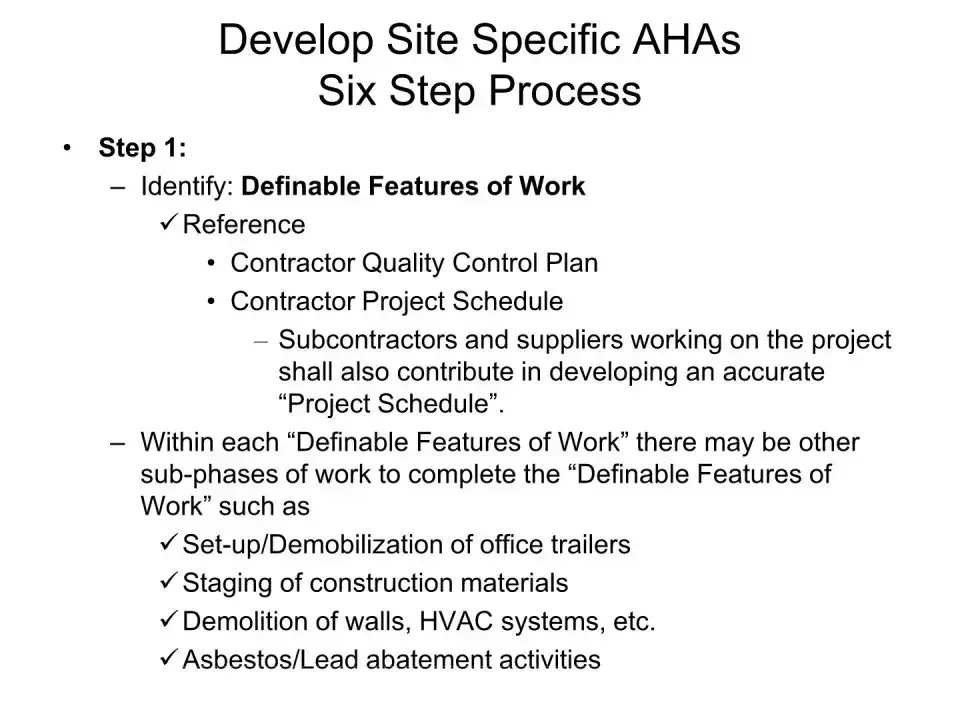
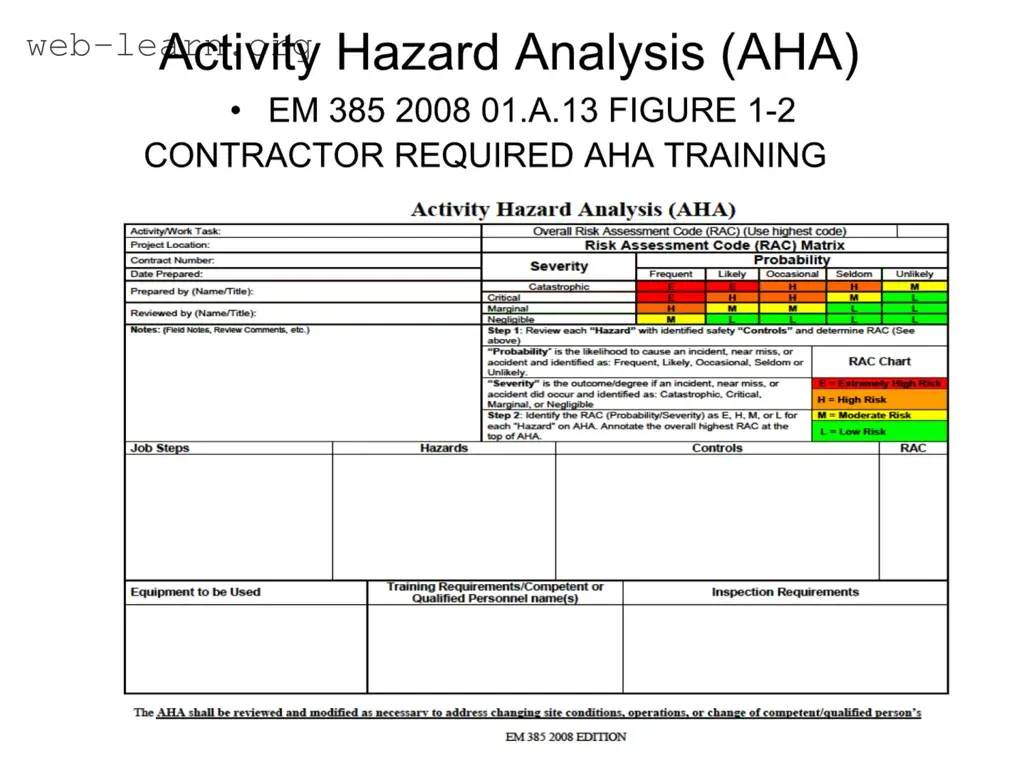
The AHA EM 385 form is a critical tool for ensuring safety in construction and other high-risk work environments. This form facilitates the Activity Hazard Analysis (AHA), which systematically identifies potential hazards associated with specific tasks and outlines necessary safety controls. Each AHA must include key elements such as the project location, contract number, and date prepared. It also requires an assessment of risks, categorized by the Overall Risk Assessment Code (RAC), which evaluates both the probability and severity of potential incidents. The form is designed to be a living document, adaptable to changing site conditions or personnel. It mandates that all hazards are reviewed alongside their corresponding safety controls, ensuring that risks are mitigated to acceptable levels before work commences. Importantly, no work can begin until the AHA is accepted by the Government Designated Authority and discussed with all parties involved. By adhering to these guidelines, contractors can better protect their teams and reduce the likelihood of accidents on the job site.
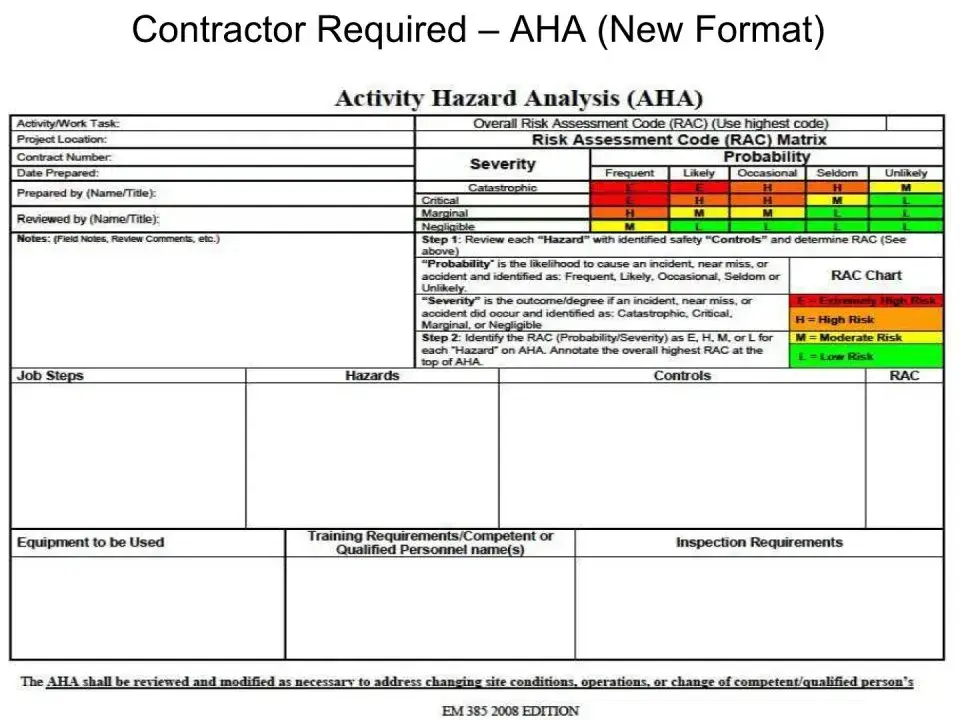
Sample - Aha Em 385 Form

Form Information

Fact Name Description
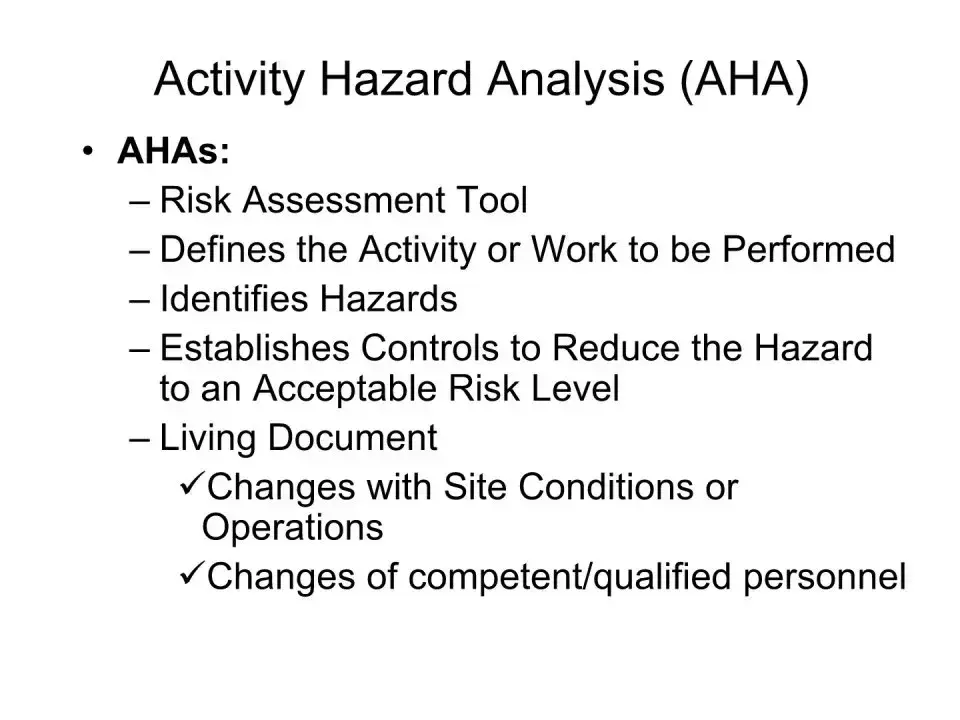
Purpose of AHA The Activity Hazard Analysis (AHA) serves as a risk assessment tool to identify hazards and establish controls to reduce risks on job sites.
Governing Law The AHA is governed by the U.S. Army Corps of Engineers (COE) EM 385-1-1 regulations.
Risk Assessment Code (RAC) The AHA uses a Risk Assessment Code (RAC) to categorize hazards based on their severity and probability.
Living Document The AHA is a living document, meaning it should be reviewed and updated as site conditions or operations change.
Training Requirements The AHA outlines training requirements for competent or qualified personnel involved in specific activities.
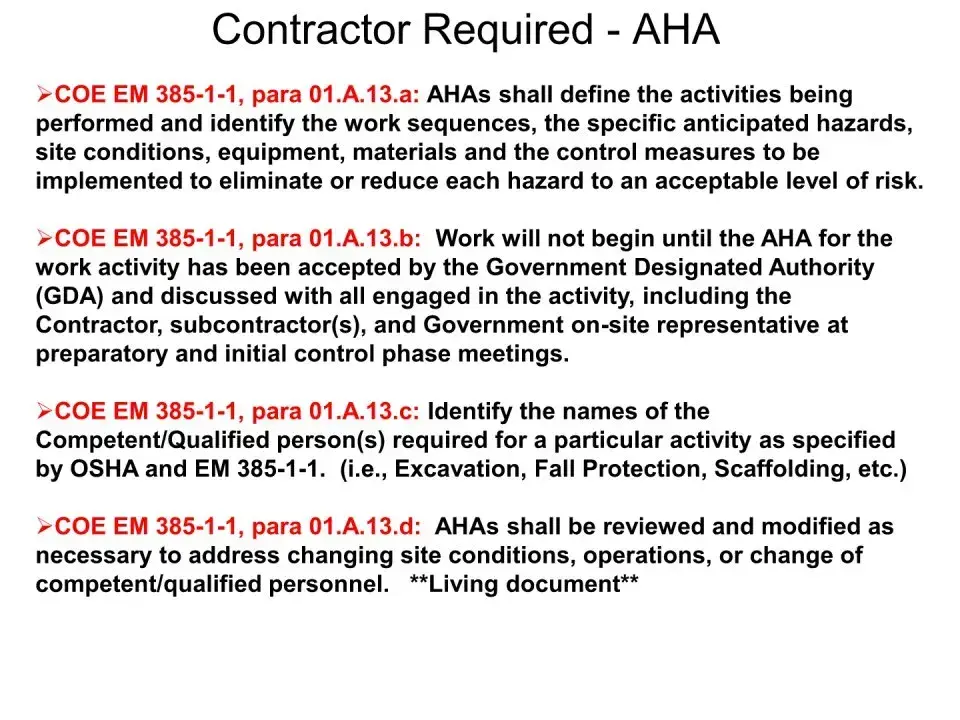
Government Approval Work cannot commence until the AHA has been accepted by the Government Designated Authority (GDA).
Review Process AHAs must be reviewed and modified as necessary to address changes in site conditions or personnel.

Detailed Guide for Filling Out Aha Em 385

Completing the AHA EM 385 form is an essential step in ensuring workplace safety and compliance. By following these steps, you will create a comprehensive Activity Hazard Analysis that identifies potential hazards and outlines necessary controls. This process not only helps in risk assessment but also fosters a culture of safety among all personnel involved in the project.

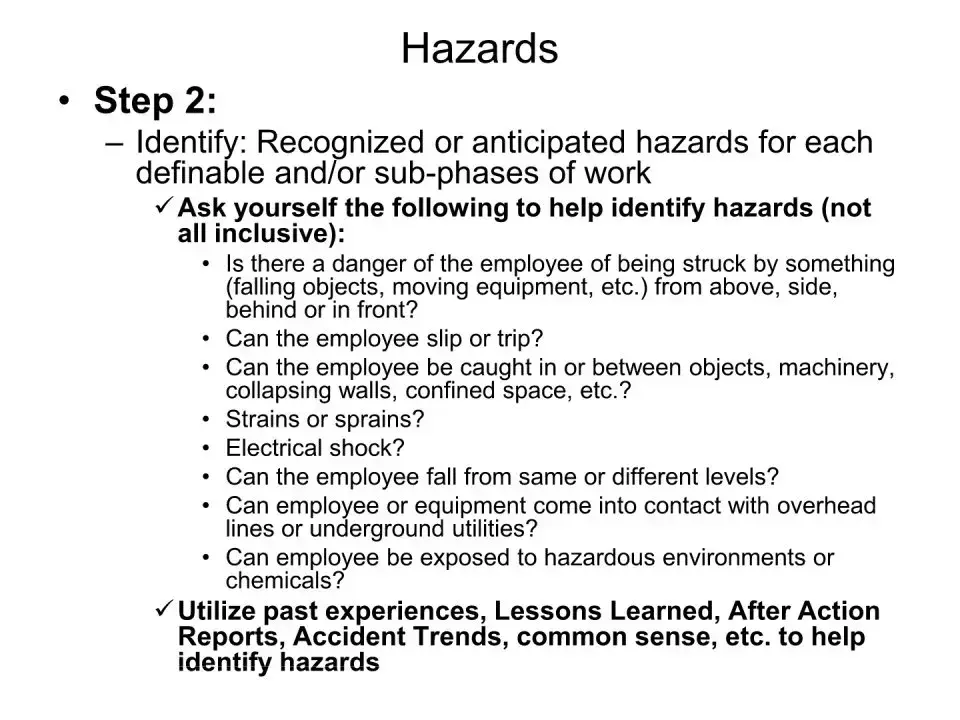
  1. Gather Necessary Information: Collect all relevant details about the project, including the activity or work task, project location, contract number, and date prepared.
  2. Review Hazards and Controls: Examine each identified hazard and its corresponding safety controls. Determine the Risk Assessment Code (RAC) based on the severity and probability of potential incidents.
  3. Assess Probability: Evaluate the likelihood of an incident occurring. Classify it as Frequent, Likely, Occasional, Seldom, or Unlikely.
  4. Determine Severity: Assess the potential outcome of an incident. Classify it as Catastrophic, Critical, Marginal, or Negligible.
  5. Identify Overall RAC: Based on your assessments, identify the overall highest RAC for each hazard. Mark this at the top of the AHA form.
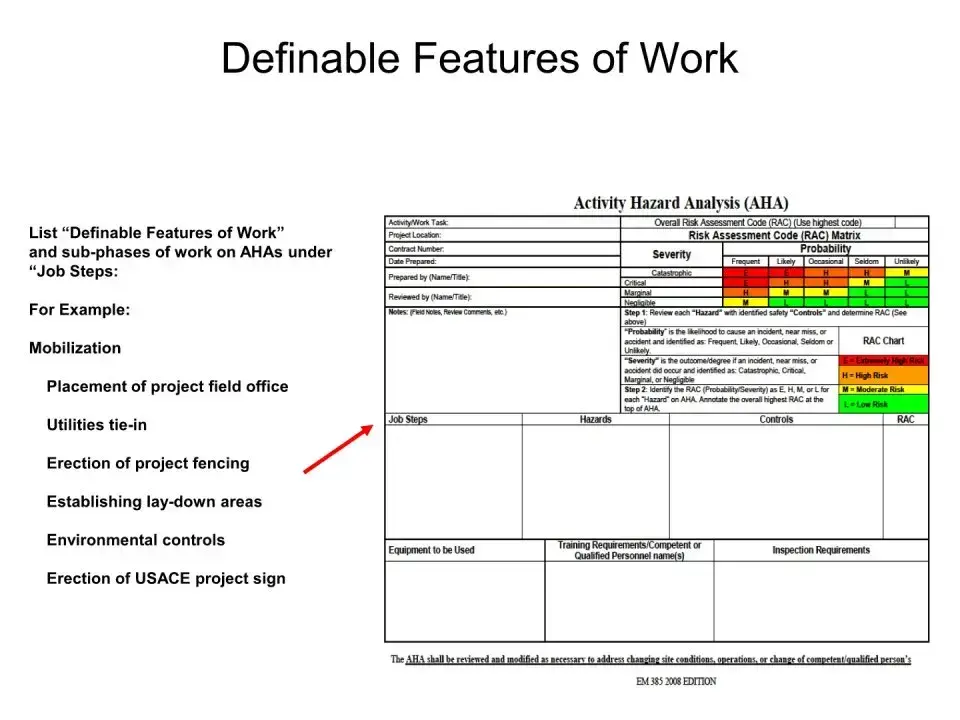
  6. Document Job Steps: List the job steps, hazards associated with each step, and the controls you plan to implement to mitigate those hazards.
  7. Specify Equipment and Training: Note the equipment to be used and any training requirements for personnel involved in the activity.
  8. Inspection Requirements: Outline any necessary inspection protocols to ensure compliance and safety throughout the project.
  9. Review and Modify: Ensure the AHA is reviewed regularly and modified as necessary to reflect any changes in site conditions, operations, or personnel.

Obtain Answers on Aha Em 385

  1. What is the AHA EM 385 form?

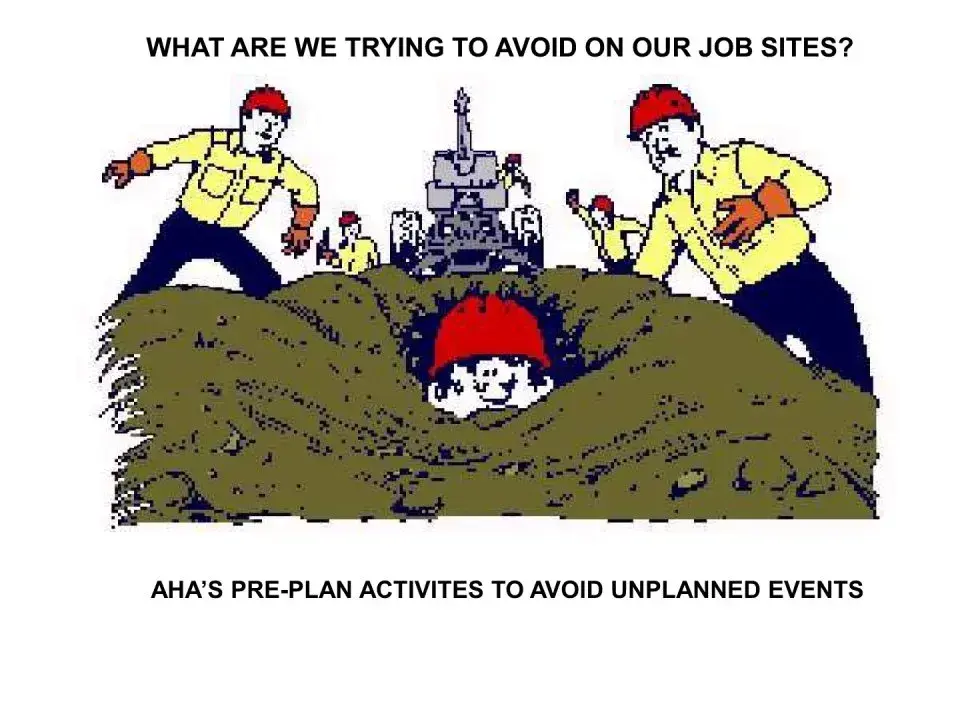
    The AHA EM 385 form, or Activity Hazard Analysis, is a critical document used to identify potential hazards associated with specific work tasks. It also outlines the necessary controls to mitigate those hazards to an acceptable risk level. The form is designed to ensure safety on job sites by pre-planning activities and avoiding unplanned events.

  2. Who is required to complete the AHA EM 385 form?

    The responsibility for completing the AHA EM 385 form falls primarily on contractors and their subcontractors. However, it must be accepted by the Government Designated Authority (GDA) before any work can commence. This ensures that all parties involved, including the contractor and on-site government representatives, are aware of the hazards and controls in place.

  3. What are the key components of the AHA EM 385 form?

    The form includes several essential components:

    • Activity/Work Task: A description of the specific task being performed.
    • Risk Assessment Code (RAC): A code that reflects the overall risk associated with the task, determined by evaluating both the probability and severity of potential hazards.
    • Hazards and Controls: Identification of hazards and the controls in place to mitigate them.
    • Training Requirements: Documentation of the necessary training for personnel involved in the task.
    • Inspection Requirements: Details on inspections that need to be conducted to ensure safety compliance.
  4. How is the Risk Assessment Code (RAC) determined?

    The RAC is determined by evaluating two factors: the probability of an incident occurring and the severity of the potential outcome if it does occur. The probability can be classified as frequent, likely, occasional, seldom, or unlikely, while severity can be categorized as catastrophic, critical, marginal, or negligible. The highest code from these evaluations is recorded at the top of the AHA.

  5. Why is the AHA considered a "living document"?

    The AHA is referred to as a "living document" because it must be continuously reviewed and updated. Changes in site conditions, operations, or personnel can affect the hazards present, necessitating modifications to the AHA. This adaptability ensures that safety measures remain relevant and effective throughout the duration of the project.

  6. What happens if the AHA is not completed or accepted?

    Work cannot begin until the AHA has been completed and accepted by the GDA. This requirement is in place to ensure that all potential hazards have been identified and addressed. Failing to complete the AHA may result in delays, fines, or even work stoppages until compliance is achieved.

  7. Who is considered a "Competent/Qualified Person" for the AHA?

    A "Competent/Qualified Person" is an individual who has the necessary training, knowledge, and experience to identify hazards and implement appropriate safety measures. This designation is crucial for specific activities such as excavation, fall protection, and scaffolding. The names of these individuals must be clearly identified in the AHA to ensure accountability and safety on the job site.

Common mistakes

Completing the AHA EM 385 form accurately is crucial for ensuring workplace safety. However, individuals often make several common mistakes that can lead to significant issues. Understanding these mistakes can help improve the quality of the completed forms and enhance safety protocols on job sites.

One frequent error is the failure to properly assess the overall Risk Assessment Code (RAC). The RAC should reflect the highest risk level identified among the hazards listed. If individuals do not take the time to evaluate each hazard thoroughly, they may underestimate the overall risk. This oversight can lead to inadequate safety measures being implemented, increasing the potential for accidents.

Another mistake involves neglecting to specify the training requirements for competent or qualified personnel. The form requires individuals to identify who is responsible for overseeing safety measures. If this section is left blank or filled out inaccurately, it can result in unqualified personnel managing hazardous tasks. This oversight not only violates safety regulations but also places workers at unnecessary risk.

Additionally, individuals often overlook the importance of updating the AHA as conditions change. The form is a living document that must reflect current site conditions and operations. If the AHA is not reviewed and modified regularly, it may become outdated, leading to unsafe practices being followed. This can create a dangerous environment for all personnel involved.

Moreover, many people fail to engage in discussions with all parties involved before finalizing the AHA. According to the guidelines, work should not commence until the AHA has been accepted by the Government Designated Authority (GDA) and discussed with all engaged in the activity. Skipping this step can lead to misunderstandings about safety protocols and responsibilities.

Lastly, a common mistake is the inadequate identification of hazards and corresponding controls. Each hazard should have clearly defined controls to mitigate risks. If these are vague or not well articulated, workers may not understand the measures in place to protect them. This lack of clarity can result in confusion and increased likelihood of accidents on the job site.
Documents used along the form

The AHA EM 385 form is an essential document used in safety management on job sites. It helps identify hazards and establish controls to minimize risks. Alongside the AHA, several other documents are often utilized to ensure comprehensive safety management. Here’s a brief overview of these forms and documents.

  • Job Safety Analysis (JSA): This document breaks down specific tasks and identifies potential hazards associated with each step. It also outlines the safety measures that should be taken to mitigate those hazards. The JSA is particularly useful for training and ensuring all workers understand the risks involved in their tasks.
  • Safety Data Sheet (SDS): An SDS provides detailed information about hazardous materials used on a job site. It includes data on handling, storage, and emergency measures in case of exposure. This document is crucial for keeping workers informed about the substances they may encounter.
  • Incident Report: This form is completed after any workplace incident, such as an accident or near miss. It documents what happened, the factors that contributed to the incident, and the actions taken afterward. Incident reports are vital for improving safety measures and preventing future occurrences.
  • Toolbox Talk: A toolbox talk is an informal safety meeting that focuses on specific safety topics or issues. These discussions are typically brief and held regularly to keep safety at the forefront of workers' minds. They can address recent incidents, new safety protocols, or general reminders about safe practices.

Using these documents in conjunction with the AHA EM 385 form enhances safety protocols on job sites. Together, they help create a safer working environment by ensuring that all potential risks are identified and managed effectively.

Similar forms

The AHA EM 385 form serves as a critical tool for ensuring safety on job sites. Several other documents share similar purposes and structures, each aimed at identifying hazards and establishing control measures. Below is a list of six documents that are comparable to the AHA EM 385 form:

  • Job Hazard Analysis (JHA): Like the AHA, the JHA identifies potential hazards associated with specific job tasks. It assesses risks and outlines safety measures to mitigate those risks, ensuring that workers are informed and protected.
  • Safety Data Sheet (SDS): The SDS provides detailed information about hazardous materials used in the workplace. Similar to the AHA, it includes safety measures and emergency procedures, helping workers understand the risks associated with chemicals.
  • Risk Assessment Matrix: This document evaluates the likelihood and severity of hazards, similar to the Risk Assessment Code (RAC) in the AHA. It categorizes risks to prioritize safety measures effectively.
  • Permit to Work (PTW): The PTW system ensures that high-risk activities are carried out safely. It requires a thorough assessment of hazards and necessary controls, akin to the detailed planning found in the AHA form.
  • Incident Report Form: This form documents accidents or near misses, analyzing the causes and preventive measures. It shares the AHA's goal of improving safety by learning from past incidents.
  • Safety Management Plan (SMP): The SMP outlines the overall safety strategy for a project, including hazard identification and risk management. It complements the AHA by providing a broader framework for safety practices on job sites.

Dos and Don'ts

When filling out the AHA EM 385 form, it's essential to adhere to certain guidelines to ensure safety and compliance. Here are four important dos and don'ts:

  • Do review each identified hazard thoroughly with the corresponding safety controls.
  • Do accurately determine the overall Risk Assessment Code (RAC) based on the highest risk identified.
  • Don't underestimate the importance of including all relevant personnel in the review process.
  • Don't neglect to update the AHA as site conditions or personnel change.

Following these guidelines will help maintain a safe working environment and ensure compliance with regulatory requirements.

Misconceptions

Misconceptions about the AHA EM 385 form can lead to misunderstandings and potential safety risks on job sites. Here are nine common misconceptions clarified:

  • AHA is optional for contractors. Many believe that completing an AHA is not mandatory. In reality, it is a requirement for contractors to ensure safety and compliance with regulations.
  • Only large projects need an AHA. Some think that only major projects require an AHA. However, any work activity that poses risks should have an AHA, regardless of size.
  • The AHA is a one-time document. It is a common misconception that the AHA is static. The AHA is a living document and must be reviewed and updated as conditions change.
  • All hazards are covered in the initial AHA. Some assume that all potential hazards can be identified upfront. New hazards may arise during the project, and the AHA must be adapted accordingly.
  • Only management needs to review the AHA. It is often thought that only higher-ups need to be involved in the AHA process. In fact, all team members engaged in the work should understand and review the AHA.
  • Training is not necessary for AHA completion. There is a belief that anyone can fill out an AHA without training. Proper training is essential to identify hazards accurately and establish effective controls.
  • The AHA is just a formality. Some view the AHA as a mere formality. In truth, it is a crucial tool for preventing accidents and ensuring a safe work environment.
  • The AHA does not need to be communicated to all workers. Many think that once the AHA is completed, it is not necessary to share it with all workers. However, communication is vital to ensure everyone understands the hazards and controls.
  • Once the AHA is submitted, it cannot be changed. There is a misconception that changes cannot be made after submission. The AHA can and should be modified as site conditions or personnel change.

Understanding these misconceptions is key to fostering a safer work environment. Each team member plays a vital role in the safety process, and awareness is the first step towards prevention.

Key takeaways

Here are key takeaways regarding the AHA EM 385 form:

  • The AHA (Activity Hazard Analysis) is essential for identifying potential hazards in work activities.
  • Each AHA must include an Overall Risk Assessment Code (RAC) based on the highest risk identified.
  • Risk is assessed using two factors: probability and severity. Probability indicates how likely an incident is, while severity describes the potential impact.
  • Controls must be established to mitigate identified hazards and reduce risk to an acceptable level.
  • The AHA is a living document, meaning it should be updated regularly to reflect changing site conditions or personnel.
  • Before starting work, the AHA must be accepted by the Government Designated Authority (GDA) and communicated to all involved parties.
  • It is critical to identify competent or qualified personnel for specific activities, as required by OSHA standards.
  • Each AHA should outline job steps, associated hazards, controls, and required training for personnel.
  • Regular reviews and modifications of the AHA are necessary to ensure ongoing safety and compliance.
  • Proper training and understanding of the AHA process can help prevent unplanned events on job sites.