When embarking on the journey of adoption, prospective parents often seek reassurance from their community, and the Adoption Letter of Recommendation form plays a crucial role in this process. This form serves as a written endorsement from friends, family members, or colleagues, attesting to the character and suitability of the adoptive parents. It typically includes personal anecdotes that highlight the strengths and values of the individuals looking to adopt. Furthermore, the letter may address the potential adoptive parents' parenting abilities, emotional stability, and commitment to providing a loving home. In many cases, these letters are submitted to adoption agencies or courts as part of the adoption application, helping to create a comprehensive picture of the applicants. By capturing the essence of the adoptive parents through the perspectives of those who know them well, the form ultimately aids in building trust and confidence in the adoption process.
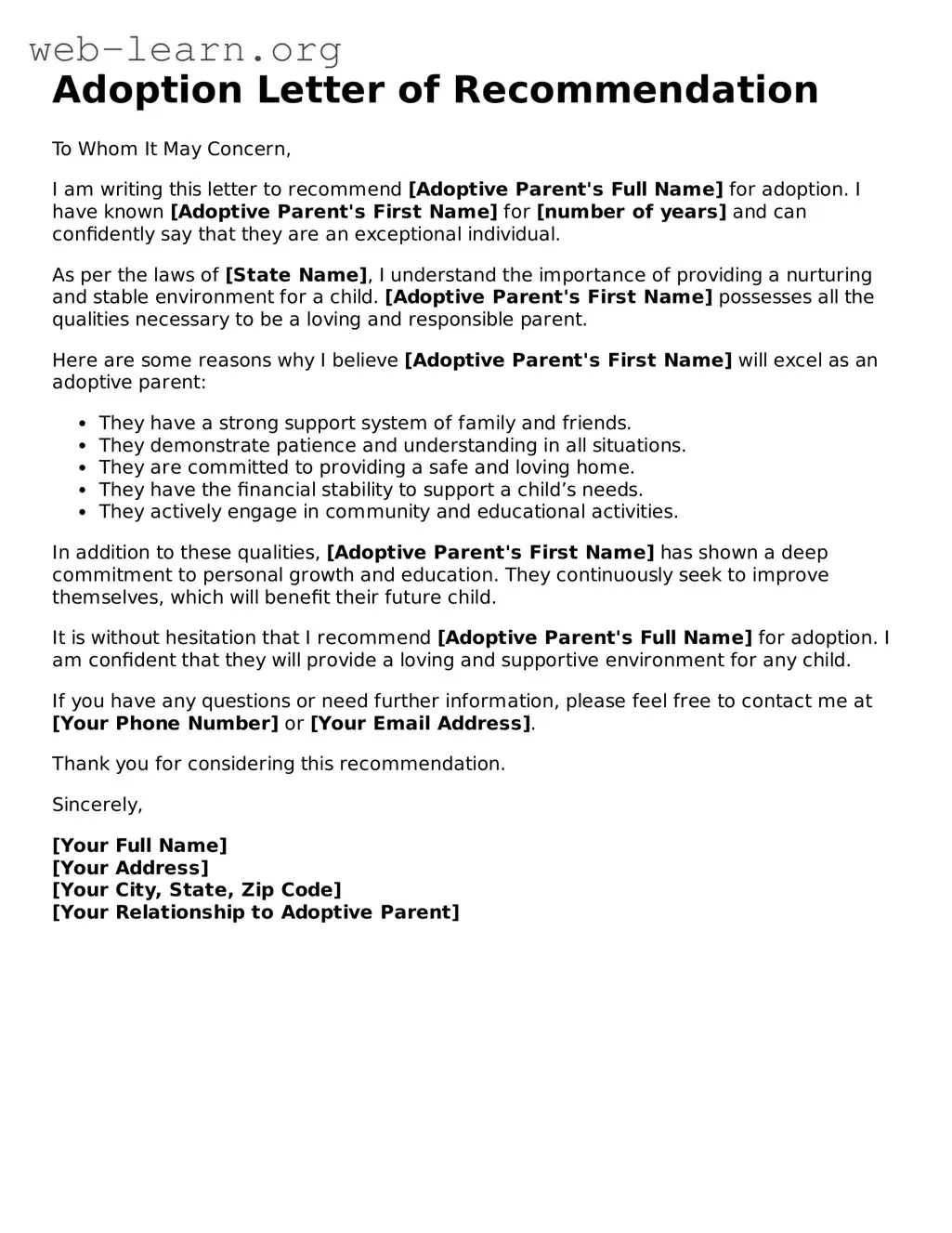
Adoption Letter of Recommendation
To Whom It May Concern,
I am writing this letter to recommend [Adoptive Parent's Full Name] for adoption. I have known [Adoptive Parent's First Name] for [number of years] and can confidently say that they are an exceptional individual.
As per the laws of [State Name], I understand the importance of providing a nurturing and stable environment for a child. [Adoptive Parent's First Name] possesses all the qualities necessary to be a loving and responsible parent.
Here are some reasons why I believe [Adoptive Parent's First Name] will excel as an adoptive parent:
In addition to these qualities, [Adoptive Parent's First Name] has shown a deep commitment to personal growth and education. They continuously seek to improve themselves, which will benefit their future child.
It is without hesitation that I recommend [Adoptive Parent's Full Name] for adoption. I am confident that they will provide a loving and supportive environment for any child.
If you have any questions or need further information, please feel free to contact me at [Your Phone Number] or [Your Email Address].
Thank you for considering this recommendation.
Sincerely,
[Your Full Name]
[Your Address]
[Your City, State, Zip Code]
[Your Relationship to Adoptive Parent]
| Fact Name | Details |
|---|---|
| Purpose | The Adoption Letter of Recommendation form is used to provide a written endorsement of an individual's suitability to adopt a child. |
| Recommender Qualifications | The person providing the recommendation must have a close relationship with the prospective adoptive parent and be familiar with their parenting abilities. |
| Content Requirements | The form typically includes personal anecdotes, observations about the prospective parent’s character, and their readiness for adoption. |
| State-Specific Forms | Different states may have specific forms or requirements. For example, California's governing law includes the California Family Code Section 8600. |
| Submission Process | The completed recommendation form must be submitted to the relevant adoption agency or court as part of the adoption application process. |
| Confidentiality | Information shared in the recommendation may be kept confidential, depending on state laws and agency policies. |
After gathering the necessary information, you are ready to fill out the Adoption Letter of Recommendation form. Follow these steps carefully to ensure that all required details are included.
What is an Adoption Letter of Recommendation?
An Adoption Letter of Recommendation is a document that provides a personal endorsement for individuals or couples looking to adopt a child. It highlights the strengths, character, and suitability of the prospective adoptive parents. This letter is often required by adoption agencies or courts to help assess the potential adoptive parents' ability to provide a loving and stable home.
Who should write the recommendation letter?
The letter should ideally come from someone who knows the prospective adoptive parents well. This could be a family member, close friend, neighbor, or colleague. The writer should be able to speak to the character and parenting potential of the individuals looking to adopt.
What should be included in the letter?
The letter should include several key elements:
How long should the letter be?
The letter does not need to be excessively long. A one to two-page letter is generally sufficient. It should be concise while still providing enough detail to support the recommendation.
Is there a specific format to follow?
While there is no strict format, the letter should be typed and formatted in a professional manner. It should include the date, the writer's name, contact information, and a clear introduction stating the purpose of the letter. A closing statement expressing confidence in the adoptive parents is also recommended.
Can I use a template for the letter?
Using a template can be helpful as a starting point, but it’s important to personalize the letter. Each recommendation should reflect the unique qualities of the adoptive parents and the writer's genuine feelings. Avoid generic phrases to ensure the letter feels authentic.
How should the letter be submitted?
The submission process may vary depending on the adoption agency or court requirements. Typically, the letter can be mailed, emailed, or submitted through an online portal. Always check the specific guidelines provided by the agency to ensure compliance.
When filling out an Adoption Letter of Recommendation form, many individuals make common mistakes that can affect the outcome of the adoption process. One frequent error is providing insufficient details about the adoptive parents. It’s essential to include specific examples of their character, parenting skills, and commitment to providing a loving home. Without these details, the recommendation may lack the depth needed to support the adoption.
Another mistake is failing to follow the form's instructions. Each form may have specific requirements regarding length, content, or format. Ignoring these guidelines can lead to the recommendation being dismissed or not taken seriously. Always read the instructions carefully before starting to ensure compliance.
Some recommenders overlook the importance of honesty. While it’s tempting to paint a perfect picture, it’s crucial to present a balanced view. Highlighting both strengths and areas for growth can lend credibility to the recommendation. Overly positive or exaggerated claims can raise doubts about the authenticity of the letter.
Additionally, many people forget to proofread their letters. Spelling and grammatical errors can distract from the message and make the recommendation appear unprofessional. Taking the time to review the letter can help ensure clarity and coherence.
Another common issue is not including contact information. Recommenders should provide their phone number or email address, allowing the adoption agency to reach out for further clarification if needed. Omitting this information can hinder the process.
Some individuals also fail to sign the letter. A signature adds a personal touch and authenticity to the recommendation. Without it, the letter may seem less credible or formal.
It's also important to avoid vague language. Statements like “they will be good parents” do not provide the necessary substance. Instead, use specific examples that illustrate why the adoptive parents will excel in their new roles.
Many recommenders neglect to mention their relationship with the adoptive parents. Including how long and in what capacity they have known them can help the agency understand the perspective of the recommender. This context is vital for assessing the recommendation’s validity.
Finally, some people submit the letter too late. Timeliness is crucial in the adoption process. Delays can lead to missed opportunities or extended waiting periods for the prospective parents. It’s important to complete and submit the recommendation promptly.
When preparing for an adoption, several important documents may accompany the Adoption Letter of Recommendation form. Each document serves a specific purpose in the adoption process, helping to ensure that the adoption is in the best interest of the child. Below is a list of commonly used forms and documents.
Each of these documents plays a crucial role in the adoption process. Together, they help create a comprehensive picture of the prospective adoptive family and ensure a smooth transition for the child into their new home.
When filling out the Adoption Letter of Recommendation form, it is important to approach the task thoughtfully. Here are five key things to do and avoid:
Adoption is a beautiful journey, but it comes with its own set of challenges and misconceptions. One important aspect of the adoption process is the Letter of Recommendation form. Here are eight common misconceptions about this form that you should be aware of:
Understanding these misconceptions can help streamline the adoption process and ensure that prospective parents receive the support they need from their community.
When filling out and using the Adoption Letter of Recommendation form, consider the following key takeaways: