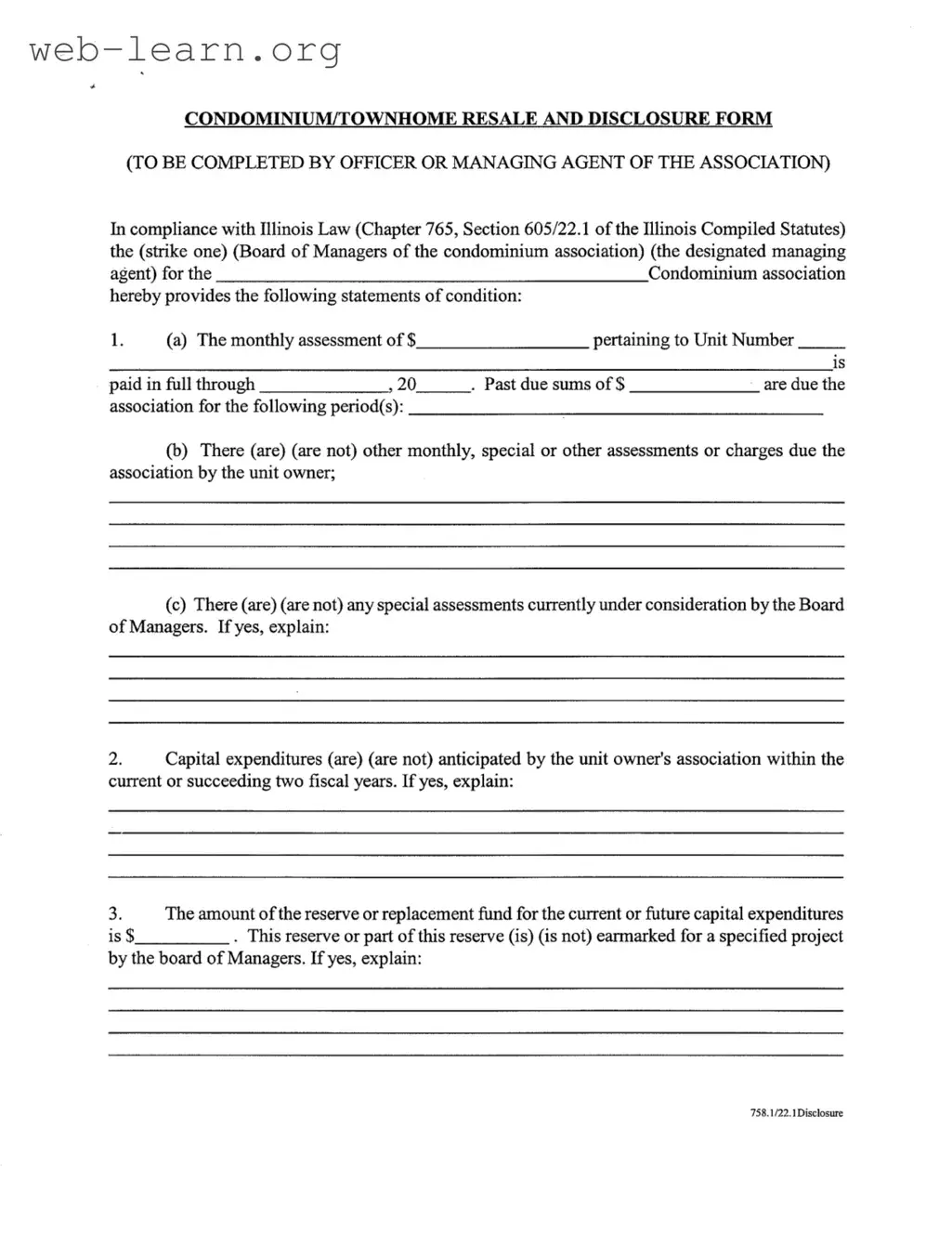
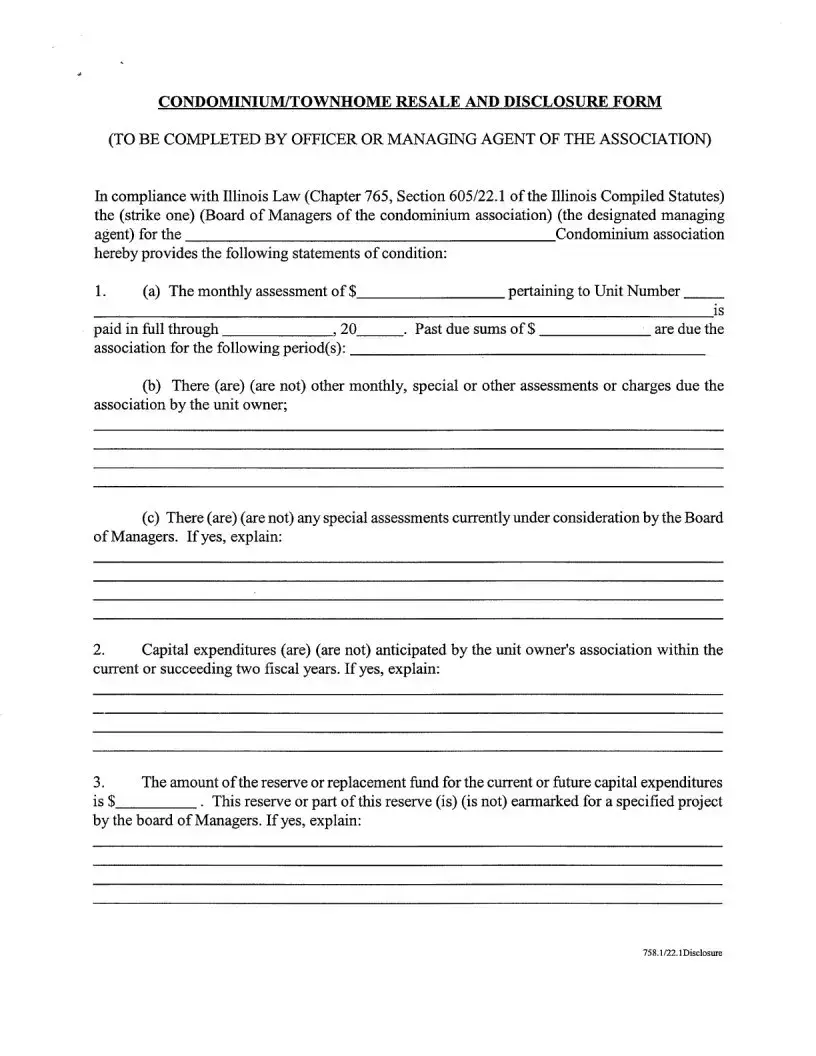
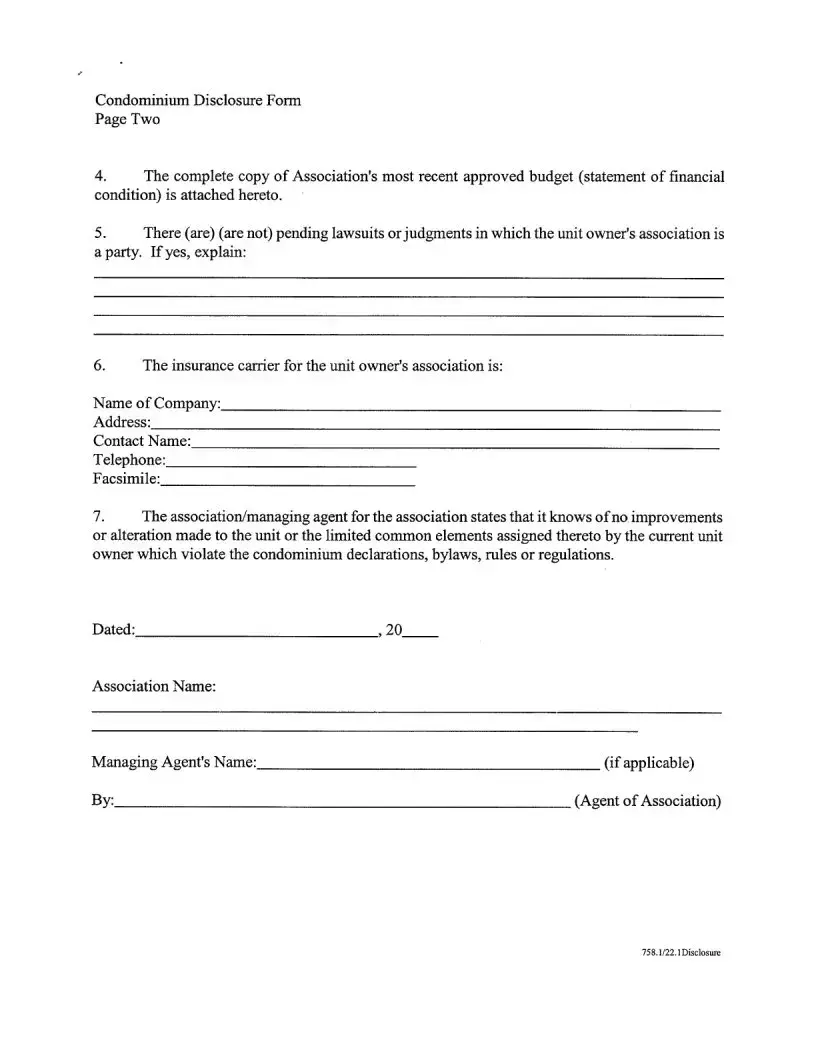
The Act 221 Disclosure form is an essential document for anyone involved in the resale of condominiums or townhomes in Illinois. This form serves to inform potential buyers about the financial health and legal standing of the condominium association. It is filled out by an officer or managing agent of the association and includes crucial information about monthly assessments, any overdue payments, and the status of special assessments. Additionally, it addresses anticipated capital expenditures and provides details about the association's reserve funds. Buyers will find a complete copy of the most recent budget attached, ensuring transparency in financial matters. The form also discloses any pending lawsuits that may affect the association and identifies the insurance carrier responsible for coverage. Lastly, it confirms that no alterations or improvements made by the current owner violate the association's governing documents. This comprehensive overview helps potential buyers make informed decisions while fostering trust between all parties involved.
| Fact Name | Description |
|---|---|
| Purpose | The Act 221 Disclosure form is designed to inform potential buyers about the financial and legal status of a condominium or townhome association. |
| Governing Law | This form is governed by Illinois Law, specifically Chapter 765, Section 605/22.1 of the Illinois Compiled Statutes. |
| Assessment Details | The form requires the disclosure of any monthly assessments and special assessments due from the unit owner, ensuring transparency in financial obligations. |
| Pending Legal Issues | It mandates the disclosure of any pending lawsuits or judgments involving the unit owner's association, providing insight into potential legal risks. |
After gathering the necessary information, the next step involves accurately completing the Act 221 Disclosure form. This form is essential for providing potential buyers with important information about the condominium or townhome. Follow the steps outlined below to ensure that all required information is filled out correctly.
What is the Act 221 Disclosure Form?
The Act 221 Disclosure Form is a document required by Illinois law for condominium and townhome associations. It provides essential information about the financial and legal status of the association and the specific unit being sold. This form is typically completed by an officer or managing agent of the association and must be made available to potential buyers to ensure transparency during the resale process.
Who is responsible for completing the form?
The form must be completed by either the Board of Managers of the condominium association or the designated managing agent. This ensures that the information provided is accurate and reflects the current status of the association and the unit in question.
What kind of information is included in the form?
The form covers several key areas, including:
Why is the form important for buyers?
This form is crucial for potential buyers as it provides a clear picture of the financial health and legal standing of the condominium association. Understanding any outstanding assessments, pending lawsuits, or anticipated capital expenditures can significantly influence a buyer's decision. It helps buyers make informed choices and avoid unexpected costs after purchase.
What should a buyer do if the form indicates issues?
If the Act 221 Disclosure Form reveals any concerns, such as outstanding assessments or pending lawsuits, buyers should consider discussing these issues with their real estate agent or legal advisor. It may be wise to negotiate repairs or financial concessions with the seller or to seek further clarification from the association regarding the implications of these issues.
How can buyers obtain the Act 221 Disclosure Form?
What happens if the form is not provided?
If the Act 221 Disclosure Form is not provided, the buyer may have grounds to withdraw from the purchase agreement without penalty. Illinois law mandates that this disclosure be made available, so failure to do so could lead to legal implications for the seller. Buyers should ensure they receive this document to protect their interests.
Filling out the Act 221 Disclosure form can be a straightforward task, but many people make common mistakes that can lead to confusion or legal issues later on. One significant error is failing to provide accurate information about the monthly assessments. When indicating whether the assessments are paid in full, it is essential to specify the exact amount due and the time frame covered. Omitting this detail can mislead potential buyers about their financial obligations.
Another frequent mistake involves the section regarding special assessments. People often overlook this part or mistakenly indicate that there are no special assessments when, in fact, there are pending charges. This can create misunderstandings and mistrust between the buyer and the condominium association. It is crucial to be transparent and provide a clear explanation if there are any special assessments currently under consideration.
Additionally, individuals sometimes neglect to mention any anticipated capital expenditures. This section requires careful consideration, as failing to disclose upcoming expenses can result in financial strain for the new owner. Providing a brief explanation of any anticipated costs helps potential buyers make informed decisions.
Many also make the mistake of not updating the reserve fund information. If the reserve amount has changed or if part of it is earmarked for a specific project, this should be clearly indicated. Misrepresenting the reserve fund status can lead to significant issues down the line, particularly if unexpected repairs arise.
Attaching the most recent approved budget is another critical step that people often forget. Without this document, buyers may lack essential insights into the financial health of the association. It is important to ensure that this budget is current and accurately reflects the association's financial condition.
Furthermore, failing to disclose pending lawsuits or judgments is a serious oversight. This information is vital for potential buyers, as ongoing legal issues can affect the value and stability of the condominium. If there are pending legal matters, they should be clearly explained in the form.
Another common error is providing incomplete insurance information. The form requires the name of the insurance carrier, along with contact details. Omitting this information can leave buyers without crucial details about the association's coverage, which is essential for understanding potential liabilities.
Moreover, some individuals may incorrectly state that no improvements or alterations have been made to the unit or common elements, even if there have been changes. It is important to accurately represent any modifications to avoid potential disputes regarding compliance with the condominium’s rules and regulations.
Lastly, failing to sign the form or provide the name of the managing agent can invalidate the document. This step is often overlooked, but it is essential for ensuring that the form is legally binding and recognized by all parties involved.
By being aware of these common mistakes, individuals can fill out the Act 221 Disclosure form more accurately and effectively, ensuring a smoother transaction process for all parties involved.
The Act 221 Disclosure form is a vital document in the process of selling a condominium or townhome in Illinois. It provides essential information about the property and the association managing it. Alongside this form, several other documents are commonly utilized to ensure transparency and compliance. Below is a list of these documents, each serving a specific purpose in the transaction process.
Understanding these documents is crucial for both buyers and sellers in the condominium market. They collectively ensure that all parties are informed about the property and the association's operations, promoting a smoother transaction process.
The Act 221 Disclosure form shares similarities with several other documents related to property disclosures and real estate transactions. Here are seven documents that have comparable purposes or content:
When filling out the Act 221 Disclosure form, it is important to follow certain guidelines to ensure accuracy and compliance. Below is a list of things you should and shouldn't do.
Understanding the Act 221 Disclosure form can be tricky. Here are some common misconceptions that people often have about it:
Many people believe that if the form is filled out and signed, it means the property has no problems. In reality, the form only provides information about the current conditions and financial status of the condominium association. It does not guarantee that there are no hidden issues with the property itself.
Some think that every condominium association must disclose the same information. However, the specifics can vary based on the association's rules and the state laws governing them. While the form outlines required disclosures, the depth of information may differ from one association to another.
It’s easy to assume that if past due assessments are mentioned, they aren’t a significant issue. This is misleading. Outstanding dues can lead to financial strain on the association and could impact future assessments or the overall financial health of the community.
Some individuals think that the Act 221 Disclosure form is only important when buying or selling a unit. However, it is also crucial for current owners to be aware of the financial and legal standing of their association. Understanding these details can help owners make informed decisions about their investments.
Filling out and using the Act 221 Disclosure form is crucial for both sellers and buyers in a condominium or townhome transaction. Here are key takeaways to consider:
Using this form effectively can protect both buyers and sellers by ensuring transparency and clarity in the transaction process.