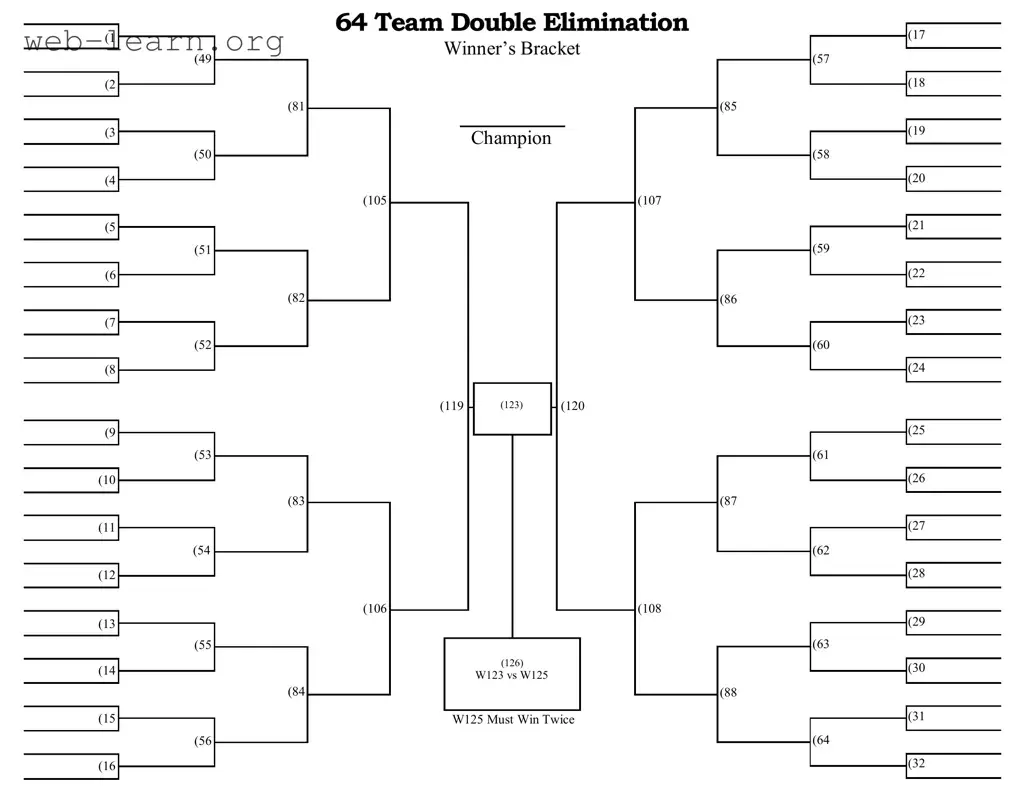
The 64 Team Double Elimination Bracket form is an essential tool for organizing competitive tournaments, particularly in sports and gaming. This format allows teams to compete in a structured way, ensuring that each team has the opportunity to play multiple matches before being eliminated. The key feature of this bracket is its double elimination structure, which means that a team must lose two matches before being eliminated from the tournament. This system not only enhances the competitive spirit but also provides teams with a second chance to prove their skills. The bracket is divided into several rounds, starting with an initial set of matches that leads to a series of winners' and losers' brackets. As teams progress, they face off against each other, with the ultimate goal of reaching the championship match. This format accommodates a large number of participants while maintaining clarity and organization throughout the tournament. By utilizing the 64 Team Double Elimination Bracket form, organizers can effectively manage match schedules, track team progress, and ensure a fair competition for all involved.
(1 |
64 Team Double Elimination |
(17 |
|
Winner’s Bracket |
|||
(49 |
(57 |
||
|
(2 |
|
|
|
|
RACKETS |
|
|
|
|
|
|
(18 |
|
|
(81 |
|
|
|
|
(85 |
(3 |
|
|
Champion |
|
|
(19 |
(50 |
|
|
|
|
|
(58 |
(4 |
|
|
|
|
|
(20 |
|
|
(105 |
|
|
(107 |
|
(5 |
|
|
|
|
|
(21 |
(51 |
|
|
|
|
|
(59 |
(6 |
|
|
|
|
|
(22 |
|
(82 |
|
B |
(86 |
||
(7 |
|
|
(23 |
|||
|
|
|
|
|
||
(52 |
|
|
|
|
|
(60 |
(8 |
|
OUR |
|
|
(24 |
|
(54 |
|
(120 |
|
(62 |
||
|
|
(119 |
(123) |
|
|
|
(9 |
|
|
|
|
|
(25 |
(53 |
Y |
|
|
|
(61 |
|
(10 |
|
|
|
(26 |
||
|
|
|
|
|
||
|
(83 |
|
|
|
|
(87 |
(11 |
|
|
|
|
|
(27 |
RINT(56 |
|
|
|
|
(64 |
|
(12 |
|
|
|
|
|
(28 |
(13 |
|
(106 |
|
|
(108 |
(29 |
(55 |
|
|
|
|
|
(63 |
P |
|
|
(126) |
|
|
(30 |
(14 |
|
|
W123 vs W125 |
|
|
|
|
(84 |
|
|
|
|
(88 |
(15 |
|
W125 Must Win Twice |
|
(31 |
||
|
|
|
||||
(16 |
|
|
|
|
|
(32 |
L9
(33
L10(65
Loser’s Bracket
L25
(41
(73L26
|
L49 |
|
|
|
|
|
|
|
RACKETS |
||||
|
|
|
|
|
|
|
|
|
|
|
|
L57 |
|
L11 |
|
|
(89 |
|
|
|
|
|
|
|
|
(93 |
L27 |
|
(34 |
|
|
|
|
|
|
|
|
|
|
|
(42 |
L12 |
|
(66 |
|
(97 |
|
L120 |
|
|
L119 |
|
(101 |
(74 |
L28 |
|
L50 |
|
L85 |
|
|
|
|
|
|
|
|
L81 |
L58 |
L13 |
|
|
|
|
|
|
|
|
|
|
|
|
L29 |
|
(35 |
|
|
|
|
|
|
|
|
|
|
|
(43 |
L14 |
|
(67 |
|
|
(109 |
|
|
|
|
|
(111 |
(75 |
L30 |
|
|
|
|
|
|
|
|
|
|
|
|
||
|
L51 |
|
|
|
|
|
|
|
|
|
|
|
L59 |
L15 |
|
|
(90 |
|
|
|
|
|
|
|
|
(94 |
L31 |
|
|
|
|
|
|
|
|
|
|
|
|
||
|
(36 |
|
|
|
|
|
B |
|
|
|
(44 |
||
L16 |
|
(68 |
|
(98 |
|
(113 |
(115 |
(102 |
(76 |
L32 |
|||
|
|
|
|
|
|
||||||||
|
|
|
|
|
|
|
|
||||||
|
|
|
|
|
|
|
|
|
|
|
|
||
|
L52 |
|
L86 |
|
|
(121 |
(124) |
(122 |
|
|
|
L82 |
L60 |
|
|
|
|
|
|
|
|
|
|
|
|
||
|
|
|
|
|
L105 |
|
|
|
|
|
L107 |
|
|
|
L53 |
|
L87 |
|
|
|
|
|
|
|
|
L83 |
L61 |
|
|
|
|
|
|
|
|
|
|
|
|
||
L1 |
|
(69 |
|
(99 |
Y |
|
|
|
|
(103 |
(77 |
L17 |
|
|
(37 |
|
|
|
|
|
(118 |
|
|
|
(45 |
||
|
|
|
|
|
(117 |
|
|
|
|
|
|||
|
|
|
(91 |
|
|
|
|
|
|
(95 |
|
||
L2 |
|
|
|
|
OUR |
|
|
|
|
L18 |
|||
|
|
|
|
|
|
|
|
|
|
||||
|
L54 |
|
|
|
|
|
|
|
|
|
L62 |
||
|
RINT |
|
|
|
|
|
|
||||||
L3 |
|
(70 |
|
|
(110 |
|
|
|
(112 |
(78 |
L19 |
||
|
(38 |
|
|
|
|
|
|
|
|
|
|
|
(46 |
L4 |
|
|
L88 |
|
|
|
|
|
|
|
|
L84 |
L20 |
|
L55 |
|
|
|
|
(114 |
|
|
|
(116 |
|
|
L63 |
L5 |
|
(71 |
|
(100 |
|
|
|
|
|
|
(104 |
(79 |
L21 |
P |
|
|
|
|
(125) |
|
|
|
|
|
(47 |
||
|
(39 |
|
|
|
|
|
W124 vs L123 |
|
|
|
|
|
|
|
|
|
(92 |
|
|
|
|
|
|
|
(96 |
|
|
L6 |
|
|
|
L106 |
|
|
|
|
|
L108 |
L22 |
||
|
L56 |
|
|
|
|
|
|
|
|
|
L64 |
||
|
|
|
|
|
Loser’s Bracket Final |
|
|
|
|
||||
L7 |
|
(72 |
|
|
|
|
|
|
(80 |
L23 |
|||
|
|
|
|
|
|
|
|
|
|
||||
|
|
|
|
|
|
|
|
|
|
|
|||
|
(40 |
|
|
|
|
PrintYourBrackets.com |
|
|
|
(48 |
|||
L8 |
|
|
|
|
|
|
|
|
L24 |
||||
|
|
|
|
|
|
|
|
|
|
|
|
||
| Fact Name | Description |
|---|---|
| Structure | A 64 team double elimination bracket allows each team to lose twice before being eliminated. |
| Initial Matchups | The first round features 32 matches, with each match eliminating one team from the winner's bracket. |
| Loser's Bracket | Teams that lose in the winner's bracket have a chance to continue in the loser's bracket. |
| Finals | The final match can potentially involve the same teams twice if the team from the loser's bracket wins the first final. |
| State-Specific Rules | Different states may have specific rules governing tournament play, including how brackets are structured. |
| Governing Laws | In many states, laws regarding amateur sports competitions apply, such as California's Business and Professions Code. |
| Seeding | Teams are often seeded based on performance to ensure a fair competition. |
| Game Format | Matches can be played in various formats, including single games or best-of series. |
| Time Constraints | Events may have time limits for matches to ensure the tournament progresses smoothly. |
| Championship Criteria | The champion is determined based on the last remaining team in the winner's bracket or the last team standing after the finals. |
Filling out the 64 Team Double Elimination Bracket form is essential for organizing your tournament effectively. Once completed, this form will help you track matchups and progress throughout the competition. Follow these steps carefully to ensure accuracy.
What is a 64 Team Double Elimination Bracket?
A 64 Team Double Elimination Bracket is a tournament format where each team has to lose twice before being eliminated. This means that a team can still compete even after losing one match. The bracket is structured to accommodate 64 teams, allowing for a fair competition where teams can recover from an early loss.
How does the double elimination format work?
In this format, teams are divided into two brackets: the winners' bracket and the losers' bracket. Teams that win their matches continue in the winners' bracket, while those that lose move to the losers' bracket. A team is eliminated from the tournament only after losing a match in the losers' bracket, allowing for a second chance to compete.
How are the matchups determined?
Matchups are typically determined through a seeding process based on the teams' performance or rankings. Teams are placed in the bracket to ensure that higher-seeded teams do not face each other in the early rounds. This setup encourages fair competition and allows for the best teams to advance through the tournament.
How long does the tournament usually take?
The duration of a 64 Team Double Elimination Tournament can vary based on several factors, including the number of matches played each day and the scheduling of games. Generally, it may take several days to complete, especially if matches are played back-to-back. Planning ahead can help ensure that all teams have ample time to compete.
Can teams play more than one match in a day?
Yes, teams may play multiple matches in a single day, especially in the early rounds. However, this depends on the tournament schedule and the number of available courts or fields. Teams should be prepared for the possibility of a busy day if they advance in the tournament.
What happens if a match ends in a tie?
If a match ends in a tie, the tournament rules will dictate how to resolve it. Common methods include playing extra innings or periods, or using a tiebreaker system. Teams should review the specific tournament rules to understand how ties will be handled.
Are there any age or skill level restrictions?
Age and skill level restrictions may vary by tournament. Some tournaments may have specific divisions based on age groups or skill levels to ensure fair play. Teams should check the tournament guidelines to confirm any restrictions that may apply.
How can I access the bracket once the tournament starts?
The tournament organizers will typically provide access to the bracket through an official website or a printed version at the venue. Keeping an eye on announcements and updates will help teams stay informed about their matchups and progress throughout the tournament.
When filling out a 64 Team Double Elimination Bracket form, individuals often encounter several common mistakes that can lead to confusion and incorrect results. One frequent error is failing to properly understand the structure of the bracket. Double elimination means that a team must lose two matches before being eliminated. Not recognizing this can lead to incorrect placement of teams in the bracket.
Another mistake involves mislabeling teams. Each team should be clearly identified and consistently labeled throughout the bracket. Inconsistencies in team names or numbers can create confusion, especially when tracking match results. It is crucial to ensure that each entry matches the corresponding team throughout the entire form.
Some individuals overlook the importance of accurately entering match results. When recording scores, it is essential to clearly indicate which team won each match. Failing to do so can lead to incorrect advancement of teams in the bracket. Additionally, not updating the bracket after each match can result in outdated information and further complications in tracking progress.
Another common error is neglecting to follow the correct progression of matches. Each round of the bracket has specific matchups that depend on the outcomes of previous rounds. Skipping rounds or mismatching teams can disrupt the flow of the tournament and lead to confusion about which teams are still in contention.
Lastly, some individuals may not account for byes in the bracket. In a 64-team format, certain teams may receive a bye during initial rounds. Failing to recognize and properly implement byes can result in an uneven number of teams competing in subsequent rounds, complicating the elimination process. Understanding the rules regarding byes is essential for maintaining the integrity of the tournament.
The 64 Team Double Elimination Bracket form is a crucial tool for organizing and managing tournaments. However, several other documents complement this form to ensure smooth operation and clear communication throughout the event. Below is a list of commonly used forms and documents that can enhance the tournament experience.
These documents, when used in conjunction with the 64 Team Double Elimination Bracket form, create a comprehensive framework for managing tournaments effectively. Proper organization not only enhances the experience for participants but also contributes to the overall success of the event.
When filling out the 64 Team Double Elimination Bracket form, it’s important to follow specific guidelines to ensure accuracy and clarity. Here’s a list of what to do and what to avoid.
By following these guidelines, you can help ensure that the bracket is filled out correctly and efficiently. Your attention to detail will make a difference in the overall process.
Understanding the 64 Team Double Elimination Bracket can be challenging. Here are four common misconceptions about this format:
While it is true that a team must lose two matches to be completely eliminated, the structure allows for a team to lose one match and still have a chance to win the tournament.
This format can be used for any 64 teams, regardless of their ranking. Teams are often placed into the bracket based on seeding, which can be determined by various factors.
In a double elimination format, the final match may involve a team that has lost once. If the undefeated team loses, a second match may be required to determine the champion.
A team in the loser’s bracket can still win the tournament. They must win all their remaining matches, including potentially facing the undefeated team in the final.
Filling out and utilizing the 64 Team Double Elimination Bracket form requires careful attention to detail. Here are some key takeaways to consider: