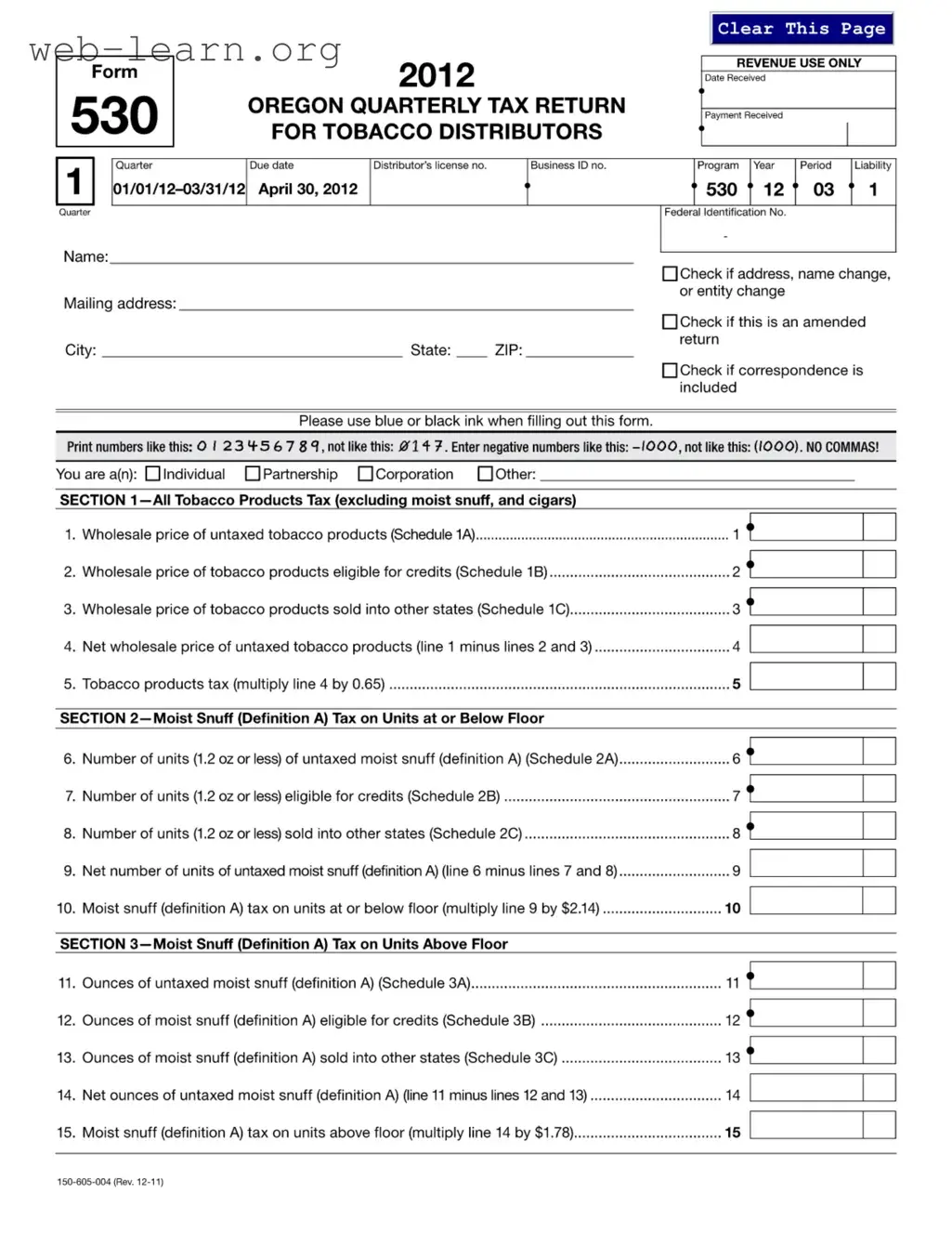
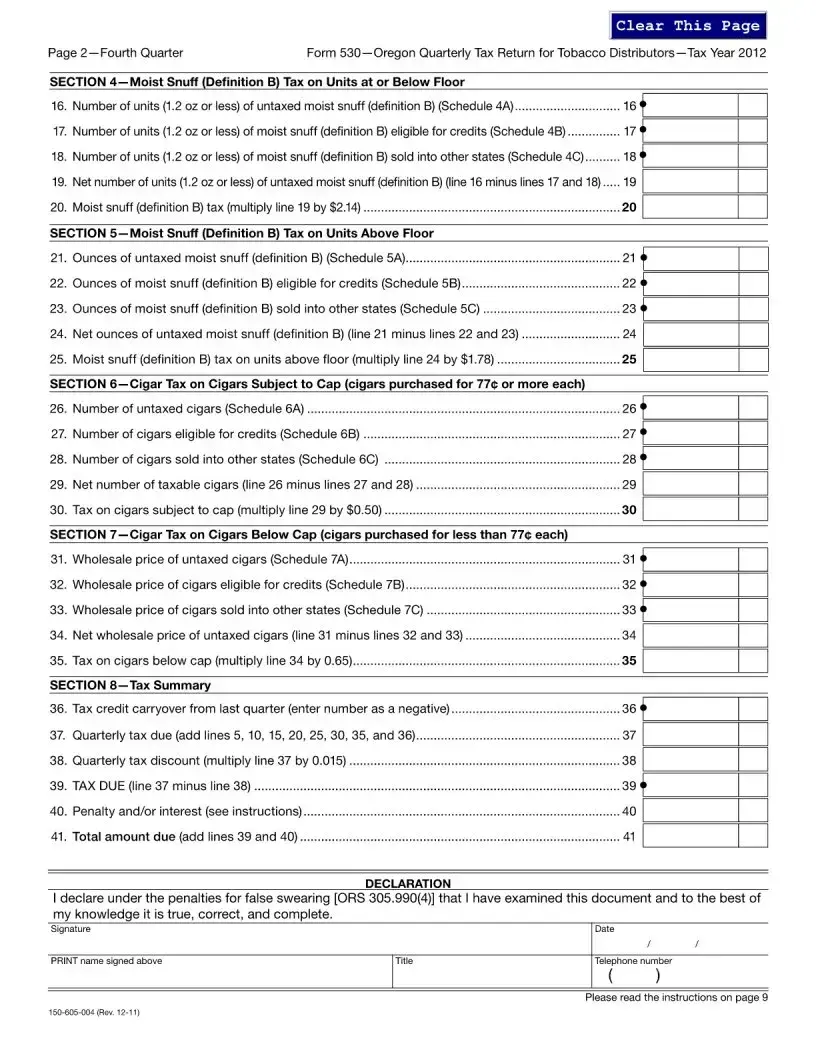
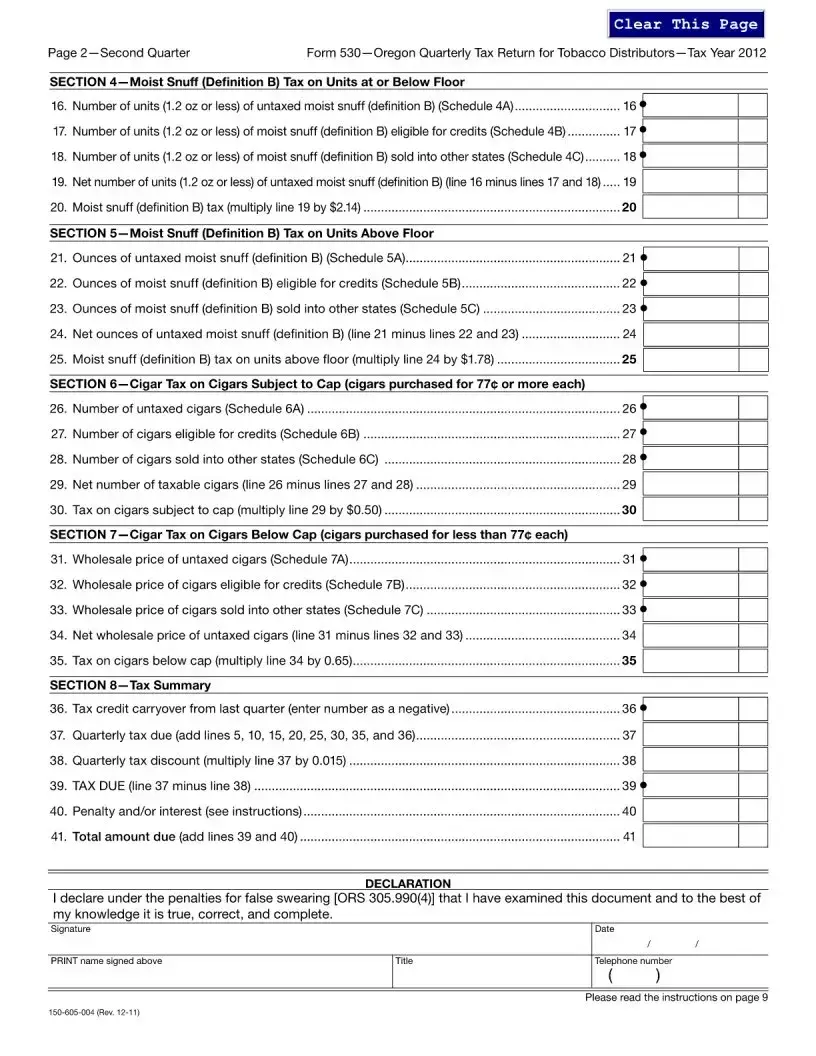
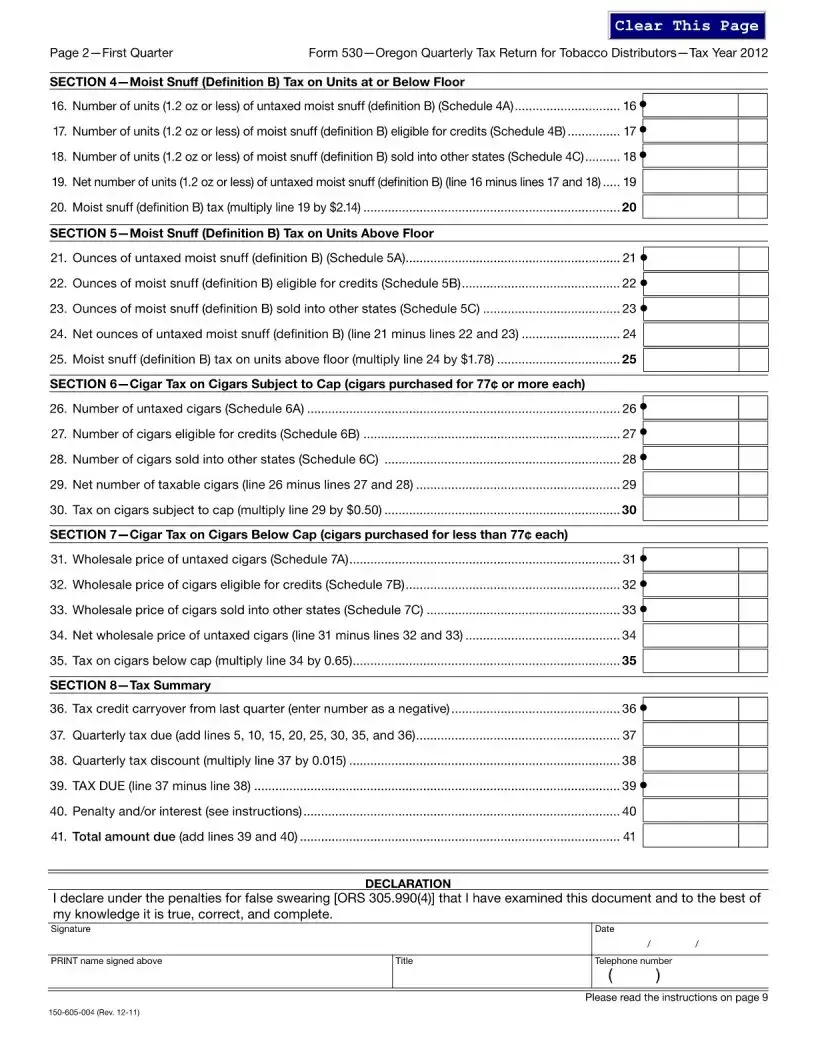
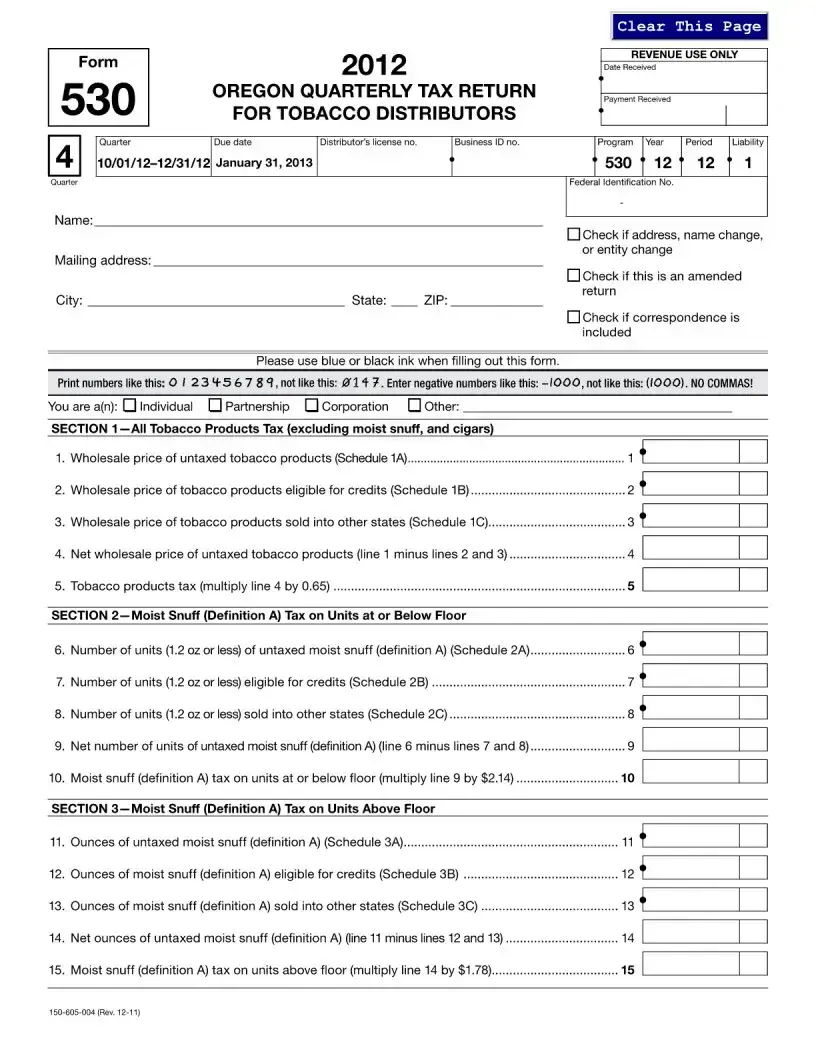
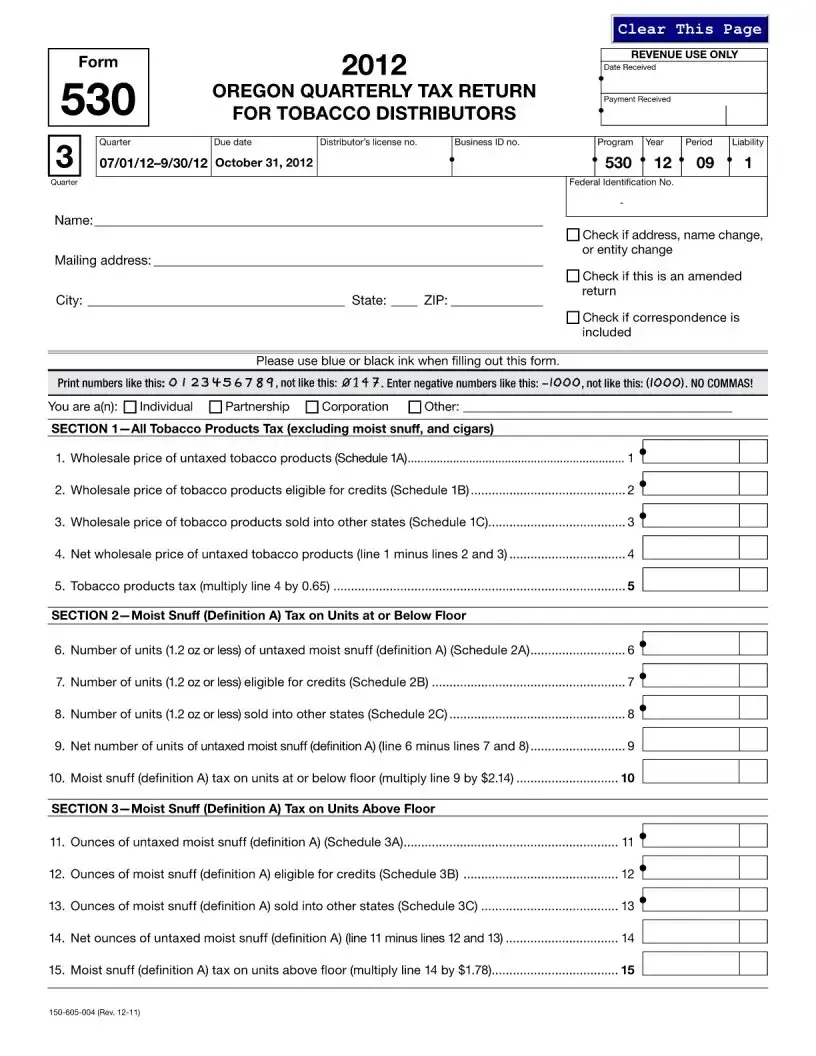
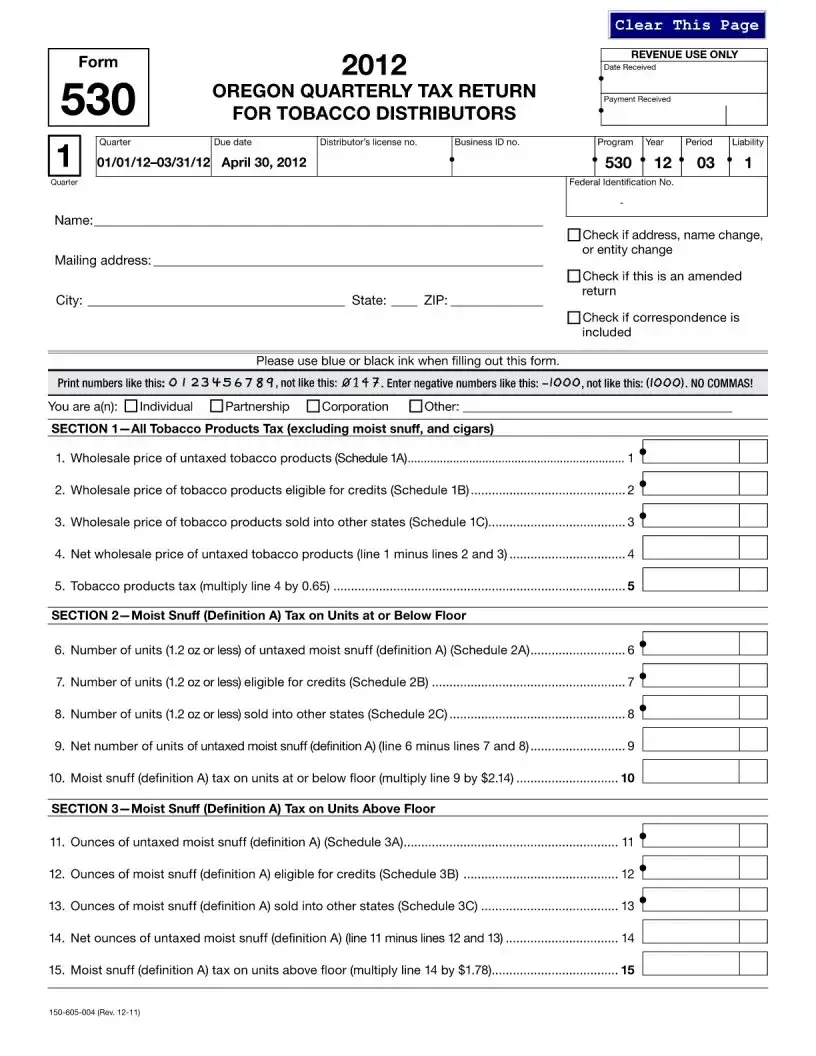
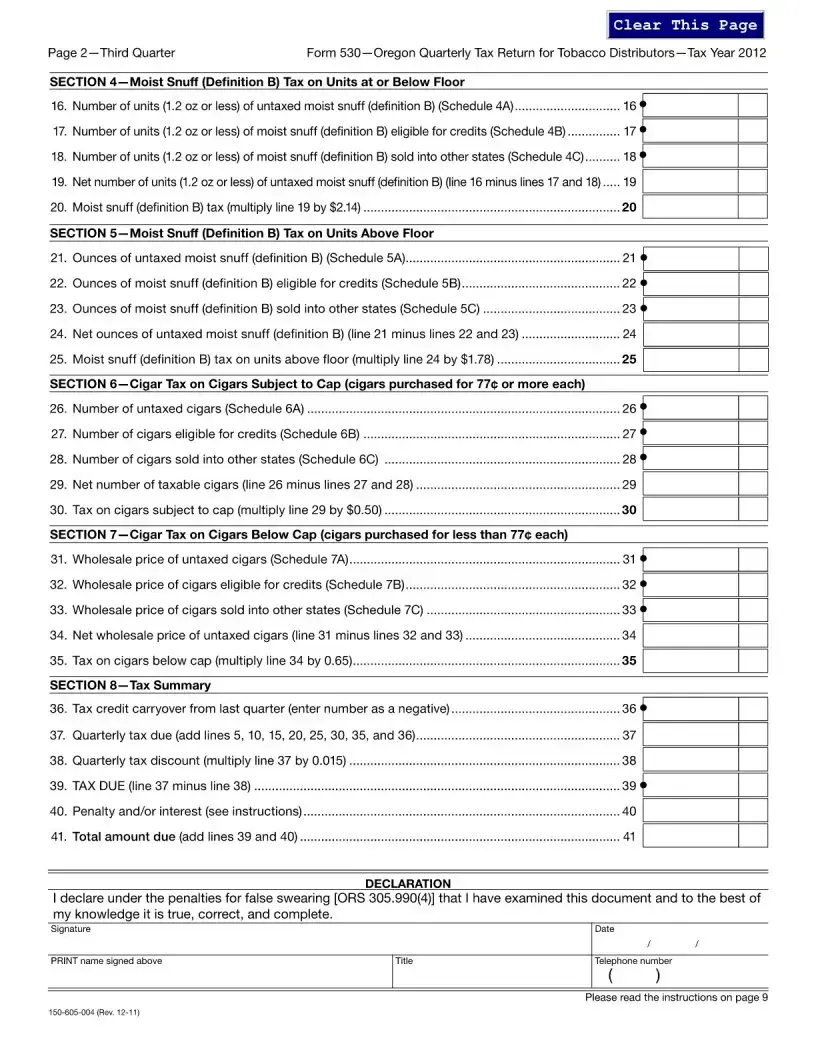
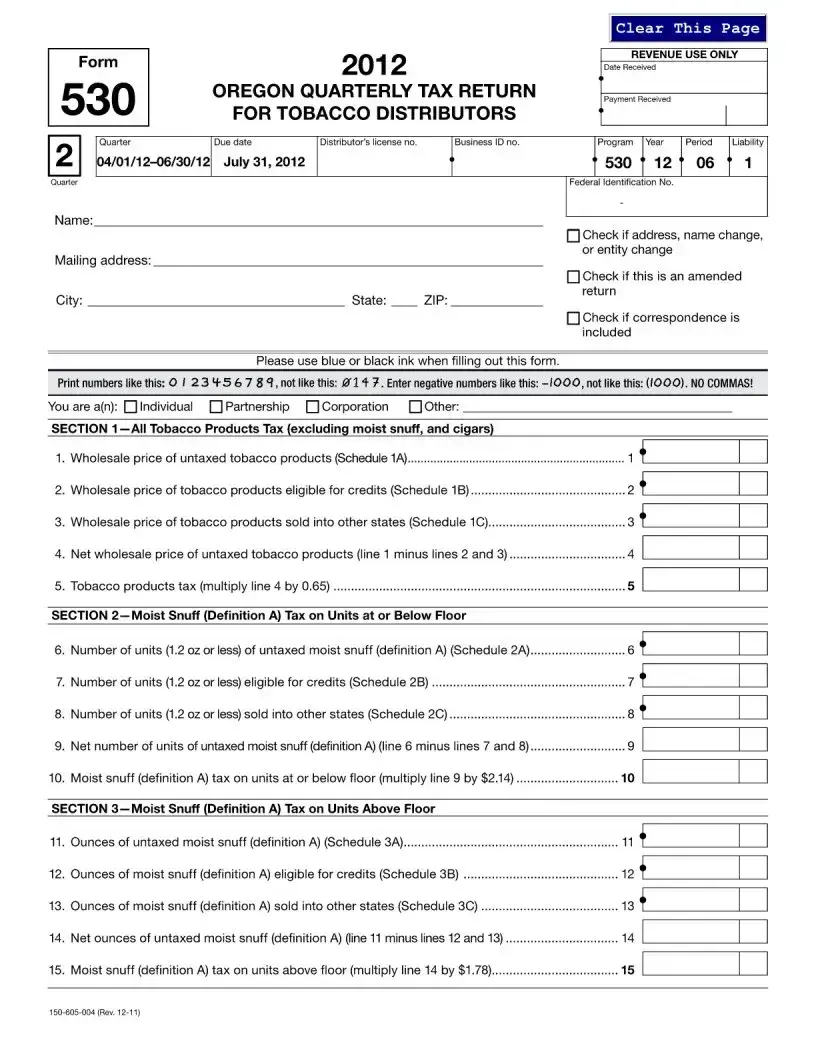
The 530 Oregon form is a crucial document for tobacco distributors operating in the state. This quarterly tax return helps businesses report and pay taxes on various tobacco products, including cigarettes, cigars, and moist snuff. Distributors must provide detailed information about their sales, including the wholesale price of untaxed products, products eligible for tax credits, and those sold to other states. The form is divided into sections that address different types of tobacco products, allowing for a clear breakdown of tax liabilities. For instance, there are specific sections for moist snuff, which is categorized based on weight and tax rates. Additionally, the form includes calculations for taxes due and potential discounts, ensuring that distributors can accurately determine their financial responsibilities. It's essential to fill out the form correctly and completely, as any discrepancies could lead to penalties or interest charges. By adhering to the guidelines outlined in the form, distributors can stay compliant with Oregon's tax regulations.
| Fact Name | Description |
|---|---|
| Form Purpose | The 530 Oregon form is used by tobacco distributors to report quarterly taxes on tobacco products. |
| Filing Frequency | This form must be filed quarterly, with specific due dates for each quarter of the year. |
| Governing Law | The form is governed by Oregon Revised Statutes (ORS) related to tobacco taxation. |
| Tax Calculation | Taxes are calculated based on the wholesale price of untaxed tobacco products and specific rates for moist snuff and cigars. |
| Amended Returns | Distributors can check a box to indicate if they are submitting an amended return for corrections. |
| Signature Requirement | A signature is required to verify the accuracy of the information provided on the form, along with a declaration statement. |
Completing the 530 Oregon form requires careful attention to detail. Follow these steps to ensure accurate submission. Each section must be filled out completely and correctly to avoid penalties or delays.
What is the purpose of the 530 Oregon form?
The 530 Oregon form is used by tobacco distributors to report and pay taxes on various tobacco products. This quarterly tax return helps ensure compliance with state tax regulations and provides a clear record of sales and tax liabilities.
Who needs to file the 530 Oregon form?
Tobacco distributors operating in Oregon must file this form. This includes individuals, partnerships, corporations, and other entities that distribute tobacco products within the state.
When is the 530 Oregon form due?
The form is due quarterly, with specific due dates based on the reporting period. For example, the first quarter's return is typically due by April 30. It is important to check the specific due dates for each quarter to avoid penalties.
What types of products are reported on the 530 form?
The form covers a variety of tobacco products, including:
How is the tax calculated on moist snuff?
Tax on moist snuff is calculated based on the number of units or ounces sold. There are different tax rates for units at or below a specified weight and for those above it. The form includes specific lines for reporting these calculations.
What should I do if I need to amend my return?
If an amendment is necessary, check the box indicating that this is an amended return when submitting the form. Ensure all corrections are accurately reflected in the new submission.
Are there penalties for late filing or payment?
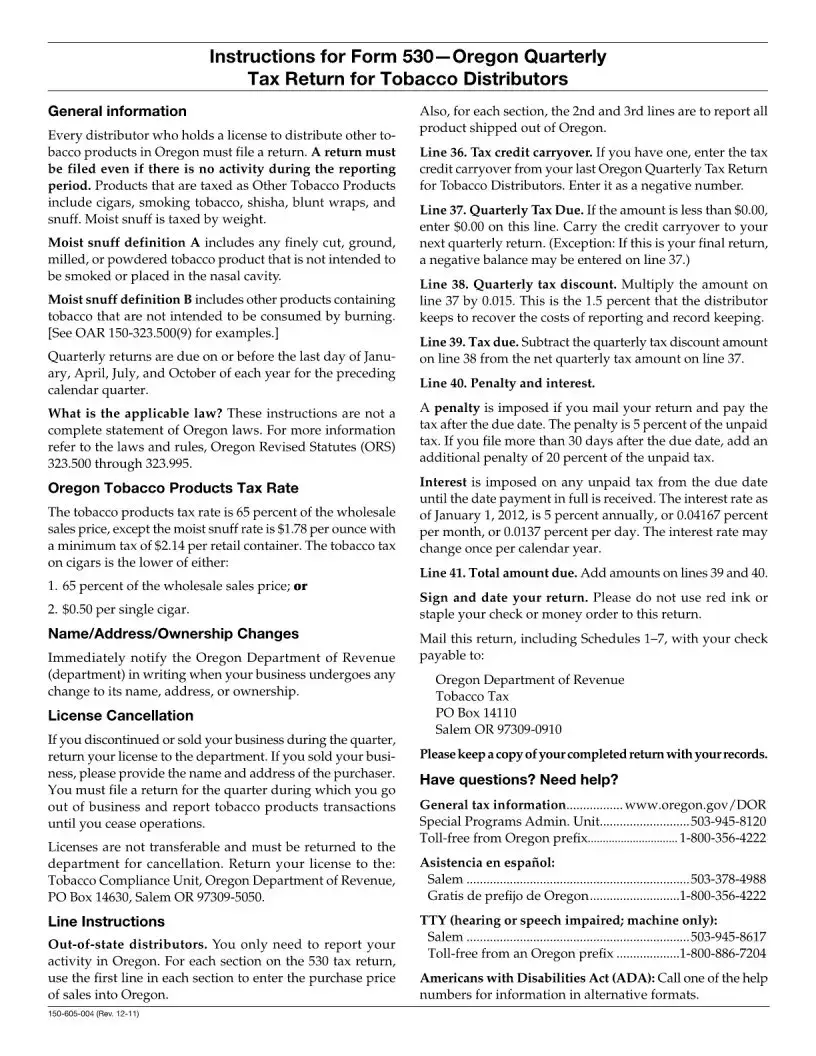
Yes, there are penalties and interest for late filings or payments. The form includes a section to calculate any penalties or interest that may apply, which will be added to the total amount due.
What information do I need to complete the form?
To complete the form, gather the following information:
Can I file the 530 Oregon form electronically?
Currently, the form must be completed and submitted in paper format. It is important to follow the instructions provided to ensure proper filing.
Where can I find additional instructions for completing the form?
Additional instructions are typically included on the form itself. It is advisable to read these instructions carefully to ensure accurate completion and compliance with all requirements.
Filling out the 530 Oregon form can be a straightforward process, but many people make common mistakes that can lead to delays or issues with their tax returns. One significant error is not using the correct ink color. The form specifically instructs users to fill it out using blue or black ink. Using any other color can result in the form being rejected or processed incorrectly.
Another frequent mistake involves the formatting of numbers. The instructions clearly state how to print numbers. For example, people often enter numbers with commas or in an incorrect format. It’s essential to follow the guidelines: print numbers without commas and use the correct negative number format. Misunderstanding these instructions can lead to inaccurate calculations and potential penalties.
Many individuals also overlook the importance of checking the appropriate boxes on the form. Failing to indicate if there has been an address change, name change, or if the form is amended can cause confusion and delays in processing. This simple oversight can complicate matters, so it's crucial to ensure all relevant boxes are checked.
Additionally, mistakes in calculations are common. Each section of the form requires specific calculations based on previous lines. Errors in these calculations can lead to an incorrect tax amount due. It's advisable to double-check all math and ensure that each line accurately reflects the figures from the previous lines.
Lastly, many people forget to sign and date the form. This step is critical, as unsigned forms are often considered incomplete and can be rejected. Always ensure that the declaration section is filled out properly, including a signature, printed name, title, and date. Neglecting this final step can lead to unnecessary complications and delays in the processing of your return.
When dealing with the 530 Oregon Quarterly Tax Return for Tobacco Distributors, there are several other forms and documents that may be necessary to ensure compliance with tax regulations. Each of these documents serves a specific purpose and helps to provide a complete picture of the tax obligations related to tobacco distribution.
Understanding these additional forms and documents can greatly assist tobacco distributors in navigating their tax obligations. Properly managing these schedules ensures accurate reporting and helps to avoid potential penalties associated with misreporting or underreporting taxes owed.
When filling out the 530 Oregon form, there are important guidelines to follow. Adhering to these can help ensure accuracy and compliance.
In addition to what to do, there are also things to avoid when completing the form:
This form is applicable to all tobacco distributors, regardless of size. Whether you are a small business or a larger operation, you must file this form if you distribute tobacco products in Oregon.
There are specific due dates for filing the 530 Oregon form. Missing these deadlines can result in penalties and interest on the amount due, so it is essential to stay on schedule.
Regardless of how you submit the form, maintaining accurate records of your tobacco products and sales is crucial. These records can help you verify the information on your tax return if needed.
Different categories of tobacco products have varying tax rates and rules. For instance, moist snuff and cigars are subject to different calculations and tax rates, as outlined in the form.
Even if there were no sales, you may still be required to file a return. Check the specific filing requirements to ensure compliance.
The 530 Oregon form also accounts for tobacco products sold into other states. Accurate reporting of these sales is necessary to avoid discrepancies and potential penalties.
The instructions specify that you should use blue or black ink only. Using the correct ink color helps ensure that your form is processed without issues.