Homepage Blank 518 Michigan Form
Outline

The Michigan Department of Treasury Form 518 serves as a crucial tool for businesses operating within the state, facilitating their registration for various business taxes. This form is essential for new businesses, those reinstating operations, or entities acquiring existing businesses. It covers a wide range of tax obligations, including Sales Tax, Use Tax, Income Tax Withholding, Corporate Income Tax, and Unemployment Insurance Tax. Employers must also comply with federal and state regulations by registering for Social Security tax and income tax withholding. Additionally, the form requires businesses to report newly hired employees and adhere to various compliance measures, such as maintaining accurate records and fulfilling health and safety standards. The registration process is not just a bureaucratic step; it establishes the foundation for a business's tax responsibilities, ensuring that they are in good standing with the Michigan Department of Treasury and the Unemployment Insurance Agency. Furthermore, understanding the implications of the form is vital, as it can affect everything from tax liabilities to potential penalties for non-compliance. Thus, navigating this registration process with care and attention to detail is paramount for any business looking to thrive in Michigan.


Sample - 518 Michigan Form

Registration Booklet
STATE OF MICHIGAN
Michigan Department of Treasury
518 (Rev. 11-22)
MICHIGAN BUSINESS TAXES
For more information regarding Michigan Treasury
Taxes, go to www.michigan.gov/taxes.
Your Responsibilities Concerning Taxes
Federal, State and Local Taxes
Employers must register with the Internal Revenue Service (IRS)
and the Michigan Department of Treasury for Social Security tax
(federal) and income tax withholding (federal and state). These
taxes must be withheld from each employee’s wages and paid
to the appropriate taxing agency. Some cities also levy a city
income tax. Contact the City Treasurer’s oce for information.
Employers must report all newly hired employees. See the
Michigan Income Tax Withholding Guide, visit the New Hire
Reporting website at http://mi-newhire.com or call 1-800-524-
9846 for more information.
Federal Unemployment Tax (FUTA)
Most employers must pay federal unemployment taxes. Contact
the IRS toll-free at 1-800-829-3676 for more information.
State Unemployment Insurance Tax
Employers must register with the Unemployment Insurance
Agency (UIA) and pay state unemployment insurance taxes.
Unemployment taxes are paid entirely by the employer. Employers
have an ongoing obligation to inform the Agency of any transfer
of assets, organization, payroll, trade or business. Contact the
UIA Tax Oce at PO Box 8068, Royal Oak MI 48068-8068; in
Michigan, or out of state, call 1-855-484-2636 for account-specic
information. More information can be found on the Agency’s
website at www.michigan.gov/uia.
Workers’ Disability Compensation
Most employers are required to provide workers’ disability
compensation coverage for their employees. A workers’
disability compensation policy is purchased from a private
insurance company. Contact the Workers’ Compensation Agency
at PO Box 30016, Lansing MI 48909, or call 517-322-1195 for
more information.
Health and Safety Standards
Employers must comply with health and safety standards under
the federal and state Occupational Safety and Health Act (OSHA)
and the Right-to-Know laws. Contact the Michigan Licensing and
Regulatory Aairs (LARA), MIOSHA, PO Box 30643, Lansing
MI 48909-8143, or call 517-322-1845 for more information.
Immigration Law Compliance
Employers must verify the employment eligibility of all
employees hired after November 6, 1986. Contact the Oce of
U.S. Immigration and Custom Enforcement at 313-568-6042 for
forms and more information.
New Businesses
Employers are required to le tax returns on time and with the
correct payment when required. Employers are responsible for
the accuracy of the returns, regardless of who may be hired
to prepare them. Accurate and complete records must be kept
for determining tax liability properly, as required by law or
department rule.
Selling or transferring all or part of your business. Whenever
you sell or transfer any part of the payroll, accounts, services or
assets of a business covered under the Michigan Employment
Security (MES) Act, you must complete a Business Transferors
Notice to Transferee of Unemployment Tax Liability and Rate
(Form UIA 1027). The seller, sellers real estate broker or other
agent must deliver the completed Form UIA 1027 to the purchaser
of the business at least two business days before the transfer of the
business. You may obtain this form at the UIA website at www.
michigan.gov/uia or by calling 1-855-484-2636. A Disclosure of
Transferor Account (Form UIA 1346), provides the information
needed to complete Form UIA 1027 and may be obtained by calling
the telephone numbers listed above. If the sale to the purchaser
results in the total transfer of the sellers business, a Discontinuance
or Transfer of Payroll or Assets in Whole or Part (Form UIA 1772)
must be completed. This form can be obtained from the same
website referenced above.
Delinquent taxes owed to the Michigan Department of Treasury
must be paid with this registration. Submit a letter identifying the
business name, address, Federal Employer Identication Number
(FEIN), type of tax being paid and the period(s) the tax was due.
Payment should include tax, penalty and interest owed. Go to the
website at www.michigan.gov/taxes.
Corporate ocers may be held liable for Treasury tax debts
incurred by their corporations.
Delinquent collections. Treasury and UIA may both le tax liens
against any taxpayers real and personal property and issue a tax
warrant or levy to seize and sell the property to pay delinquent
taxes.
Successors (buyer or acquirer of a business). If you buy or
acquire either an existing or discontinued business or its stock
of goods, you can be held liable for tax debts incurred by the
previous owner. You must withhold sucient purchase money
to cover these tax debts until the previous owner produces a
receipt showing the taxes have been paid or a certicate stating
that no taxes are due. This certicate may be obtained through
the Department of Treasury, Tax Clearance Section. Upon the
owners written waiver of condentiality; under the Authorization
for Disclosure section, at the bottom of page 2 of the Request for
Tax Clearance Appliation (Form 5156), Treasury will release
a business’s know tax liability for purposes of establishing an
escrow account to a third party. The Tax Clearance Section can
be reached at 517-636-5260.
For unemployment tax purposes, a successor may be held liable
for tax debts or the experience account incurred by the previous
business. For more information, or to obtain clearance statements,
call UIA Employer Ombudsman at 1-855-484-2636 or access the
Agency’s website at www.michigan.gov/uia.
--- IMPORTANT INFORMATION ---
Use Tax on Rental or Leased Property
You may elect to pay use tax on receipts from the rental or lease of
the tangible personal property instead of paying the sales or use tax
on the full cost of the property at the time it is acquired.
If you elect to pay use tax on receipts from the rental or lease, you must
rst obtain a Use Tax Registration before you acquire the property.
For additional information, contact the Michigan Department of
Treasury at 517-636-6925.
Sales Tax for Concessionaires
If you will make retail sales at only one or two events in Michigan per
year, do not complete Form 518. Instead, complete a Concessionaire’s
Sales Tax Return (Form 5089). This form can be found on Treasury’s
Web site at www.michigan.gov/taxes or by calling 517-636-6925.
1
Helpful Information for Starting a New Business
By reading and completing the Michigan Business Taxes Registration
Booklet, you can register for any/all of the following business taxes
and licenses:
Sales Tax
Use Tax
Income Tax Withholding
Corporate Income Tax
Unemployment Insurance Tax.
State unemployment insurance taxes are paid to the Unemployment
Insurance Agency (UIA). All other taxes are paid to the Michigan
Department of Treasury.
If you need a Motor Fuel License, call 517-636-4600. If you need
a IFTA license, call 517-636-4580. If you need a Tobacco Products
License, call 517-636-4630. The following are some suggestions of
other places to contact for further help.
Determine Your Business’s Legal Structure
Contact an attorney, accountant or other business professional to
determine the appropriate structure for your business. You may
wish to contact the Michigan Licensing and Regulatory Aairs
(LARA), at 517-241-6470 for more information about starting a
business.
Register Your Business Name
Depending on the legal structure chosen, the business name may
be registered with the local county clerk’s oce or the State of
Michigan. Sole proprietorships and partnerships should contact
the county clerk’s oce. Corporations, limited partnerships and
limited liability companies (LLCs) should contact the Michigan
Licensing and Regulatory Aairs (LARA) at 517-241-6470.
Obtain a Federal Employer Identication Number (FEIN)
This number is issued by the IRS and is required if you will have
employees. It is also mandatory for your UIA registration. If you
do not have an FEIN, contact the IRS at 1-800-829-3676 to request
Form SS-4. You can also obtain Form SS-4 at the IRS website at
www.irs.ustreas.gov/formspubs/index.html. When you have
completed the form, you may call 1-800-829-4933 and provide
the information from the form to the agent. The agent may assign
your FEIN while you are on the telephone. To complete your FEIN
registration, mail the form to the address shown on the form or
fax it to 1-829-292-5760.
Obtain Special Licenses
Some occupations, professions and business activities require
certication or licensing at the state or local level. An abbreviated
list of state licensing contacts is provided below.
Department of Agriculture
Food Service................................................ 1-800-292-3939
Michigan Licensing and Regulatory Aairs (LARA)
Health Services ............................................. 517-335-0918
Commercial Services .................................... 517-241-6470
Insurance Bureau............ 517-373-0220 or 1-877-999-6442
Liquor Control Commission ......................... 517-322-1345
Plumbing ....................................................... 517-241-9330
Electrical ....................................................... 517-241-9320
Boiler ........................................................... 517-241-9334
Mechanical .................................................... 517-241-9325
Elevator ......................................................... 517-241-9337
Health Facilities ............................................ 517-241-4160
Long-Term Care Division ............................. 517-334-8408
You may also contact your local library, chamber of commerce or
the nearest Small Business Development Center for information
about state licenses. You can reach the Michigan Small Business
Development Center Network at 1-877-873-4567. More
information can also be found on the Network’s website at medc.
michigan.org. Also check with your county and city clerks for
information about local licenses.
Forms and Information
New business forms can be found on Treasury’s website at
www.michigan.gov/businesstaxes or call 517-636-6925 to have
forms mailed to you. If you need assistance or more information,
contact the appropriate party listed below.
Registration: Call 517-636-6925.
UIA: In Michigan, call toll-free 1-855-484-2636. Questions may
also be faxed to 313-456-2130. For questions regarding a specic
account number, call 1-855-484-2636. More information can also
be found on UIAs website at www.michigan.gov/uia.
Unemployment Insurance Agency - Tax O󰀩ce
Employers may now register for a UIAAccount Number using
an online e-Registration application.
The process is easy, secure, convenient and much faster than
registering by mail. After completing the on-line registration,
you can receive your new UIA Account Number in as little as
three days.
www.michigan.gov/business
Unemployment Insurance Agency - Tax Oce
Whenever you contact UIA for tax assistance, please have your ten-
digit UIA Account Number, or if you do not have a UIA Account
Number, then your Federal Employer Identication Number (FEIN)
available. Contact Tax Status regarding registering a new business,
the sale/discontinuance of a business or seasonal designation. Tax
Maintenance provides assistance with tax rates, overpayments, and
940 certications. Contact Tax Collections about assessments, payment
plans, and tax liens. For general assistance, you may call 1-855-484-
2636 within Michigan or outside of Michigan.
Team Email Address
Tax Status [email protected]
Tax Maintenance T[email protected]
2
Registration for Michigan Taxes
It is important that you complete all items on the Registration form. Incomplete or inaccurate information will delay
processing and in some cases may subject you to a penalty. Read all instructions carefully before you begin.
This form is provided under PA 122 of 1941 and the Michigan
Employment Security Act. Filing is mandatory if you are
required to pay business taxes in Michigan.
Complete this Registration Form if you:
Start a new business or reinstate an old business.
Purchase or acquire an existing business.
Need to register for any of the Michigan taxes listed below.
Change the type of ownership of your business (e.g., change
from sole proprietorship to partnership, or incorporate a sole
proprietorship or partnership). Submit to the Unemployment
Insurance Agency documents for changes in ownership,
management or control, or change in management through
arms-length transactions.
Do not complete this Registration Form if you:
Make sales at fewer than three events in Michigan during
a calendar year. Instead, le a Concessionaires Sales Tax
Return and Payment (For m 2271).
Wish to apply for an ID number for your bank account. Use
your Social Security number for this purpose.
Register for Sales Tax if you:
Sell tangible personal property to the end user from a
Michigan location (wholesalers do not need to register).
For more information regarding Sales Tax, go to www.
michigan.gov/businesstaxes or call 517-636-6925.
Register for Use Tax if you:
Lease tangible personal property in Michigan.
Sell telecommunication services.
Provide transient hotel or motel room rentals.
Buy goods for your own use from out-of-state unlicensed
vendors.
Launder or clean textiles under a sole rental or service
agreement with a term of at least ve days.
For more information regarding Use Tax, go to www.michigan.
gov/businesstaxes or call 517-636-6925.
Register for Employer and Retirement Withholding
Tax if you:
Are an employer withholding federal income tax from employee
compensation (see Federal Employer’s Tax Guide Circular E).
Eective January 1, 2012, Michigan's tax treatment of pension
and retirement benets changed and these benets will be
subject to income tax for many recipients. Michigan law now
requires the administrators of pension and retirement benets
to withhold income tax on payments that will be subject to tax.
For more information regarding Withholding Tax, go to www.
michigan.gov/businesstaxes or call 517-636-6925. Individual
owners and partners may not remit withholding on their wages
through their business account numbers. They must le quarterly
income tax estimates. For information about quarterly estimates,
call 517-636-4486.
Corporate Income Tax
Michigan's Corporate Income Tax (CIT) imposes a 6 percent
income tax on entities that are treated as C Corporations for federal
income tax purposes. Insurance companies and nancial institutions
pay special taxes.
Register for Corporate Income Tax if you:
Have apportioned or allocated gross receipts greater than
$350,000 (with the exception of insurance companies and
nancial institutions).
For more information regarding business taxes, visit Treasury’s
website at www.michigan.gov/taxes or call 517-636-6925.
Register for Motor Fuel Tax if you:
Operate a terminal or renery for gasoline, diesel or aviation
fuel or import from a foreign country.
Transport fuel across a Michigan border for hire.
Are a position holder in a fuel terminal.
Sell diesel fuel for use in watercraft.
Sell LPG for highway use.
Sell aviation fuel for resale.
For more information regarding Motor Fuel Tax, visit Treasury's
website at www.michigan.gov/taxes or call 517-636-4600.
Register for IFTA Tax if you:
Operate a diesel-powered vehicle for transport across
Michigans borders, having three or more axles, or having
two axles and a gross vehicle weight over 26,000 pounds.
For more information regarding IFTATax, visit Treasury’s website
at www.michigan.gov/IFTA or call 517-636-4580.
Register for Tobacco Products Tax if you:
Sell cigarettes or other tobacco products for resale.
Purchase any tobacco products from unlicensed out-of-state
sources.
Sell cigarettes or other tobacco products in a vending machine.
For more information regarding Tobacco Tax, go to at www.
michigan.gov/tobaccotaxes or call 517-636-4630. If, after
reviewing your registration, Treasury determines that you need to
le a Tobacco Tax License, you will be contacted with instructions
on how to apply for a license.
Register for State Unemployment Tax if you:
Have employees performing services in Michigan.
Plan to have employees working or performing services in
Michigan.
Have acquired all/part of the payroll, accounts, services or
assets of a business having employees in Michigan.
All employers must complete a Liability Questionnaire (UIA
Schedule A) and a Successorship Questionnaire (UIA Schedule B).
For more information, visit Treasury’s website at www.michigan
.gov/taxes or UIAs website at www.michigan.gov/uia.
For specic information regarding missing UIA payments, reports,
penalties, and/or interest, in Michigan, call 1-855-484-2636. Be
sure to have your UIA Account Number, or if you do not have a
UIA Account Number, then your Federal Employer Identication
Number (FEIN) available.
Mailing Instructions
Mail your completed registration and UIA schedules to:
Michigan Department of Treasury
PO Box 30778
Lansing MI 48909
Mail your application at least six weeks, but not more than three
months, before you intend to start your business to allow your
registration to be processed. Treasury will forward your application
to UIA.
3
Instructions for Completing Form 518, Registration for Michigan Taxes
Treasury will mail your personalized Sales, Use and Withholding
Tax returns. UIA will issue your unemployment account number.
Lines not listed are explained on the form.
Reason for This Application. Check the reason why you are
completing this application. If more than one reason applies, in
most cases, check all that apply. The sole exception arises if you
are registering for withholding on an employee payroll, and for
withholding on pension payments to retirees, and one of those
will be performed by a third party (e.g., a payroll service). In that
case, le a separate Form 518 for the each of the two functions, so
as to identify clearly which party (taxpayer or payroll service) is
handling each function.
Line 1, Federal Employer Identication Number (FEIN). The
Internal Revenue Service (IRS) issues the FEIN. If you need an
FEIN, contact the IRS at 1-800-829-3676 and ask for Form SS-4,
or visit the IRS website at www.irs.ustreas.gov/formspubs/index.
html to download the form.
Line 2, Company Name. If your company is a partnership or
corporation, include the appropriate indicator in this box: LLP, LLC,
Corp, Inc, PC or LC. If your business is a sole proprietorship, enter
the owners name here and the business name on line 3.
Line 4, Legal Address. Enter the street address where your books
and records are kept for audit purposes. You must also receive
mail there.
Line 5, Mailing Address. This may be a Post Oce box or any
other address where you want business tax forms mailed.
Line 6, Physical Address. Enter the Michigan physical address
if the actual location of your business is dierent from the legal
address, line 4.
Line 7, Business Ownership Type Code. Enter the business type
code from the list below that precisely describes the business entity
being registered.
Sole Proprietorship.......................................................... 10
Husband/Wife Proprietorship..........................................20
Partnerships
Limited Partnership (LP).................................................33
General Partnership......................................................... 30
Limited Liability Companies (LLC)
Select a code based on how the LLC les its federal income tax
Files federal tax as a sole proprietor (Form 1040) ..........35
Files federal tax as a partnership (Form 1065)................36
Files federal tax as a C Corporation(Form 1120)............ 37
Files federal tax as an S Corporation (Form 1120S).........38
Wholly owned by another entity (not by an individual)
and les federal tax as a disregarded entity on the
owners return ................................................................39
Corporation incorporated under Michigan law
Files federal tax as a C-Corporation (Form 1120) .......... 40
Files federal tax as a S-Corporation (Form 1120S) ..........41
Corporation incorporated under law of any other state
or country
Files federal tax as a C-Corporation (Form 1120) .......... 50
Files federal tax as a S-Corporation (Form 1120S) ............ 51
Trust or Estate (Fiduciary) ..............................................60
Joint Stock Club ..............................................................70
Social Club or Fraternal Organization ............................80
Any Other Type of Business ...........................................90
Line 8, Michigan Licensing and Regulatory Aairs (LARA)
Corporate ID Number. This item is only applicable if you have a
Michigan business entity. A non-Michigan entity will not be issued
a LARA Corporate ID number.
Line 9, Business Code. Locate the six-digit code that best describes
your business on the list of North American Industrial Classication
System (NAICS) codes found at: http://www.census.gov/eos/www/
naics. Enter that code on Line 9. You must supply a NAICS code.
Line 10, Business Activity. Briey describe the specic business
activity or aairs the business will be transacting or conducting
in Michigan.
Line 11, Products You Sell. Briey describe what products you
will sell to the nal consumer.
Lines 12 to 15, Taxes. Check the box for each tax type you expect
to pay. Indicate in the space next to each tax type the date your
liability for that tax begins. For Sales Tax, Use Tax and Employer
and Retirement Withholding, check the box that indicates how
much each month you expect to pay of that tax. Please note that a
C Corporation (or entity taxed federally as such) is required to pay
the Michigan Corporate Income Tax if its apportioned or allocated
gross receipts exceed $350,000 in a year.
Line 16, Unemployment Insurance Tax. If you will be paying
this tax, you should already have received an FEIN from the
IRS. Be sure to enter this number on Line 1 and complete the
attached Unemployment Insurance Agency (UIA) Schedule A and
Schedule B. If this is the only tax you will be paying, send these
forms and other requested documents to Unemployment Insurance
Agency, Tax Oce at:
UIA Or Fax to:
PO Box 8068 313-456-2130
Royal Oak MI 48068-8068
Line 17a, Motor Fuel Tax. Check this box if your business will
be selling motor fuel or if your business will include operation of
a commercial vehicle transporting motor fuel.
Line 17b, IFTA Tax. Check this box if your commercial vehicle
qualies for IFTA and you will have interstate travel.
Line 18, Tobacco Tax. Check this box if you will be selling tobacco
products to other businesses or will be purchasing untaxed tobacco
from an unlicensed source.
Line 19, Number of Locations. Enter the number of Michigan
locations that will need a Sales Tax License.
Line 20, Fiscal Year. Enter the two-digit number that corresponds
to the month in which you close your tax books. For instance, if
your tax year is from July to June, enter “06” for June.
Line 21, Seasonal Business. Complete this only if your business is
not open the entire year. Enter two two-digit numbers corresponding
to the months your business opens and closes, respectively. For
example, if your business is open from October to May, enter “10”
on the rst line and “05” on the second line. NOTE: Seasonal
businesses are required to le monthly returns for the months
that they are open.
Do not submit this form solely for the purpose of making sales
at only one or two events in Michigan per year. Instead, submit a
Concessionaire’s Sales Tax Return (Form 5089). This form can be
4
found on Treasury’s website at www.michigan.gov/taxes, or you
can call 517-636-6925 to have this form mailed to you.
Line 22, Payroll Service. This refers to you only if you contract with
a company that prints payroll checks for your business (or processes
EFT payments to your employees) and makes payments on your
company’s behalf for income tax withholding. If you contract with
such a company, you should access Michigan Treasury Online
(MTO) at mto.treasury.michigan.gov to add this information or ll
out an Authorized Representative Declaration (Power of Attorney)
(Form 151). This form can be found on Treasury’s website at www.
michigan.gov/taxes, or call 517-636-6925 to have this form mailed
to you. Do not check this box if you or your company produce your
own paychecks for your employees and you hire an accounting
rm that manages your payroll. If you do have a payroll service,
provide its name so that Registration sta can assist you with this.
Line 23. If your business succeeds or replaces an existing business
or businesses because of incorporation, purchase or merger, provide
the names and account numbers of those previous business(es).
Lines 28 to 31. You must supply at least one name. If there are more
than four owners or partners (other than non-ocer shareholders),
attach a separate sheet of paper.
NOTE: You must provide a signature certifying that the information
provided on the form is true, correct and complete to the best of
your knowledge and belief.
Accepted Ownership Titles & Codes:
All Types of LLCs
Member...................................................35, 36, 37, 38, 39
Sole Prop & Husband/Wife Partnerships
Owner .......................................................................10, 20
All Types of Partnerships
Partner/General Partner ............................................30, 36
Limited Partnerships
General Partner ...............................................................33
All Types of Entities
President
Vice President
Secretary
Treasurer
Chief Accounting Ocer
Chief Administrative Ocer
Chief Executive Ocer
Chief Financial Ocer
Chief Operations Ocer
Chief Restructuring Ocer
Compensation and Benets Mgr
Controller
Director
Employee Relations Mgr/Adv.
Executive Director
General Manager
Human Resources Manager
Of Counsel/Attorney
Operation Director
Resident Agent
Superintendent
Trust Executive
5
Michigan Department of Treasury
518 (Rev. 02-18)
Registration for Michigan Taxes
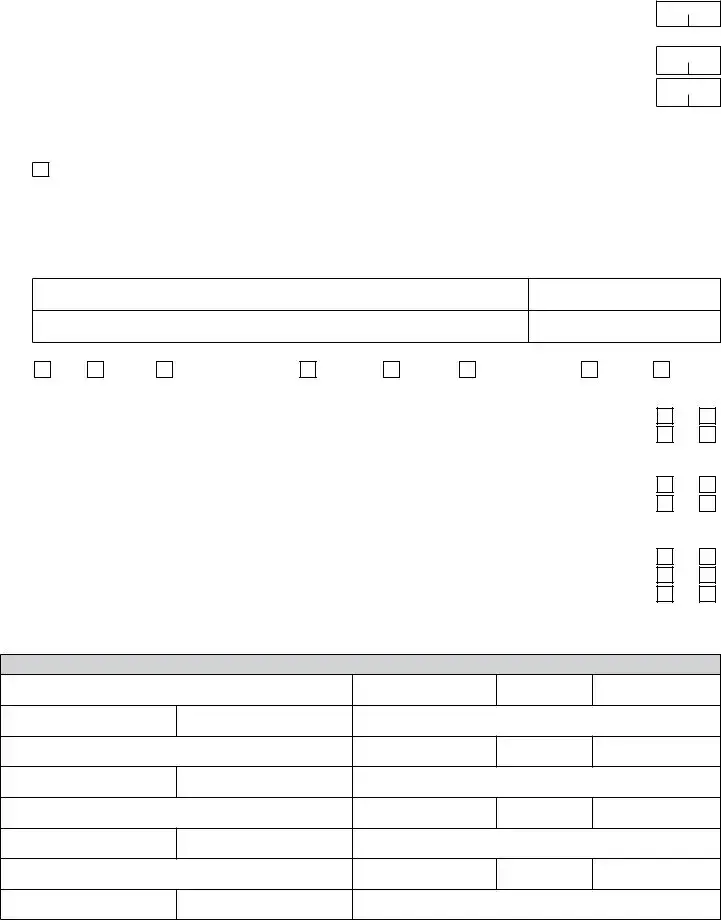
Check the reason for this application. If more than one applies, see instructions.
Started a New Business Incorporated/Purchased an Existing Business
Reinstating an Existing Account Acquired/Transferred All/Part of a Business
Hired Employee/Hired Michigan Resident Added a New Location(s)
Type or print in blue or black ink.
PEO: Client Level Reporting
Report Wages After Total Transfer/Sale of Business
Other (explain)_________________________
1. Federal Employer Identication Number, if known 2. Company Name or Owner’s Full Name (include, if applicable, Corp, Inc, PC, LC, LLC, LLP, etc.). Required.
-
3. Business Name, Assumed Name or DBA (as registered with the county)
4. Address for all legal contacts (street and number - no PO boxes)
Business Telephone
Legal
Address
City State ZIP Code
(Required)
5. Address, if di󰀨erent from Box 4, where all tax forms will be sent, unless otherwise instructed
If this address is for an accountant or
Taxpayer
other representative, attach Form 1488,
Power of Attorney for UIA.
Mailing
City State ZIP Code
Address
6. Address of the actual Michigan location of the business, if di󰀨erent from above (street and number--no PO boxes). If NO Michigan address, check this box
Physical
Address
City State ZIP Code
7. Enter the Business Ownership Type code from Page 4 (Required) ............................................................................. 7.
If your business is a limited partnership, you must name all general partners beginning on line 28.
If you are a Professional Employer Organization (PEO), give PEO License ID ______________________.
8. If you are a Michigan entity and line 7 is 35-39, 40, OR 41, enter your
Michigan Licensing and Regulatory A󰀨airs (LARA) Corporate ID Number....
8.
Check this box if you have applied for and not yet received your ID number.
Date of Incorporation _______________________ State of Incorporation_______________________
9. Enter Business Code (NAICS) that best describes your business ........................................ 9.
NAICS codes can be found at http://www.census.gov/eos/www/naics/
10. Dene your business activity 11. What products, if any, do you sell (sold to nal consumer)?
Check the tax(es) below for which
you are registering. At least one
box (12-15) must be checked.
12. Sales Tax............................. 12a.
13. Use Tax................................ 13a.
14.
Employer and Retirement
Withholding (See line 22.) ... 14a.
15.
Annual Gross Receipts
over $350,000 (CIT) ............ 15a.
Date that liability will begin
for each box checked at left.
Month Day Year
Estimated monthly payment for each tax
Required if box at left is checked.
Annual Quarterly Monthly
12b.
Up to $62 $63 to $999 Over $1,000
13b.
Up to $62 $63 to $999 Over $1,000
14b.
Up to $62 $63 to $999 Over $1,000
Corporate Income Tax is required only if
annual gross receipts in Michigan exceed
$350,000 with the exception of insurance
companies and nancial institutions.
Check the box if these other taxes also apply:
16.
Unemployment Insurance Tax. Attach UIA Schedule A and UIA Schedule B. Corporations, LLCs, LLPs: Enclose a copy of your
Articles of Incorporation or Organization. You must complete all items on this form accurately and completely. Failure to
do so may subject you to the penalties provided under the Michigan Employment Security (MES) Act.
17a.
Motor Fuel. Treasury will review your registration and contact you for any additional information.
17b.
IFTA Tax. Apply for a license rst at www.michigan.gov/IFTA. You may contact IFTA at 517-636-4580.
18.
Tobacco Tax. Complete line 27. Treasury will review your registration and will contact you for more information.
19.
Enter the number of business locations you will operate in Michigan (Required) ................................................... 19.
If more than 1, attach a list and include each location’s name, address, city, state and ZIP code.
518, Page 2
20. Enter the month, numerically, that you close your tax books (for example, enter 08 for August)............................ 20.
21.
Seasonal Only: (Your business is not open continuously for the entire year) Seasonal lers are
required to le monthly returns for the months that you are open.
a. Enter the month, numerically, this seasonal business opens............................................................................
21a.
b. Enter the month, numerically, this seasonal business closes ...........................................................................
21b.
NOTE: If you are registering to sell at only one or two events in Michigan per year, do not submit this
registration form. Instead, le a Concessionaire’s Sales Tax Return (Form 5089). This form can be obtained
on Treasury’s Web site at www.michigan.gov/taxes, or by calling 1-517-636-6925.
22.
Check this box if you use a payroll service that produces your payroll checks and sends income tax withholding payments
to the State and Federal Governments. Access Michigan Treasury Online (MTO) at mto.treasury.michigan.gov or attach
Authorized Representative Declaration (Power of Attorney) (Form 151). This form can be obtained on Treasury’s Web site at
www.michigan.gov/taxes, or by calling 1-517-636-6925.
Enter the name of your payroll service provider:_____________________________________________________________
23.
If you are incorporating an existing business, or if you purchased an existing business, list previous business names, addresses,
and FEINs, if known.
Previous Business Name and Address FEIN
24. If you purchased an existing business, what assets did you acquire? Check all that apply.
Land Building Furniture and Fixtures Equipment Inventory Accounts Payable Goodwill None
25. Motor Fuel Tax: (if you answer Yes to any of the questions below, see Web site www.michigan.gov/IFTA) Yes No
a. Will you operate a terminal or renery?........................................................................................................25a.
b. Will you transport fuel across Michigan’s borders? ......................................................................................25b.
26. IFTA Tax: (if you answer Yes to any of the questions below, see Web site www.michigan.gov/IFTA)
a. Do you own a diesel-powered vehicle used for transport across Michigan’s borders with three
or more axles or two axles and a gross vehicle weight over 26,000 lbs? ....................................................26a.
b. Will you transport fuel across Michigan’s borders? ......................................................................................26b.
27. Tobacco Tax: (if you answer Yes to any of the questions below, see Web site michigan.gov/tobaccotaxes)
Do you intend to:
a. Sell cigarettes or other tobacco products for resale to other businesses?........................................................27a.
b. Purchase any tobacco products from an out of state unlicensed source? ........................................................27b.
c. Sell any tobacco products in a vending machine?............................................................................................. 27c.
Complete all the information for each owner (sole proprietor or member), partner, or corporate o󰀩cer. For limited partnership you must
list all general partners. For limited liability companies you must list all members. For corporations you must list all o󰀩cers, but do not
include shareholders who are not o󰀩cers. A signature is REQUIRED for each person listed in boxes 28-31. Attach a separate list if necessary.
I certify that the information provided on this form is true, correct and complete to the best of my knowledge and belief.
28. Name (Last, First, Middle, Jr/Sr/III)
Title Date of Birth Phone Number
Driver License / MI Identication No. Social Security Number Signature
29. Name (Last, First, Middle, Jr/Sr/III)
Title Date of Birth Phone Number
Driver License / MI Identication No. Social Security Number Signature
30. Name (Last, First, Middle, Jr/Sr/III)
Title Date of Birth Phone Number
Driver License / MI Identication No. Social Security Number Signature
31. Name (Last, First, Middle, Jr/Sr/III)
Title Date of Birth Phone Number
Driver License / MI Identication No. Social Security Number Signature
Questions regarding this form should be directed to Treasury at 517-636-6925. Submit this form six weeks before you intend to start your
business. MAIL TO: Michigan Department of Treasury, PO Box 30778, Lansing, MI 48909.
UIA Schedule A - Liability Questionnaire
Issued under authority of the Michigan Employment Security Act of 1936, as amended, MCL 421.1 et
seq. Filing is mandatory for all employers. You must
complete all items on this form accurately and completely. Failure to do so may subject you to the penalties provided under the MES Act.
UIA Account Number, if already assigned Federal Employer Identification No. (required)
An employing unit becomes liable to pay Michigan unemployment taxes when the employing unit meets any of the following criteria:
Pays $1,000 or more in gross wages for covered employment in a calendar year.
Employs one or more employees in 20 different weeks within a calendar year.
Acquires all or part of an existing Michigan business.
Pays at least $1,000 in cash, not including room and board, for domestic service within a calendar quarter.
Pays at least $20,000 in cash, not including room and board, for agricultural service within a calendar quarter, OR
Employs at least 10 agricultural workers in each of 20 different weeks in the current or preceding calendar year.
Elects coverage under the terms of the Michigan Employment Security (MES) Act.
Is subject to federal unemployment tax.
When any one of the above criteria is met, you must submit Form 518, Registration for Michigan Taxes, and UIA Schedule A -
Liability Questionnaire and UIA Schedule B - Successorship Questionnaire. You must also begin quarterly filing of Form UIA
1028, Employer's Quarterly W a g e / Tax Report. Unemployment taxes are due and payable beginning with the first calendar quarter
in which you had payroll. Due dates for tax and wage reports are April 25, July 25, October 25 and January 25.
Providing inaccurate or incomplete information in this Registration, or UIA Schedules A or B, will be evidence of
intentional misrepresentation and may subject you to the civil and/or criminal penalties provided in Sections 54 and
54b of the Michigan Employment Security (MES) Act.
Month Day Year
On what date did/will you first employ anyone in Michigan?
Complete the appropriate sections below according to the type of employer being registered.
SECTION 1
EMPLOYERS OTHER THAN AGRICULTURAL OR DOMESTIC/HOUSEHOLD
(See instructions to determine if applicable)
Month Day Year
If Agricultural, skip to Section 2. If Domestic/Household,skip to Section 3.
If you have had a gross payroll of $1,000 or more within a calendar year,
enter the date it was reached or will be reached.
Month Day Year
If you have had 20 or more calendar weeks in which one or more persons
performed services for you within a calendar year, enter the date the 20th
week was reached or will be reached. The weeks do not have to be
consecutive nor the persons the same.
If Employer is a NonProfit, a Governmental Agency / Indian Tribe/ Tribal Unit, a Federal Unemployment Tax Act (FUTA) Subjectivity, or is
selecting Elective Coverage, then complete only one of the following four employer types below that best describes the business.
1. NONPROFIT EMPLOYERS
Nonprofit organizations finance their unemployment liability by either (1) paying unemployment taxes on the taxable wages of
their employees (contributing) or (2) making a specific prior election to reimburse the UIA for any unemployment benefits paid to
their former employees (reimbursing). A nonprofit organization that does not elect to be reimbursing will be, by default,
contributing.
To elect contributing status, check this box: and skip paragraphs A D below.
To elect reimbursing status, see paragraphs A D.
A. Nonprofit employers electing reimbursing status must provide the UIA with a copy of the documentation from the Internal
Revenue Service (IRS) granting 501(c)(3) status.
Check this box if you elect to be a reimbursing employer. Attach a copy of your IRS 501(c)(3) documentation.
Failure to check this box will result in the establishment of your liability as a contributing employer.
B. If you are a nonprofit employer electing reimbursing status, enter
$
the amount (or estimate) of your gross annual payroll
C.
Bonding Requirements. Section 13a of the Michigan Employment Security (MES) Act requires that nonprofit
employers electing reimbursing status on or after December 21, 1989, and that have, or expect to have, a gross payroll of
more than $100,000 during any calendar year must notify the UIA of that fact immediately and must provide a surety
bond, irrevocable letter of credit, or other banking device approved by the UIA, in an amount to be determined by the
UIA to secure the employer's obligations under the MES Act. If you exceed $100,000 in gross payroll in a later year, you
are obligated to notify the UIA, and provide the bond at that time.
D.
If your organization is funded more than 50 percent by a grant, list the source and duration of the grant.
Source Start Date End
Date
Michigan
Unemployment
Insurance Agency
2. GOVERNMENTAL AGENCIES, INDIAN TRIBES AND TRIBAL UNITS
Governmental entities generally reimburse unemployment insurance benefits paid to former employees on a dollar-for-dollar
basis unless they elect to make quarterly "contribution" payments.
A. If you are a governmental agency, or Indian tribe or tribal unit,
identify the type (i.e., city, township, commission, authority, tribe, etc.)
Month Day
B. Enter your fiscal year beginning date
C.
Check this box if you elect to be a contributing employer. Leaving this box unchecked will result in the
establishment of your liability as a reimbursing employer.
D . Indian tribes and tribal units are subject to the same bonding requirements as nonprofit employers (see Line 1C,
above).and must provide the amount (or estimate of their gross annual payroll here:
3. FEDERAL UNEMPLOYMENT TAX ACT (FUTA) SUBJECTIVITY. Select this option ONLY if you are NOT liable for UIA taxes
State
under any of the other employer types.
If you are already subject to FUTA, enter the state, other than Michigan, where you became liable
Note: "Subject to FUTA" refers to filing Form 940 with the IRS. If you are required to file Form 940 (FUTA) with the IRS in
other states, you are required to file and pay state unemployment taxes in Michigan.
4. ELECTIVE COVERAGE. For employers who would not otherwise be liable for unemployment taxes, such as churches.
Check this box if you wish to elect coverage under the MES Act. Approval is subject to UIA review; some qualifiers
apply. Your election, if granted, will apply to all your employees. Give your reason for electing coverage in the space
provided below. If you are an individual owner or partnership electing to cover family members, specify their
relationship to the owner or partners. You may not elect coverage for your parents or spouse, nor for your child under the
age of 18. Individual owners and partners cannot elect coverage for themselves. You may not elect coverage for
domestic employment below the statutory requirements stated above. Election of coverage remains in effect for a
minimum of two calendar years.
SECTION 2
2. AGRICULTURAL EMPLOYERS ONLY
A. If you have had a total cash payroll of $20,000 or more for agricultural
services performed within a calendar quarter in either the current or
preceding calendar year, not including room and board, enter the date the
$20,000 was reached or will be reached.
B. If you have had at least 10 agricultural workers in each of 20 different
weeks in the current or preceding calendar year, enter the date the 20th
week was reached or will be reached. The weeks do not have to be
consecutive nor the persons the same.
SECTION 3
3. DOMESTIC/HOUSEHOLD EMPLOYERS ONLY
A. If you have had a cash payroll of $1,000 or more for domestic services
within a calendar quarter in either the current or preceding calendar year,
not including room and board, enter the date the $1,000 was reached or will
be reached.
SECTION 4
ALL EMPLOYERS
Month Day Year
Month Day Year
Month Day Year
Print Name of Owner/Officer Signature of Owner/Officer
Title Telephone Number Date
Print Name of Owner/Officer Signature of Owner/Officer
Title Telephone Number Date
Attach this schedule to Form 518, Registration for Michigan Taxes and mail it to the Michigan Department of Treasury.

Form Information

Fact Name Detail
Governing Law This form is governed by PA 122 of 1941 and the Michigan Employment Security Act.
Purpose The form is used for registering businesses for various Michigan taxes.
Tax Types Businesses can register for Sales Tax, Use Tax, Income Tax Withholding, Corporate Income Tax, and Unemployment Insurance Tax.
Registration Requirement Filing is mandatory for businesses that are required to pay taxes in Michigan.
New Business Registration New businesses must submit the form at least six weeks before starting operations.
Delinquent Taxes Delinquent taxes owed must be paid with the registration to avoid penalties.
Contact Information For assistance, contact the Michigan Department of Treasury at 517-636-6925.

Detailed Guide for Filling Out 518 Michigan

Completing the 518 Michigan form is essential for registering your business for various taxes in Michigan. Ensure that all information is accurate and complete to avoid delays in processing. Follow the steps below to fill out the form correctly.

  1. Obtain the 518 Michigan form from the Michigan Department of Treasury website or a local office.
  2. Identify the reason for completing the application. Check all applicable boxes.
  3. Enter your Federal Employer Identification Number (FEIN) in Line 1. If you do not have one, request it from the IRS.
  4. Provide your company name in Line 2. If a sole proprietorship, enter the owner's name here and the business name in Line 3.
  5. Fill in the legal address where your records are kept in Line 4.
  6. In Line 5, provide a mailing address where you want to receive tax forms.
  7. If your physical business address differs from the legal address, enter it in Line 6.
  8. Indicate the business ownership type code in Line 7 based on the structure of your business.
  9. If applicable, enter your Michigan LARA Corporate ID Number in Line 8.
  10. Locate and enter the appropriate six-digit business code in Line 9 from the NAICS codes list.
  11. Briefly describe your business activity in Line 10.
  12. In Line 11, describe the products you will sell to the final consumer.
  13. For Lines 12 to 15, check the boxes for each tax type you expect to pay and indicate the start date for each.
  14. Enter your FEIN again in Line 16 if you will pay Unemployment Insurance Tax and complete the attached schedules.
  15. Check the appropriate boxes in Lines 17a, 17b, and 18 if your business involves motor fuel or tobacco tax.
  16. Enter the number of Michigan locations needing a Sales Tax License in Line 19.
  17. Specify your fiscal year closing month in Line 20 using a two-digit number.
  18. If your business is seasonal, enter the opening and closing months in Line 21.
  19. Review all entries for accuracy before submission.
  20. Mail the completed form to the Michigan Department of Treasury at the specified address.

Obtain Answers on 518 Michigan

  1. What is the purpose of the Michigan Department of Treasury Form 518?

    Form 518 is used for registering businesses for various state taxes in Michigan. This includes sales tax, use tax, income tax withholding, corporate income tax, and unemployment insurance tax. Completing this form is essential for compliance with state tax regulations.

  2. Who needs to complete Form 518?

    Any business starting, acquiring, or changing ownership in Michigan must complete Form 518. This includes sole proprietorships, partnerships, corporations, and limited liability companies (LLCs). If you plan to hire employees or sell taxable goods, this form is necessary.

  3. What types of taxes can I register for using Form 518?

    • Sales Tax
    • Use Tax
    • Income Tax Withholding
    • Corporate Income Tax
    • Unemployment Insurance Tax

    Each of these taxes serves a different purpose, and registering for them ensures that you are compliant with Michigan tax laws.

  4. How do I submit Form 518?

    Once you have completed Form 518, mail it to the Michigan Department of Treasury at the address provided on the form. It is advisable to send your application at least six weeks before you plan to start your business to allow for processing time.

  5. What happens if I do not complete Form 518?

    Failure to complete Form 518 when required can lead to penalties and delays in your business operations. You may also be held liable for unpaid taxes if you do not register properly.

  6. Can I amend my registration after submitting Form 518?

    Yes, if there are changes in your business structure or ownership, you can submit updated information to the Michigan Department of Treasury. Be sure to keep your records accurate and up to date to avoid any issues with tax compliance.

  7. Where can I find additional information about Michigan taxes?

    For more information, visit the Michigan Department of Treasury’s website at www.michigan.gov/taxes. You can also call their office at 517-636-6925 for assistance with specific questions or concerns.

Common mistakes

Filling out the Michigan Department of Treasury Form 518 can be straightforward, but many make mistakes that can lead to delays or complications. One common error is leaving sections incomplete. Every item on the form must be filled out accurately. Incomplete forms can result in processing delays or even penalties.

Another frequent mistake involves the Federal Employer Identification Number (FEIN). Applicants sometimes enter incorrect numbers or fail to obtain one before completing the form. The FEIN is essential for tax identification, and without it, the registration will not be processed.

People often confuse the legal and mailing addresses. It's important to clearly distinguish between where the business operates and where correspondence should be sent. Providing inconsistent information can lead to confusion and miscommunication with tax authorities.

Many applicants neglect to check the appropriate boxes for tax types they will be responsible for. This oversight can cause issues later when tax obligations arise. Each tax type must be clearly indicated, along with the expected start date for each liability.

Some individuals fail to describe their business activities adequately. A vague description can lead to misunderstandings about tax obligations. Providing a clear and detailed explanation helps ensure that the correct taxes are assessed.

Another common error is misidentifying the business ownership type. Selecting the wrong category can complicate tax responsibilities. It's crucial to choose the correct ownership type code from the provided list to avoid issues down the line.

Applicants sometimes skip the requirement to provide a North American Industrial Classification System (NAICS) code. This code is vital for categorizing the business and determining applicable taxes. Missing this information can delay processing.

Some people fail to submit the form within the recommended time frame. It is advisable to mail the completed registration at least six weeks before starting the business. Late submissions may lead to penalties or complications in tax registration.

Lastly, individuals often overlook the importance of keeping copies of submitted forms. Retaining a copy can be invaluable for future reference or in case of disputes. Keeping thorough records is a best practice that can save time and trouble later.

Documents used along the form

The Michigan Department of Treasury Form 518 is essential for businesses registering for various taxes. However, several other forms and documents are often used in conjunction with it. Understanding these documents can streamline the registration process and ensure compliance with state regulations.

  • Form UIA 1027: This is the Business Transferor’s Notice to Transferee of Unemployment Tax Liability and Rate. It must be completed whenever a business sells or transfers any part of its payroll, accounts, or assets. This form informs the purchaser of any unemployment tax liabilities associated with the business.
  • Form UIA 1346: Known as the Disclosure of Transferor Account, this form provides the necessary information to complete Form UIA 1027. It can be obtained by contacting the Unemployment Insurance Agency and is crucial for ensuring that all tax liabilities are disclosed during a business transfer.
  • Form UIA 1772: This form is used for the Discontinuance or Transfer of Payroll or Assets in Whole or Part. If a complete transfer of the seller's business occurs, this form must be filed to document the transfer and any associated tax responsibilities.
  • Form 5156: The Request for Tax Clearance Application is important for businesses undergoing ownership changes. It allows the new owner to obtain a tax clearance certificate, indicating whether any taxes are owed by the previous owner.
  • Form 5089: The Concessionaire’s Sales Tax Return is specifically for businesses making retail sales at one or two events per year. If a business qualifies, it should use this form instead of Form 518 for tax registration.

Familiarizing yourself with these forms will help you navigate the complexities of business registration in Michigan. Ensure you have the correct documentation ready to avoid delays and potential penalties.

Similar forms

The Michigan Department of Treasury Form 518 is essential for businesses registering for various taxes in Michigan. Several other documents serve similar purposes, focusing on tax registration and compliance. Here are five documents that share similarities with Form 518:

  • Form UIA 1027 - This form, known as the Business Transferor’s Notice to Transferee of Unemployment Tax Liability and Rate, is used when a business is sold or transferred. Like Form 518, it ensures that the new owner is aware of any unemployment tax liabilities associated with the business.
  • Form UIA 1346 - The Disclosure of Transferor Account provides necessary information to complete Form UIA 1027. This document is similar to Form 518 in that it helps clarify tax responsibilities during a business transfer, ensuring that all parties understand their obligations.
  • Form UIA 1772 - This form is required when there is a total transfer of a business's payroll or assets. Similar to Form 518, it addresses tax liabilities and helps maintain compliance during significant business changes.
  • Form 5089 - The Concessionaire’s Sales Tax Return is for businesses making retail sales at limited events. While Form 518 is for broader tax registration, Form 5089 serves a specific purpose for temporary sales, highlighting the need for compliance in different business contexts.
  • Form 5156 - The Request for Tax Clearance Application is used to obtain a certificate indicating that no taxes are due. Like Form 518, it plays a critical role in ensuring that businesses are compliant with tax obligations, particularly when ownership changes occur.

Dos and Don'ts

  • Do read all instructions carefully before starting the form. Understanding the requirements will help avoid mistakes.
  • Do ensure all information is complete and accurate. Incomplete forms can delay processing and may lead to penalties.
  • Do check the appropriate boxes for each tax type you expect to pay. This will help the authorities process your registration correctly.
  • Do keep a copy of the completed form for your records. Having a reference can be useful in the future.
  • Do mail your application at least six weeks before you plan to start your business. This allows enough time for processing.
  • Don't submit the form if you only plan to make sales at fewer than three events per year. Instead, use the Concessionaire’s Sales Tax Return.
  • Don't leave any lines blank unless specified. Every detail matters for proper registration.
  • Don't forget to enter your Federal Employer Identification Number (FEIN) if applicable. This number is essential for tax purposes.
  • Don't use your Social Security number for business registration. Always use the FEIN for business-related tax matters.
  • Don't assume that someone else will handle your tax responsibilities. As the business owner, you are ultimately accountable for compliance.

Misconceptions

Understanding the 518 Michigan form can be challenging, and several misconceptions often arise. Here are four common misunderstandings about this important document:

  • Misconception 1: The 518 form is only for new businesses.
  • Many people believe that the 518 Michigan form is exclusively for new businesses. However, it is also required for existing businesses that are changing ownership, structure, or need to register for specific taxes. This means that even established businesses may need to complete this form under certain circumstances.

  • Misconception 2: Completing the form is optional if you are not making sales year-round.
  • Some individuals think they can skip the 518 form if their business does not operate year-round. This is not true. If your business operates seasonally or only at specific events, you still need to register and may be required to file tax returns during the months you are open.

  • Misconception 3: You do not need to report employee information if you are a sole proprietor.
  • There is a common belief that sole proprietors are exempt from reporting employee information. This is incorrect. All employers, regardless of their business structure, must report newly hired employees and comply with tax withholding requirements.

  • Misconception 4: The 518 form covers all types of business taxes in Michigan.
  • While the 518 form is essential for registering various business taxes, it does not encompass every type of tax. For instance, specific licenses and registrations, such as those for motor fuel or tobacco products, require separate forms. It is crucial to understand which forms apply to your business activities.

Key takeaways

Here are some key takeaways about filling out and using the 518 Michigan form:

  • Purpose of the Form: The 518 Michigan form is used to register for various business taxes in Michigan, including sales tax, use tax, and unemployment insurance tax.
  • Complete All Sections: Ensure that every section of the form is filled out accurately. Incomplete forms can lead to delays or penalties.
  • Federal Employer Identification Number (FEIN): Obtain your FEIN from the IRS before completing the form. This number is essential for tax registration.
  • Tax Types: Check the boxes for all tax types that apply to your business. This includes sales tax, use tax, and employer withholding tax.
  • Mailing Instructions: Send your completed form to the Michigan Department of Treasury at least six weeks before you plan to start your business.
  • Registration for New Businesses: If you are starting a new business or purchasing an existing one, you must complete this form to register for taxes.
  • Consult Resources: For additional help, contact the Michigan Department of Treasury or visit their website for more information on business taxes.